
Ueteto Mechanical Metronome Black
4.4Editor score
Loud sound for clarity
Wind up mechanism
Adjustable tempo range
This guide compares the top 10 mechanical metronome for piano options including sound precision battery free operation and durable construction for musicians
Choosing the right mechanical metronome for piano can transform your practice sessions significantly. These timeless devices offer reliable rhythm without needing batteries or digital connections. Musicians appreciate the tactile feedback and classic design that fits any studio environment perfectly.
We evaluated ten top rated models based on precision, sound clarity, and build quality. Each product was assessed for ease of use and versatility across different instruments. Our goal is to help you find the perfect tool to keep your tempo steady and focused.
Each pick highlights unique features and strengths to guide your decision making process. You will find detailed insights into movement type and design aesthetics. Please note that prices and availability may change frequently so check current listings before purchasing.
4.4Editor score

4.5Editor score

4.6Editor score
Here is a side by side comparison of all ten mechanical metronomes included in this guide. Review the key specifications and features to find the model that best suits your practice needs and aesthetic preferences today.


The Tempi Metronome for Musicians stands out as a top choice for pianists seeking reliable rhythm tools. It holds an impressive rating and offers a classic look that complements any piano studio beautifully. Users appreciate the sturdy steel gears that ensure accurate beats over time.
We may earn a commission when you buy through this link, at no additional cost to you.
Its design features a beautiful brown grain veneer that adds a touch of elegance to your practice space. The metronome requires no batteries as it operates on a wind up mechanism that lasts for extended practice sessions. The chromatic settings allow precise tempo control from slow to fast speeds effortlessly.
While the price is higher than budget models the durability and aesthetic appeal justify the investment for serious musicians. The lack of a bell might be a drawback for some but the clear audible click remains consistent. The included microfiber cloth helps keep the surface looking new.
This metronome is ideal for musicians who value style and precision in their practice routine. It works well for piano violin and guitar among other instruments providing a steady beat. The two year warranty adds peace of mind for your purchase decision today.
The brown grain veneer finish gives this metronome a vintage look that fits seamlessly into home studios and recital halls.
Steel gears ensure the internal mechanism stays precise and durable even after years of regular use without corrosion issues.
We may earn a commission when you buy through this link, at no additional cost to you.
The Ueteto Mechanical Metronome in black is an excellent budget friendly option for students and beginners starting their musical journey. It delivers a loud sound that cuts through background noise making it easy to keep time. The simple design ensures that anyone can operate it without confusion or frustration.
We may earn a commission when you buy through this link, at no additional cost to you.
It features a wind up mechanism that eliminates the need for batteries which saves money in the long run. The tempo range spans from forty to two hundred eight beats per minute covering most musical pieces. Users can select different beat patterns including accents for the first beat to enhance rhythm practice.
While the build is simple plastic it remains durable enough for daily use in a home studio. The wind duration depends on the tempo chosen which means faster tempos require more frequent winding. This is a minor tradeoff for the convenience of no batteries and low cost.
This metronome is perfect for beginners who need an affordable tool to develop their sense of rhythm. It supports piano violin guitar and other instruments making it a versatile addition to your practice kit. The loud click ensures you stay on beat even in a noisy environment.
Despite its low cost this metronome offers all the essential features needed for effective rhythm training and tempo control.
The sound output is strong enough to be heard clearly over piano strings and other ambient noise during practice sessions.
We may earn a commission when you buy through this link, at no additional cost to you.
The Wittner 836 Taktell Piccolo is a premium mechanical metronome designed for professionals who demand precision and portability. It is rated highly by users for its consistent tempo and compact design that fits easily into a case. The black finish is sleek and minimal making it suitable for any performance setting.
We may earn a commission when you buy through this link, at no additional cost to you.
This model features a plastic casing that is both lightweight and durable for travel without worry. It does not include a bell which some musicians prefer as it reduces distractions during complex passages. The wind up system ensures long battery free operation allowing for uninterrupted practice sessions.
While the price is higher the quality of construction and reliability make it a worthwhile investment for serious pianists. The absence of a bell means you rely solely on the click which can be sharper and clearer. This simplicity is often preferred by advanced players who do not need beat accents.
Ideal for touring musicians this metronome provides accurate timing in a small package. It works well for piano and other instruments where space is limited during travel. The professional grade precision ensures you maintain exact tempo requirements for exam performances or recording sessions.
Its small size and lightweight build make it easy to carry in a gig bag or piano case without adding bulk.
The lack of a bell provides a pure click sound that avoids disrupting the flow of music during intricate rhythmic patterns.
We may earn a commission when you buy through this link, at no additional cost to you.
The Mechanical Metronomes with Wood Grain finish offer a blend of style and function for musicians starting their practice journey. It features a high precision track that ensures accurate beats for every note you play. The metal movement adds durability which is crucial for a tool used daily in rehearsals.
We may earn a commission when you buy through this link, at no additional cost to you.
Its wood grain look gives it a traditional feel that appeals to classical pianists and conservatory students. The loud sound ensures you hear the beat clearly even when playing loudly on the piano keys. You can choose from multiple beat options to practice different time signatures effectively.
While the body may include plastic components the metal movement ensures the core mechanism remains reliable. The wind up system is straightforward but requires you to wind it regularly depending on your tempo choice. This is a standard feature for mechanical metronomes in this class.
This model is a strong choice for beginners who want a precise and durable tool at a reasonable price. It supports a wide range of instruments including guitar and violin making it versatile for ensemble practice. The loud sound helps maintain focus during long practice sessions.
The internal metal parts ensure consistent performance and reduce the risk of wear over time compared to all plastic models.
The wood grain finish adds warmth to your practice space and complements traditional wooden pianos beautifully.
We may earn a commission when you buy through this link, at no additional cost to you.
The M350 AUPHY Mechanical Metronome combines a classic shape with modern features to meet diverse musical needs. It includes an accent bell that marks the first beat of a measure helping you understand time signatures better. The PC material body is sturdy and resists wear from regular handling and use.
We may earn a commission when you buy through this link, at no additional cost to you.
Its design features a lowered center of gravity which keeps the metronome stable on the piano top during vigorous use. The metal clockwork gears ensure the beat remains accurate over time without slipping or slowing down. This reliability is essential for maintaining consistent tempo during complex practice sessions.
While the bell cannot be turned off in some modes it provides clear cues for rhythm training. The wind up mechanism allows for extended use without battery dependency which is convenient for long rehearsals. Users appreciate the balance between classic design and practical functionality.
This metronome suits players who need an accent feature to learn complex rhythms efficiently. It works well for piano drums and saxophone making it a versatile tool for bands or solo practice. The classic shape adds a nostalgic charm to your musical equipment setup.
The accent bell highlights the downbeat allowing you to internalize the pulse of different time signatures more effectively.
The lowered center ensures the metronome stays firmly in place on smooth piano surfaces without sliding unexpectedly.
We may earn a commission when you buy through this link, at no additional cost to you.
The Mechanical Metronomes in Walnut color offer a sophisticated look that fits well in professional studios and homes. It features a classic walnut finish that adds elegance to your piano desk while maintaining high precision performance. The metal movement ensures that the rhythm remains steady throughout your practice session without deviation.
We may earn a commission when you buy through this link, at no additional cost to you.
Its operation is simple with clear steps that anyone can follow easily to start practicing. You can select various beat patterns to suit different musical styles and time signatures effectively. The loud sound helps you stay on track even in a busy environment or room.
While it requires winding before use the convenience of battery free operation makes it a preferred choice for many. The plastic body is durable and can withstand accidental drops or bumps during transport. This model is ideal for students who need a reliable tool to improve rhythm skills.
This metronome is great for musicians who value both aesthetics and functionality in their gear. The walnut color enhances the visual appeal of your workspace while delivering accurate timing. It supports piano and guitar practice making it a versatile option for multi instrumentalists.
The classic walnut color brings a warm traditional look to your practice space that complements wooden furniture and pianos.
Clear instructions make it easy to set up and adjust the tempo without frustration or confusion.
We may earn a commission when you buy through this link, at no additional cost to you.
The Mechanical Metronome in Standard Black provides a reliable and stable solution for rhythm practice across various instruments. It features a high hardness construction that withstands regular use in both home and teaching environments. The heavy bell sound provides a clear accent that helps you emphasize specific beats accurately.
We may earn a commission when you buy through this link, at no additional cost to you.
Its adjustable tempo range allows you to set speeds that match your current skill level and musical needs. The standard black color is neutral and blends well with any studio decor or case setup. Users find it easy to maintain rhythm with the loud and consistent sound output.
While the design is basic it focuses on function over form which is perfect for serious practice sessions. The metal and plastic combination ensures durability without adding excessive weight to your gear. This makes it portable enough for travel to lessons or auditions easily.
This metronome is suited for students and teachers who need a dependable tool for consistent training. It supports piano guitar and drums making it versatile for ensemble work or solo practice. The heavy bell ensures the beat remains clear even in noisy practice rooms.
The heavy bell provides a distinct sound that marks the downbeat clearly helping you stay oriented in the measure.
The construction materials resist wear and tear ensuring the metronome performs well over years of daily use.
We may earn a commission when you buy through this link, at no additional cost to you.
The Ueteto Mechanical Metronome with Wood Grain finish offers a classic look that appeals to traditional musicians and students. It produces a loud crisp tick that cuts through piano sound effectively for clear rhythm tracking. The wind up operation ensures you never need to replace batteries which is convenient for long practice sessions.
We may earn a commission when you buy through this link, at no additional cost to you.
Its wind duration can vary based on the tempo you choose allowing flexibility for different practice needs. The wood grain adds a natural aesthetic that looks great on a piano top or shelf. This model is designed to help you master rhythm and tempo with consistent audible cues.
While the winding mechanism may sometimes feel tight the overall build quality ensures it lasts. The lack of batteries means you rely solely on the mechanical spring which is a hallmark of quality metronomes. Users appreciate the tactile feel of winding and setting the tempo manually.
This metronome is a good fit for players who prefer a traditional tool with reliable performance. It supports guitar and violin as well making it ideal for band practice or private lessons. The crisp tick helps maintain focus during repetitive practice exercises efficiently.
The wood grain finish provides a timeless look that matches traditional music rooms and studio aesthetics beautifully.
The sound is sharp and clear ensuring you hear every beat even when playing fast or loudly on the piano.
We may earn a commission when you buy through this link, at no additional cost to you.
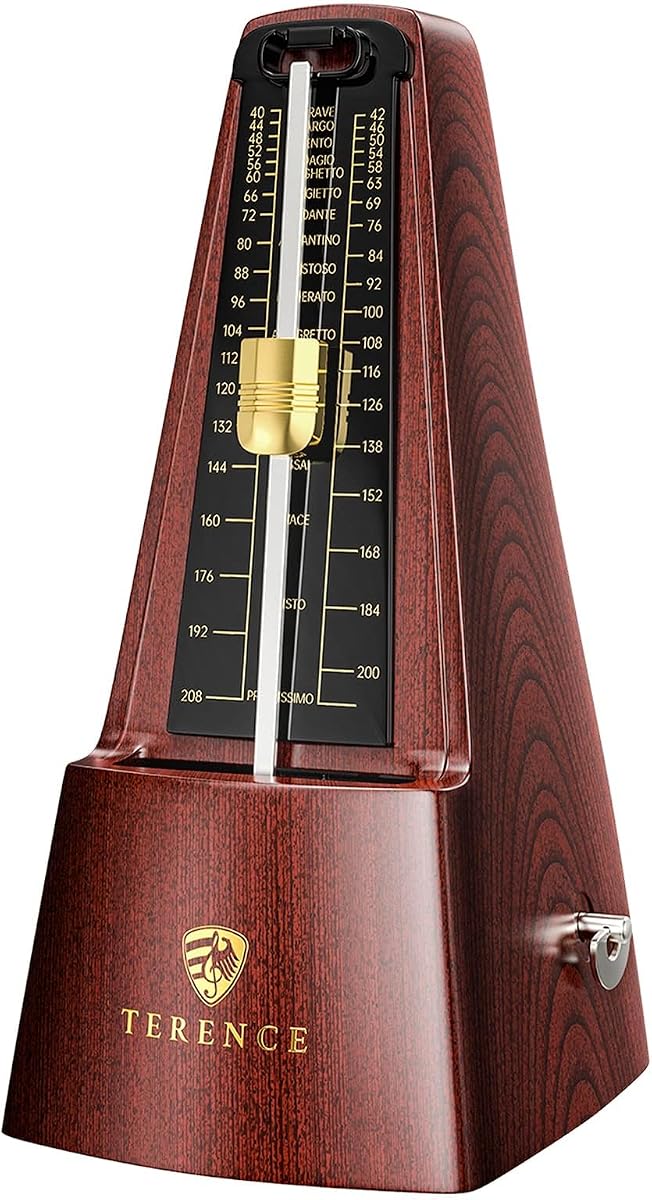
The TERENCE Mechanical Metronome features a unique transparent design that allows you to see the internal gears in action. It includes a metal accent bell that provides a loud sound for clear beat tracking during practice. The all copper pendulum adds a touch of quality and reduces rust issues over time.
We may earn a commission when you buy through this link, at no additional cost to you.
Its high precision track ensures the tempo remains consistent which is vital for developing good rhythm habits. The transparent look makes it an attractive gift for students or beginners starting their music lessons. Users enjoy watching the pendulum swing and gears move while they play.
While the plastic body can scratch with heavy use the overall functionality remains solid. The wind up system is easy to operate and provides sufficient runtime for most practice sessions. This model stands out for its visual appeal and practical features in a portable package.
This metronome is perfect for beginners who want a tool that looks interesting and performs well. It supports piano and violin making it versatile for various musical styles. The loud sound ensures you stay on beat even in a loud environment.
The transparent body lets you see the mechanics working which adds an educational aspect to using the metronome.
The metal bell produces a distinct sound that marks the downbeat clearly for better rhythm internalization.
We may earn a commission when you buy through this link, at no additional cost to you.
The Mechanical Metronome with Loud Sound provides a straightforward solution for rhythm training in various settings. It offers five tempo settings to cover a wide range of musical pieces and skill levels. The loud clear sound ensures you can hear the beat even in a noisy room or large practice space.
We may earn a commission when you buy through this link, at no additional cost to you.
Its simple operation makes it easy for new learners to get started quickly without confusion. The premium materials used in its construction aim to ensure durability for years of reliable use. Users find it helpful for building a strong foundation in rhythm and tempo control.
While the average rating is lower the basic functionality meets the needs of those seeking an affordable tool. The wind up system avoids battery dependency which is convenient for long sessions. This model is suitable for students who need a basic beat keeper.
This metronome is a practical choice for beginners who want a simple and loud rhythm tool. It supports piano and violin practice making it a good fit for early training stages. The loud sound helps maintain accuracy during exercises and scales.
The easy setup allows new learners to start practicing rhythm exercises immediately without technical hurdles.
The strong audio output ensures the beat remains audible even when playing loudly or in a busy studio.
We may earn a commission when you buy through this link, at no additional cost to you.
Selecting the right mechanical metronome for piano involves considering several factors to ensure it meets your practice needs effectively.
Sound clarity is crucial for a mechanical metronome so that you can hear the beat clearly over piano notes. Look for models with loud clear ticks or bells that cut through ambient noise. A louder metronome helps maintain focus during long practice sessions.
Prioritize models with strong audible output to ensure you never lose the beat during intense practice.
A wide tempo range allows you to practice pieces at various speeds from slow to fast. Most quality metronomes cover forty to two hundred eight beats per minute. This flexibility ensures the tool grows with your skills over time.
Ensure the metronome offers sufficient tempo settings to match your current and future repertoire.
Durability depends on the internal gears and external casing materials. Metal movements tend to last longer than plastic ones. A sturdy casing resists wear from daily handling and transport.
Choose models with metal movement parts for better long term reliability and precision.
The visual design of your metronome can enhance your practice space. Options include wood grain black or transparent finishes. Pick a style that matches your piano and studio decor preferences.
Select a design that inspires you and fits well in your musical environment.
Simple operation ensures you can set the metronome quickly without distractions. Look for intuitive wind up mechanisms and clear markings. Beginners should favor models with straightforward controls.
Prioritize ease of use to focus on music rather than device settings.
Wind duration determines how long you can practice without rewinding. Faster tempos usually reduce wind time. Consider your typical practice length when choosing a model.
Look for models that offer sufficient wind duration for your standard practice sessions.
Beat selection options like accent bells help you understand time signatures. Models offering different beat patterns add value for complex rhythms. This feature is useful for learning different musical styles.
Choose a metronome with flexible beat options to support varied rhythmic training.
Balance the price with the features and durability you need. Higher price often means better materials and accuracy. Consider your budget while ensuring quality standards.
Seek a model that offers the best value within your budget constraints.
To begin using your mechanical metronome remove the stopper and wind the key clockwise until tight. Set the tempo by sliding the weight along the pendulum to match the desired beats per minute.
Place the metronome on a flat stable surface near your piano keys. Flick the pendulum to start the ticking and adjust the volume or bell as needed for clear sound.
Store the metronome in a dry cool place when not in use to prevent dust buildup. Clean the exterior gently with a soft cloth to maintain its appearance and performance.
No mechanical metronomes for piano do not require batteries. They operate using a wind up spring mechanism that powers the pendulum and ticking sound. This eliminates the need for battery replacements during practice.
Most mechanical metronomes cover a tempo range from forty to two hundred eight beats per minute. This range supports most classical and modern music pieces for piano and other instruments.
To set the tempo slide the weighted slider up or down on the pendulum. The markings indicate beats per minute so align it with your desired speed for practice.
Your metronome may stop soon if the spring is not fully wound or the tempo is set fast. Ensure you wind it fully and consider the tempo impact on wind duration.
Wooden metronomes often offer better durability and aesthetics compared to plastic ones. However high quality plastic models can also provide reliable performance and precision for regular use.
Yes mechanical metronomes can be used for guitar violin drums and other instruments. They provide a steady beat that helps maintain rhythm across different musical styles.
Maintain sound quality by keeping the metronome clean and avoiding dust accumulation. Store it in a dry place to prevent internal corrosion of metal parts.
An accent bell marks the first beat of a measure while a click provides the standard beat. This helps you understand time signatures and rhythmic accents better.
In summary the Tempi Ueteto and Wittner models offer top tier performance for different needs. Each metronome brings unique features that enhance your rhythm practice and tempo control.
Prioritize sound clarity and durability when selecting a tool for daily use. A reliable metronome helps build consistent rhythm skills that last a lifetime.
Remember to check current prices and availability before making your final purchase decision. Prices can change frequently so verify details on the product page.