
RC Cellmeter 7 Digital Battery Capacity Checker
4.7Editor score
Supports multiple battery types
Compact lightweight design
Clear digital voltage display
Compare the best lithium ion battery tester models for 2026. This guide reviews top automotive and household testers for accuracy and ease of use.
Finding the right tool to check battery health is crucial for any vehicle owner or electronics enthusiast. A reliable lithium ion battery tester helps you diagnose issues before they leave you stranded. Whether you need to test a car starting system or a small household cell, the right device provides clarity on your power source.
We analyzed ten top-rated models to create this comprehensive comparison. Our selection includes testers designed for automotive lead-acid and lithium systems as well as portable devices for household cells. Each product was evaluated based on accuracy, safety features, display clarity, and overall value for money.
Every pick in this list offers unique strengths for different testing needs. Some focus on professional vehicle diagnostics while others excel at checking small rechargeable cells. Keep in mind that product prices and availability change frequently, so verify current details before making your final purchase decision today.
4.7Editor score

4.6Editor score

4.5Editor score
This side-by-side comparison highlights the key specifications and capabilities of each selected tester. Use this table to quickly identify which model matches your specific testing requirements and budget constraints.



The ANCEL BT410 stands out as a top choice for users needing a versatile tester that handles both standard and lithium-ion automotive batteries. With a rating of four point five stars, it delivers reliable diagnostics for vehicles ranging from motorcycles to heavy trucks.
We may earn a commission when you buy through this link, at no additional cost to you.
Its standout feature is the dual compatibility that allows testing across twelve and twenty-four volt systems without needing separate tools. The device provides detailed health data including State of Charge and Internal Resistance while the color screen ensures readability in any lighting condition.
While the unit is heavier than basic handheld testers, this is a reasonable trade-off for the advanced protection and accuracy it offers. The long cables make it easier to reach batteries in tight engine compartments without stretching or struggling.
If you need a single tool to cover multiple vehicle types and want detailed health reports, this model is highly recommended. It is ideal for fleet owners or serious DIYers who value precision and safety during testing.
This tester seamlessly switches between twelve and twenty-four volt systems supporting both lead-acid and lithium batteries.
Built-in short circuit and reverse polarity protection guards your equipment and battery during every test cycle.
We may earn a commission when you buy through this link, at no additional cost to you.
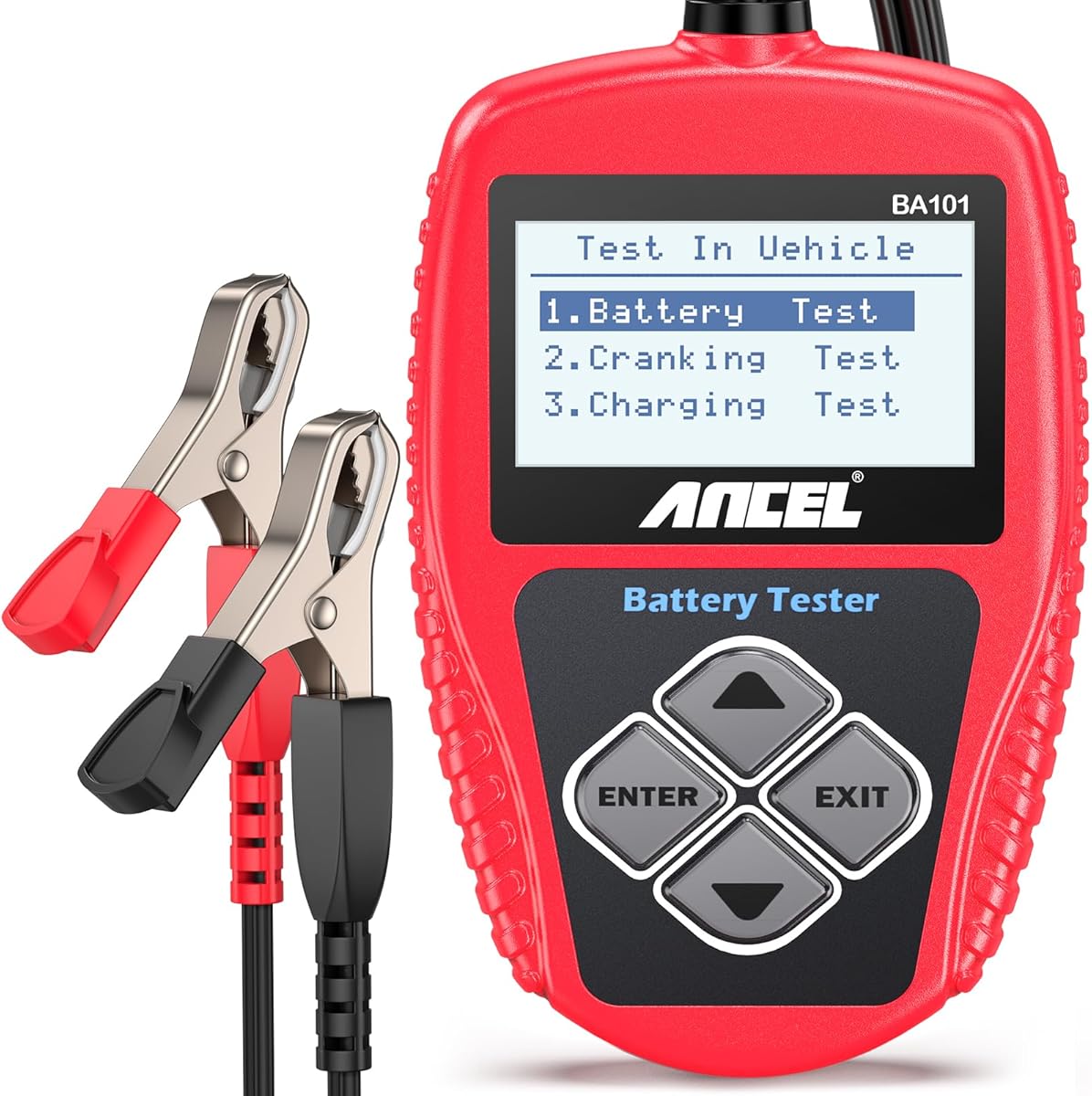
The ANCEL BA101 is a solid performer for standard twelve-volt automotive batteries. Its four point five star rating reflects its ability to deliver accurate readings on State of Health and State of Charge without requiring complex setup or calibration.
We may earn a commission when you buy through this link, at no additional cost to you.
One of its key strengths is the high-quality copper clips and precision smart chip that ensure dependable results. The classic black and white screen with adjustable contrast makes it easy to read data even in bright sunlight or dark garages.
The main limitation is that it does not support lithium batteries which may be a drawback for newer hybrid or electric vehicles. However for traditional combustion engines it provides all the necessary diagnostics including charging system checks at a reasonable price point.
This tester is best suited for users who work primarily with standard lead-acid batteries and want a durable reliable tool. Its simple interface and strong protection features make it a safe choice for everyday use.
The three times reinforced ABS housing and quality copper clips ensure the device lasts through repeated daily use.
Adjustable contrast and white backlight allow for clear reading of critical battery data in any lighting.
We may earn a commission when you buy through this link, at no additional cost to you.
This module is specifically designed for enthusiasts who need to test 18650 lithium batteries for DIY projects. With a rating of four point three stars it provides accurate capacity and internal resistance measurements essential for building reliable battery packs.
We may earn a commission when you buy through this link, at no additional cost to you.
The four-channel support allows you to test multiple cells at once saving time during quality control checks. The clear LCD screen displays real-time voltage power and current making it easy to monitor discharge cycles accurately.
The user manual is not physically included but can be requested from the seller via online channels. Despite this minor inconvenience the performance and data accuracy make it a valuable tool for anyone working with lithium cell configurations.
If you build custom battery packs or refurbish old cells this tester offers the precision needed to ensure safety and performance. It is a specialized tool that fits perfectly in the hands of hobbyists and engineers.
Test up to four cells at once to save time when sorting or validating large batches of batteries.
Internal resistance tracking helps identify weak cells before they cause issues in larger battery assemblies.
We may earn a commission when you buy through this link, at no additional cost to you.
The ANCEL BT310 combines affordability with high performance for those needing dual voltage support. Its four point five star rating highlights its ability to deliver precise measurements across various battery types including lithium-ion configurations.
We may earn a commission when you buy through this link, at no additional cost to you.
One of the most useful features is the built-in review function that lets you track battery performance over time. This history tracking helps you spot gradual degradation before the battery fails completely during critical use.
While the interface is straightforward, users must manually select the correct battery rating to ensure accuracy. This extra step is minor compared to the benefit of having reliable data without needing to guess about battery health.
This model is an excellent choice for users who need to monitor multiple vehicles or batteries over long periods. Its durability and data tracking features make it a practical addition to any automotive toolbox.
Review past test results to monitor trends and detect early signs of battery degradation over time.
Clear results like Good Battery or Replace Battery simplify decision-making for non-expert users.
We may earn a commission when you buy through this link, at no additional cost to you.
The TOPDON BT100 earns high marks for its simplicity and portability. With a rating of four point six stars it provides quick and reliable checks for standard automotive batteries without complicated menus or setup steps.
We may earn a commission when you buy through this link, at no additional cost to you.
Its passive testing method ensures safety by powering on only when correctly attached to the battery. The color LED indicators give you an instant visual signal about the battery health status without needing to interpret complex data.
While the lack of detailed text output might limit deep analysis the speed and ease of use make it ideal for quick checks. It is particularly useful for home mechanics who want to avoid guessing before starting a vehicle.
For users who prioritize speed and safety over detailed data, this is a fantastic compact option. It fits easily in a glove box and offers reliable performance for routine maintenance checks.
The unit powers on only when correctly connected preventing accidental shorts or device damage.
Color LEDs provide immediate status updates so you know battery condition at a glance.
We may earn a commission when you buy through this link, at no additional cost to you.
The RC Cellmeter 7 is a budget-friendly tool that delivers great value for hobbyists. With a rating of four point seven stars it is widely trusted for quickly checking cell voltages in RC vehicles and other lithium polymer packs.
We may earn a commission when you buy through this link, at no additional cost to you.
Its ability to show total voltage and voltage gap helps identify unbalanced cells that could cause performance issues. The compact size allows it to fit easily in a toolbox or kit without taking up much space.
While it does not store data or offer advanced features, its simplicity ensures you can get a quick reading in seconds. For the price, it is hard to find a more reliable way to check battery balance and health.
This tester is perfect for anyone building or maintaining small lithium battery packs. Its high rating reflects consistent performance and ease of use for both beginners and experienced hobbyists.
Instantly see the difference between highest and lowest cells to ensure safe pack balance.
Supports various battery chemistries making it versatile for multiple projects and applications.
We may earn a commission when you buy through this link, at no additional cost to you.
The FOXWELL BT705 is a trusted tool for mechanics who need reliable testing results. With a rating of four point five stars it provides accurate diagnostics on cranking and charging systems across twelve and twenty-four volt vehicles.
We may earn a commission when you buy through this link, at no additional cost to you.
The long five point nine feet cable allows you to sit in the driver seat while testing, which is very convenient for solo mechanics. This feature makes it easy to start the engine and view results simultaneously without help.
Although it lacks data storage, the clear screen and guided prompts make it easy to understand test results quickly. The included hard case ensures the unit stays protected during transport between jobs or garage bays.
For professionals who need consistent results and durability, this tester offers excellent value. Its reputation in testing videos and among mechanics confirms its reliability for daily use in repair shops.
The extra long cable lets one person test the vehicle while starting the engine without assistance.
Designed for repeated use in shops and fleets with a protective case and sturdy clamps.
We may earn a commission when you buy through this link, at no additional cost to you.
The FOXWELL BT705Plus is an enhanced version that offers speed and clarity for professional use. With a rating of four point five stars it delivers results faster than the original model making it ideal for busy shops.
We may earn a commission when you buy through this link, at no additional cost to you.
The high-contrast color LCD ensures clear visibility even in bright sunlight or dim garages. The three core tests allow you to diagnose battery cranking and charging issues sequentially without switching devices.
While it is more expensive, the improved speed and display quality justify the cost for frequent users. Note that it does not support lithium batteries which limits its use for modern hybrid vehicles but covers standard needs well.
If you need the fastest and clearest testing experience for standard vehicles, this model is the top choice. Its performance upgrades make it a premium tool worth considering for serious mechanics.
New processors deliver results up to thirty percent faster than previous generation testers.
High contrast color screen ensures all metrics are readable in any lighting environment.
We may earn a commission when you buy through this link, at no additional cost to you.
This magnetic tester is designed for checking household batteries quickly and efficiently. With a rating of four point five stars it handles a wide range of sizes from AA to 9V and various chemistries including lithium-ion cells.
We may earn a commission when you buy through this link, at no additional cost to you.
The magnetic slot holds the battery firmly so you can test with one hand without worrying about slipping. The digital display provides clear voltage and health status ensuring you never guess about a battery again.
It is rechargeable via USB-C which saves money on replacing internal batteries over time. The only limitation is that it is not built for high voltage automotive systems but is perfect for home and office use.
For checking remotes toys and flashlights this unit offers convenience and reliability. Its modern design and digital feedback make it a practical addition to any household toolkit.
The magnetic slider secures the battery so you can test easily without holding it manually.
USB-C input lets you recharge the unit repeatedly saving on waste and battery replacements.
We may earn a commission when you buy through this link, at no additional cost to you.
The La Crosse 911 is a simple and durable tool for checking common household batteries. With a rating of four point six stars it provides clear LED strength indicators that help you decide if a battery is good or needs replacement.
We may earn a commission when you buy through this link, at no additional cost to you.
Its operation involves three easy steps that anyone can follow without instructions. The tray mechanism ensures a secure connection while the LED shows voltage and strength levels clearly at a glance.
While it does not show numeric values, the strength indicators are sufficient for most home needs. The design is robust enough to withstand regular use in busy households where battery checks are frequent.
This tester is ideal for users who want a no-fuss solution for checking remotes toys and flashlights. Its simplicity and reliability make it a trusted choice for everyday battery management.
Select voltage insert and close tray to get an instant LED status indication.
LED lights show battery strength quickly so you know when to replace without complex data.
We may earn a commission when you buy through this link, at no additional cost to you.
Selecting the right tester depends on your specific needs and the types of batteries you encounter most often. This guide outlines key factors to consider before purchasing.
Ensure the tester supports the specific chemistries you need whether they are automotive lead-acid lithium-ion or small household cells. Some devices only work with twelve volt systems while others handle twenty-four volt or smaller button cells.
Check the product description for compatible types to avoid buying a unit that cannot test your specific batteries.
Most automotive testers cover twelve and twenty-four volt ranges which is essential for trucks and boats. Household testers focus on lower voltages for AA AAA and other common sizes.
Select a device that covers the full voltage range of your typical applications to ensure accurate and safe testing results.
High accuracy is critical for diagnosing health issues correctly without false positives. Look for testers with smart chips that deliver precise readings for State of Health and Internal Resistance.
Prioritize models with proven accuracy ratings to ensure your maintenance decisions are based on reliable data.
Safety protections such as reverse polarity and short circuit prevention are vital when testing live batteries. These features prevent damage to the tester and the battery in case of accidental misconnection.
Always choose a unit with built-in safety protections to ensure safe operation every time you perform a test.
A clear display is necessary for reading results in various lighting conditions such as bright sunlight or dark garages. Look for backlit screens or high-contrast displays that make data easy to interpret.
Opt for a tester with a well-designed screen to avoid eye strain and misreading critical health data.
Longer cables provide flexibility to reach batteries in tight spaces without moving the tester. Portability ensures you can store the device easily in a glove box or toolbox for on-the-go checks.
Consider the cable length and overall size to ensure the unit fits your workspace and storage needs.
Simple interfaces with clear instructions make testing faster and more accessible for non-experts. Features like one-handed operation or automatic mode detection reduce the time spent setting up tests.
Choose a model with intuitive controls to minimize setup time and focus on the results.
Robust materials such as reinforced ABS or silicone cases protect the tester from drops and wear over time. Durable clamps ensure consistent electrical contact for accurate readings.
Invest in a device built to last so it remains reliable through regular use in various environments.
Always start by reading the manual to understand the specific steps for your model. Turn on the device if required and select the correct battery type and voltage range to ensure the settings match the battery label.
Connect the red clamp to the positive terminal and the black clamp to the negative terminal ensuring good contact. For automotive units the device often draws power from the battery itself so ensure the vehicle is off during initial connection.
Run the test and wait for the results to appear on the screen. After testing clean the clamps and store the device in a dry place to prevent corrosion. Charge rechargeable units fully to maintain accuracy for the next test.
A lithium ion battery tester is used to measure the health capacity and internal resistance of lithium cells. It helps identify failing batteries before they cause device failure and ensures batteries are balanced before use.
No, standard car battery testers are designed for twelve or twenty-four volt lead-acid systems. Using them on smaller household cells can damage the tester or the battery due to high voltage and load mismatch.
It is recommended to test your vehicle battery at least twice a year especially before extreme weather seasons. Regular testing helps catch gradual degradation and prevents unexpected breakdowns during cold winter mornings.
Low State of Health usually indicates internal damage or age-related wear that reduces capacity. This means the battery cannot hold a full charge and should be replaced to maintain vehicle reliability.
No not all testers support twenty-four volt systems. Many basic models are limited to twelve volt applications so always check the product specs to confirm compatibility with larger commercial or marine vehicles.
CCA stands for Cold Cranking Amps which measures starting power at low temperatures. Ah stands for Ampere Hours which measures total energy storage capacity useful for deep cycle and backup applications.
Some charg allow charging tests while the engine runs to check the alternator but ensure all accessories are off. Always follow the manual safety guidelines to avoid electrical hazards during live system testing.
We have reviewed ten distinct models ranging from professional automotive units to household cell checkers. Each pick offers unique advantages depending on whether you need dual voltage support or small cell analysis.
Prioritize accuracy and safety features when making your decision to ensure reliable results. The right tool can save you money by diagnosing issues before they become major problems requiring replacements.
Remember that prices and availability fluctuate often so check current listings before purchasing. Use this guide to find the best match for your specific needs and budget.