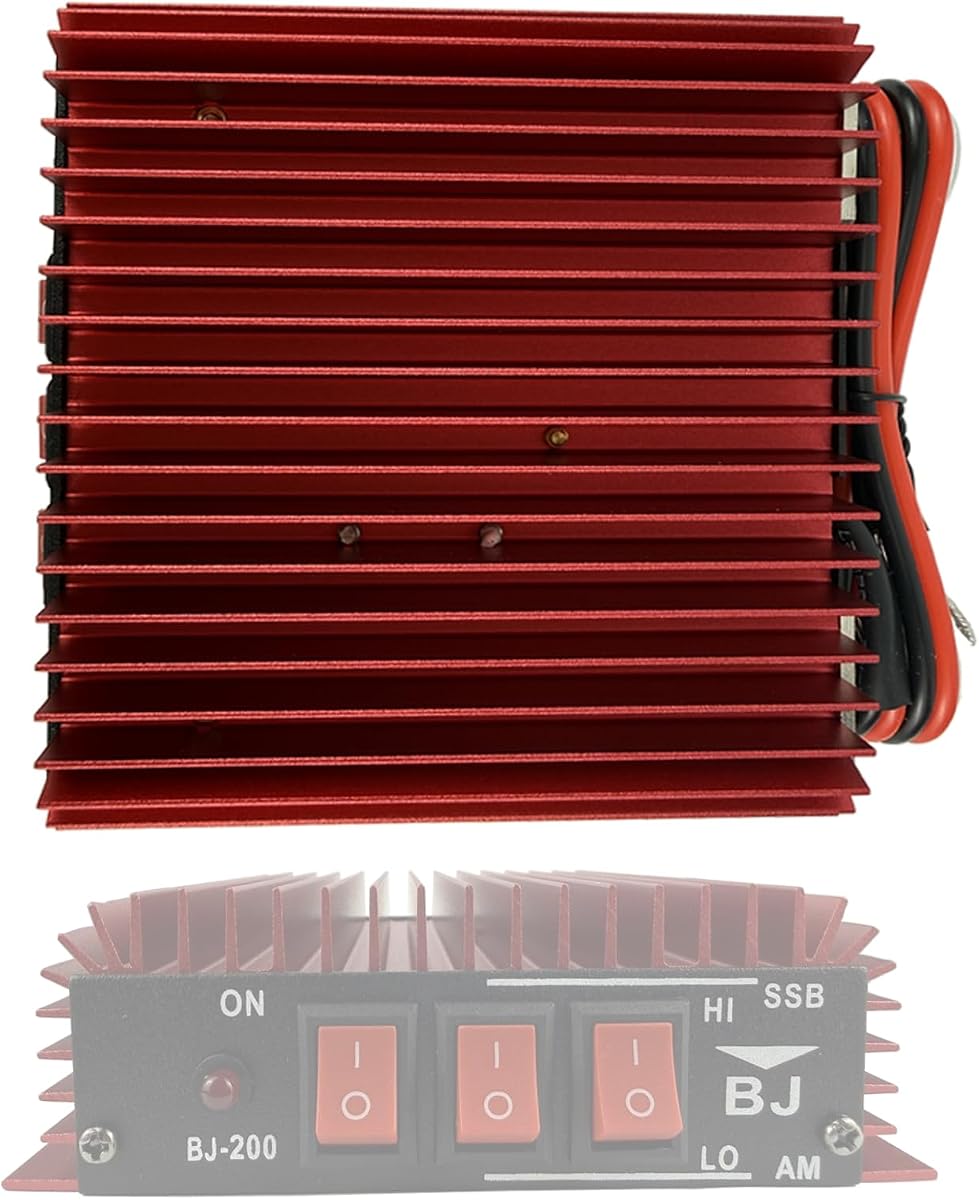
BJ-200 Linear
5.0Editor score
150W SSB output max
Compact durable build design
Polarity reversal protection
This guide compares the top ten linear amplifiers for ham radio operators, evaluating power output, compatibility, and protection features to help you choose.
Linear amplifiers for ham radio are essential tools for operators seeking to boost signal strength and extend communication range. Whether you are a seasoned amateur or new to the hobby, selecting the right amplifier can significantly enhance your transmitting capabilities across various bands.
We have carefully reviewed and compared ten leading models available in the current market. Our analysis focuses on technical specifications, user feedback, and practical performance metrics to ensure you receive accurate and actionable insights for your purchasing decision.
Each pick in this list highlights specific strengths and use cases to match different operational needs. Please note that product availability and pricing can change frequently, so we recommend verifying current details before finalizing your order with any retailer.
5.0Editor score

4.2Editor score

3.9Editor score
The following table provides a side-by-side comparison of all ten products featured in this guide. It highlights key specifications such as output power, frequency ranges, and specific protection features to help you quickly identify the model that best fits your requirements.


The Xiegu GPA100 stands out as a high-performance linear amplifier designed for HF radio transceivers. With a rating of 4.2 stars, it is praised for its clean and stable RF output up to 100W on HF bands. Its solid-state linear design ensures low distortion and exceptional signal purity across various modes.
We may earn a commission when you buy through this link, at no additional cost to you.
This model offers flexible band switching with seven bands selectable via manual buttons or auto mode for seamless tracking. The built-in Bluetooth allows wireless band control with supported devices like the IC-705. It also features smart cooling and intelligent protection against SWR, overheating, and overcurrent conditions.
While the GPA100 is an excellent choice for serious operators, the price reflects its advanced features compared to simpler amplifiers. The wireless functionality is a major perk but requires specific compatible radios. However, the robust protection and high efficiency justify the investment for reliable daily operation.
Operators looking to expand a QRP setup into a powerful 100W station should consider this unit. Its automatic band synchronization and ALC support make it safe and efficient for long transmissions. It is a top-tier choice for those prioritizing signal quality and modern convenience.
The solid-state design ensures minimal distortion, providing crystal-clear performance across all common amateur radio modes.
Intelligent control circuits detect high SWR and overheating to protect both the amplifier and connected radio from damage.
We may earn a commission when you buy through this link, at no additional cost to you.
The BJ-300 Plus is a broadband linear amplifier tailored for CB and ham radio users seeking extended communication range. With a rating of 3.1 stars, it delivers up to 150W on SSB and 100W on FM. It is designed to work with HF transceivers requiring modest input power.
We may earn a commission when you buy through this link, at no additional cost to you.
This unit features a reliable thermal management system with a cooling fan and aluminum heat sink to prevent overheating. Safety is addressed through electronic polarity reversal protection and dual fuses. The design is compact and user-friendly with simple power and mode selectors.
Despite its low price, some users report variability in performance or build quality. The basic controls are easy to use but lack advanced automation found in premium units. However, for those on a tight budget needing significant power boost, it remains a viable option.
This amplifier is suitable for operators who need a straightforward way to increase output power without complex setup. It works well with walkie talkies and CB radios. If you prioritize cost over advanced features, this model provides a practical entry point.
The inclusion of a radiator fan ensures stable operation even during extended use by preventing internal overheating.
Standard connectors and simple switches make installation quick for both new and experienced users.
We may earn a commission when you buy through this link, at no additional cost to you.
Similar to the first variant, this BJ-300 Plus model offers high-power performance for CB and ham radio operations. It supports AM, FM, SSB, and CW modes with outputs up to 150W on SSB. The product aims to extend communication range for reliable long-distance operation.
We may earn a commission when you buy through this link, at no additional cost to you.
Thermal management is handled by a high-efficiency cooling fan and large red aluminum heat sink. This helps prevent overheating and protects internal components during extended use. Safety is ensured with electronic polarity reversal protection and dual 15A fuses.
Users may find the build quality adequate for casual use but not robust enough for professional heavy-duty applications. The controls are straightforward, making it easy to adjust power levels. While ratings are lower, it remains a functional option for budget-conscious buyers.
This amplifier is ideal for hobbyists who need a basic boost in signal strength without investing in premium equipment. It is compatible with most HF band walkie talkies. If you value simplicity and low cost, this unit fits the bill well.
Compatible with HF transceivers and CB radios, offering versatile use across multiple communication platforms.
Polarity reversal protection guards against incorrect power connections, ensuring worry-free operation.
We may earn a commission when you buy through this link, at no additional cost to you.
The BJ-300 Broadband linear AMP is designed for HF transceivers with low power input requirements. It delivers up to 150W on SSB and supports various modulation modes including AM and FM. It aims to provide reliable signal amplification for radio applications.
We may earn a commission when you buy through this link, at no additional cost to you.
Key features include dual power control with HI/LO switches for adjusting output strength. Enhanced protection features safeguard against incorrect power connections through electronic switches and polarity inversion protection. The compact aluminum alloy heat sink construction aids in efficient heat dissipation.
While it lacks customer ratings in this dataset, the technical specifications suggest it is a capable unit for specific input ranges. The simple design makes it easy to integrate into existing stations. However, it may not suit those needing automatic band switching.
This amplifier is best for operators who want a straightforward boost to their HF signal without complex integration. It works well with standard CB and HF gear. If you prioritize durability and protection features, this model is a strong contender.
Switches allow you to adjust output strength based on operating needs and power conservation.
Small footprint with standard antenna ports ensures quick and easy installation in any station setup.
We may earn a commission when you buy through this link, at no additional cost to you.
The BJ-200 Linear Power AMP has achieved a perfect 5.0 rating from users, indicating high satisfaction. It supports AM, FM, and SSB modes across the 3-30MHz range. Delivering up to 150W on SSB from a 3-5W input, it is effective for boosting signal range.
We may earn a commission when you buy through this link, at no additional cost to you.
It features built-in polarity reversal protection and runs on 13.8V DC supply. The red aluminum alloy heat sink ensures optimal thermal management during continuous use. Controls include an ON/OFF switch and HI/LO power adjustment for easy operation.
While it performs excellently for its class, it is primarily designed for specific input power ranges which might limit compatibility with some transceivers. However, the user-friendly interface and safety features make it reliable. Its small form factor is ideal for mobile setups.
Operators looking for a compact and well-rated amplifier for two-way radio use will find this unit appealing. It is suitable for vehicle or base station installation. For a low-cost solution with excellent user feedback, this is a top choice.
The red alloy heat sink maintains stable performance and extends amplifier lifespan during continuous transmit cycles.
Clear switches and indicators simplify operation for both beginners and experienced enthusiasts.
We may earn a commission when you buy through this link, at no additional cost to you.
The Xiegu XPA125B is a versatile unit offering both a 100W power amplifier and an automatic antenna tuner. With a rating of 3.9 stars, it is praised for its ability to handle various loads in HF bands. It serves as a perfect amplifier for QRP radios needing higher output.
We may earn a commission when you buy through this link, at no additional cost to you.
It features intelligent protection circuits that detect SWR issues or high temperature and enter bypass mode. The large 2.7 inch LCD display shows detailed status information like voltage and current. The enhanced version is smaller and designed for better integration into stations.
The price point is higher than standard amplifiers due to the added tuner functionality. Some users may find the setup process complex compared to simpler units. However, the convenience of an integrated tuner makes it valuable for mobile or compact setups.
This device is ideal for operators seeking a comprehensive solution that reduces equipment clutter. It works well with low-power transceivers. If you value an all-in-one approach and high power in a compact package, this premium choice is worth considering.
The built-in tuner handles 14-500 ohm loads independently, offering flexibility in how the unit is used.
The large display provides real-time data on SWR and power, making operation simple and user friendly.
We may earn a commission when you buy through this link, at no additional cost to you.
The LICAEVEY 30W Shortwave Power Amplifier Board is designed for enthusiasts needing a signal boost for CW and SSB modes. It covers the full shortwave spectrum from 3MHz to 30MHz. The finished board provides ample boost for ham radio transceivers to enhance clarity.
We may earn a commission when you buy through this link, at no additional cost to you.
It uses advanced broadband circuitry to deliver consistent gain without manual tuning. The design includes a heat sink and low loss PCB material to handle extended transmit cycles. It is engineered for high efficiency with minimal distortion for serious DXers.
As a board module, it requires some level of integration or assembly which may not suit all users. However, its performance in specific bands is strong. The stable circuit design protects against overcurrent, ensuring reliability once installed.
This unit is best for DIY operators or those building custom stations. It is perfect for portable setups where space is limited. If you need a specific module upgrade for a QRP radio without a full box unit, this fits the bill.
Advanced circuitry ensures consistent gain across the entire shortwave range without needing manual tuning.
Integrated heat sink and low loss material handle extended cycles without overheating for reliable operation.
We may earn a commission when you buy through this link, at no additional cost to you.
This BJ-200 CB Radio Power Amplifier is built for simple three-wire connections using standard connectors. It supports wide DC input from 12-14V, ensuring stable operation during engine starts in mobile setups. It is designed to be compatible with most CB radios.
We may earn a commission when you buy through this link, at no additional cost to you.
The connection includes RF input, RF output, and DC power using SO-239 connectors. This simplicity makes it easy to integrate into existing antenna systems. The compact housing ensures it fits easily in vehicles or small spaces.
While it lacks detailed performance specs in the data, its design focuses on basic connectivity and stability. It may not offer high-end power boost compared to ham-specific units but works well for CB bands. The simple setup is a major benefit.
Operators looking for a straightforward CB amplifier without complex features will find this useful. It is ideal for basic mobile setups where space and ease of use are priorities. For a no-fuss signal boost, this model serves well.
Standard connectors and three-wire setup make installation quick and straightforward for most users.
Wide DC input range ensures stable performance even during engine start fluctuations.
We may earn a commission when you buy through this link, at no additional cost to you.
This Low Noise RF Amplifier is distinct as it focuses on reception rather than transmission boost. It offers 32dB gain across a vast range from 0.1MHz to 2000MHz. With a low noise figure, it significantly improves weak signal reception for SDR and ham radios.
We may earn a commission when you buy through this link, at no additional cost to you.
It operates on 9-12V DC with only 27mA current consumption, making it battery friendly for field use. The stable 50 ohm impedance ensures it works well with various antennas and receivers. It helps increase communication distance by cleaning up weak incoming signals.
Users should note this is a Low Noise Amplifier (LNA) meant for receive chains, not for boosting transmit power. It is not a substitute for power amplifiers but complements them by improving sensitivity. This distinction is vital when planning your station setup.
This unit is ideal for operators who struggle with weak signals in their area. It is suitable for SDR enthusiasts and field day setups. If you need to improve receiving quality without adding noise, this amplifier is an excellent add-on.
Designed as a preamp to improve weak signal reception rather than increase transmit power output.
Low current draw allows for portable use with lithium batteries or standard 12V adapters.
We may earn a commission when you buy through this link, at no additional cost to you.
This Xiegu XPA125B unit is specifically designed for compatibility with Xiegu host radios like the G90. With a rating of 4.1 stars, it delivers robust 100W output in HF ranges. It ensures maximum output power is automatically maintained for operational efficiency.
We may earn a commission when you buy through this link, at no additional cost to you.
The device features advanced automatic tuning to simplify the process for users. Constructed from high-quality materials, it promises durability and reliability for long-term use. The integration with specific models means seamless operation without complex adjustments.
While it is excellent for Xiegu users, those with other brands may not benefit from the specific integration. The price reflects its premium quality and specialized design. However, the consistent performance and support services add significant value.
Operators using compatible Xiegu transceivers will find this a seamless addition to their setup. It enhances efficiency and reduces manual tuning time. For those invested in the Xiegu ecosystem, this model is a reliable and professional choice.
Designed specifically for Xiegu transceivers, ensuring seamless integration and operational efficiency.
High-quality materials guarantee durability and reliability for long-term professional use.
We may earn a commission when you buy through this link, at no additional cost to you.
Choosing the right linear amplifier depends on your specific station needs, budget, and operating style. Understanding the key factors will help you select a model that balances performance with reliability.
Determine how much output power you actually need for your communication goals. While 100W is common for HF, higher power units exist for long-range contacts. Ensure your power supply can support the amp's demand without voltage drops.
Select an amplifier that matches your transceiver's capabilities and your typical operating conditions.
Check that the amplifier covers the frequency bands you intend to use. Some units are HF-only while others cover VHF or UHF. Ensure it supports the modes you use such as SSB, CW, or FM to avoid distortion.
Look for broadband models if you operate on multiple bands or narrowband for specific applications.
Advanced protection circuits are vital to prevent damage from high SWR or overheating. Features like automatic bypass or shutdown add safety for both the amp and your radio. Always prioritize models with robust thermal management.
Safety features ensure reliable operation during extended sessions without risking equipment failure.
Verify the input voltage requirements match your power supply setup. Mobile operators need units that handle 12-14V efficiently while base stations may use 13.8V DC systems. Compatibility prevents instability during transmission.
Choose a model that fits your existing power infrastructure to avoid costly adapter purchases.
Modern amplifiers often offer Bluetooth or automatic band switching. These features simplify operation by reducing manual intervention. Ensure the connectivity supports your transceiver brand for seamless integration.
Convenient connectivity options improve user experience and station efficiency.
Aluminum heat sinks and compact designs help with thermal management and portability. Evaluate the physical dimensions to ensure it fits in your intended space. High-quality materials contribute to a longer operational lifespan.
Durable construction ensures the unit withstands regular use and environmental conditions.
Check the warranty terms and availability of technical support from the manufacturer. Reliable support is crucial if you encounter issues during setup or use. Established brands often provide better service guarantees.
Good support provides peace of mind and protects your investment over time.
Balance the cost with the features offered to get value for money. Higher-priced units often include automatic tuners or wireless controls. Decide which features are essential versus nice-to-have for your situation.
Set a realistic budget that covers necessary features without overspending on unused capabilities.
Always connect the amplifier between your transceiver and antenna system using high-quality coaxial cables. Ensure all connectors are tight to prevent signal leakage or damage during transmission. Verify polarity when connecting DC power to avoid immediate damage.
Monitor the temperature during extended use to ensure the cooling systems are functioning properly. If the unit gets excessively hot, reduce duty cycle or improve airflow around the device. Regular checks prevent overheating and internal component failure.
Store the amplifier in a dry environment to protect internal electronics from humidity and corrosion. Use a cover or case when transporting to avoid physical damage. Regular cleaning of vents and connectors maintains performance and longevity over years of service.
A power amplifier boosts the signal strength for transmission to extend communication range. A low noise amplifier improves reception sensitivity to receive weak signals without adding noise. It is essential to use the correct type based on whether you are transmitting or receiving.
Not always. Some high-end amplifiers include built-in automatic antenna tuners which simplify station setup. However, many basic models do not include this feature and require an external tuner for impedance matching on specific bands.
Excessive heat can reduce efficiency and potentially damage internal components over time. Proper thermal management like heat sinks and fans is vital to maintain signal purity and longevity. Always ensure your amp has adequate airflow during use.
Most modern linear amplifiers are designed to be broadly compatible with standard HF and VHF radios. However, specific integration features like automatic band switching may only work with certain brands or models. Check the manual for exact compatibility details before purchasing.
High SWR indicates a mismatch that can reflect energy back into the amplifier. Without protection, this can cause overheating or permanent damage to the unit. Built-in circuits help prevent such damage by limiting output or shutting down automatically.
Yes but you need to ensure your vehicle power system can support the current draw. Look for units designed for 12-14V inputs and those with compact designs to save space. Proper mounting and grounding are essential for safe mobile operation.
Selecting the right amplifier significantly enhances your ham radio experience by improving signal strength and range. The ten models reviewed cover a wide spectrum from budget-friendly options to premium integrated solutions with advanced features.
Prioritize units that offer robust protection and compatible connectivity for your specific transceiver. While power is important, reliability and ease of use are equally vital for long-term satisfaction in amateur radio operations.
Remember that prices and availability fluctuate often so verify current stock before purchasing. Use the comparisons in this guide to make an informed decision that fits both your needs and budget for your next station upgrade.