
FLY RC Cellmeter 7
4.6Editor score
Compact lightweight design
Shows total and cell voltage
Works with LiPo and NiMH
This expert guide compares the top ten Li Ion Battery Tester models available in October 2026 to help you find the perfect device for your specific charging
Finding the right Li Ion Battery Tester is essential for anyone who relies on rechargeable power sources daily. These devices help you monitor health, capacity, and safety across various battery types efficiently.
We evaluated ten top-rated models based on accuracy, compatibility, ease of use, and additional features like balancing or discharge capabilities to ensure you get the best value.
Each selection below highlights unique strengths and potential limitations to guide your purchase. Please note that product availability and pricing may change frequently on the retail platform.
4.6Editor score
4.6Editor score

4.7Editor score
This side-by-side comparison highlights the key specifications and capabilities of each model to help you quickly identify the best fit for your application.


This module offers a straightforward way to check the capacity and internal resistance of 18650 cells without complex setups. It supports four channels simultaneously which is rare at this price point and displays real-time power data clearly on its LCD.
We may earn a commission when you buy through this link, at no additional cost to you.
The device handles charge and discharge cycles automatically saving you from disassembling equipment to test batteries. You can monitor voltage current and power levels in real time helping you identify weak cells quickly during maintenance or build tasks.
While it is cost-effective the manual is not physically included and must be requested from the seller. The measurement error is around ten percent which is acceptable for general diagnostics but might not suit precision engineering needs requiring tighter tolerances.
If you need an affordable way to verify bulk 18650 cells for projects or repairs this tester provides essential data reliably. It balances functionality with cost making it a solid starting point for hobbyists entering battery testing.
You can test up to four batteries at once saving significant time compared to single-channel units found in similar price ranges.
The screen shows voltage current and power simultaneously helping you understand battery performance under load instantly.
We may earn a commission when you buy through this link, at no additional cost to you.
This tester simplifies checking household batteries with a magnetic slot that holds cells securely during testing. It covers a wide range of sizes from AAA to 9V and displays clear health status on a precise digital LCD screen.
We may earn a commission when you buy through this link, at no additional cost to you.
Designed for convenience it uses a USB-C rechargeable battery that lasts up to fifteen hours on a single charge. You simply slide the battery in adjust the slider and the device automatically cycles through types or uses preset modes for quick checks.
The lack of a power adapter in the box requires a user-owned charger which might inconvenience some buyers. While it does not offer internal resistance metrics it provides sufficient voltage and health data for everyday home and office battery management.
Ideal for families or offices keeping track of AA and AAA batteries this unit removes the hassle of old-style probe testers. Its ergonomic design and reliable performance make it a top choice for general purpose testing.
The magnetic slider keeps batteries in place preventing slips during testing and allowing one-handed operation comfortably.
Built-in USB-C charging eliminates the need for disposable test batteries reducing long-term costs and waste.
We may earn a commission when you buy through this link, at no additional cost to you.
The RC Cellmeter 8 is a dedicated tool for remote control enthusiasts needing quick voltage checks on various cell types. It supports LiPo Li-ion NiMH and Nicd batteries ensuring versatility for different device requirements across hobby projects.
We may earn a commission when you buy through this link, at no additional cost to you.
Its user-friendly design features a large LCD screen and a one-click measurement button making it accessible even for beginners. The device prevents damage by setting a minimum operating voltage threshold which protects delicate electronics from over-discharge risks.
While it lacks advanced features like internal resistance monitoring it excels at providing rapid accurate voltage data for field use. The compact build fits easily in toolboxes or flight bags allowing convenient access during setup or maintenance sessions.
For RC hobbyists who primarily need to verify voltage levels before flight or operation this meter delivers reliable results. It strikes a good balance between simplicity and functionality for basic battery health assessments.
Minimum voltage protection helps prevent accidental damage to sensitive electronic components during testing procedures.
A single press initiates measurement reducing steps needed to verify battery status in the field.
We may earn a commission when you buy through this link, at no additional cost to you.
This meter stands out by offering a cell balancing function alongside standard voltage testing for LiPo and NiMH packs. It helps optimize battery performance and extend lifespan by ensuring individual cells are aligned during routine checks.
We may earn a commission when you buy through this link, at no additional cost to you.
Powered directly by the battery pack being tested it eliminates the need for external power sources or batteries. The internal resistance tester function provides deeper insight into battery health allowing you to make informed decisions about replacing older cells.
The requirement for specific balance connectors like Hitech or Futaba limits compatibility with packs lacking these interfaces. However for compatible users the built-in balancer and resistance data make it a versatile tool for maintaining multi-cell configurations.
Hobbyists looking to maximize their battery pack longevity will appreciate this unit's maintenance capabilities. It simplifies the balancing process significantly compared to separate dedicated balancers on the market.
Built-in balancing helps distribute energy evenly across cells improving runtime and preventing premature pack failure.
No need for external batteries simplifies the setup and reduces clutter during field or bench testing.
We may earn a commission when you buy through this link, at no additional cost to you.
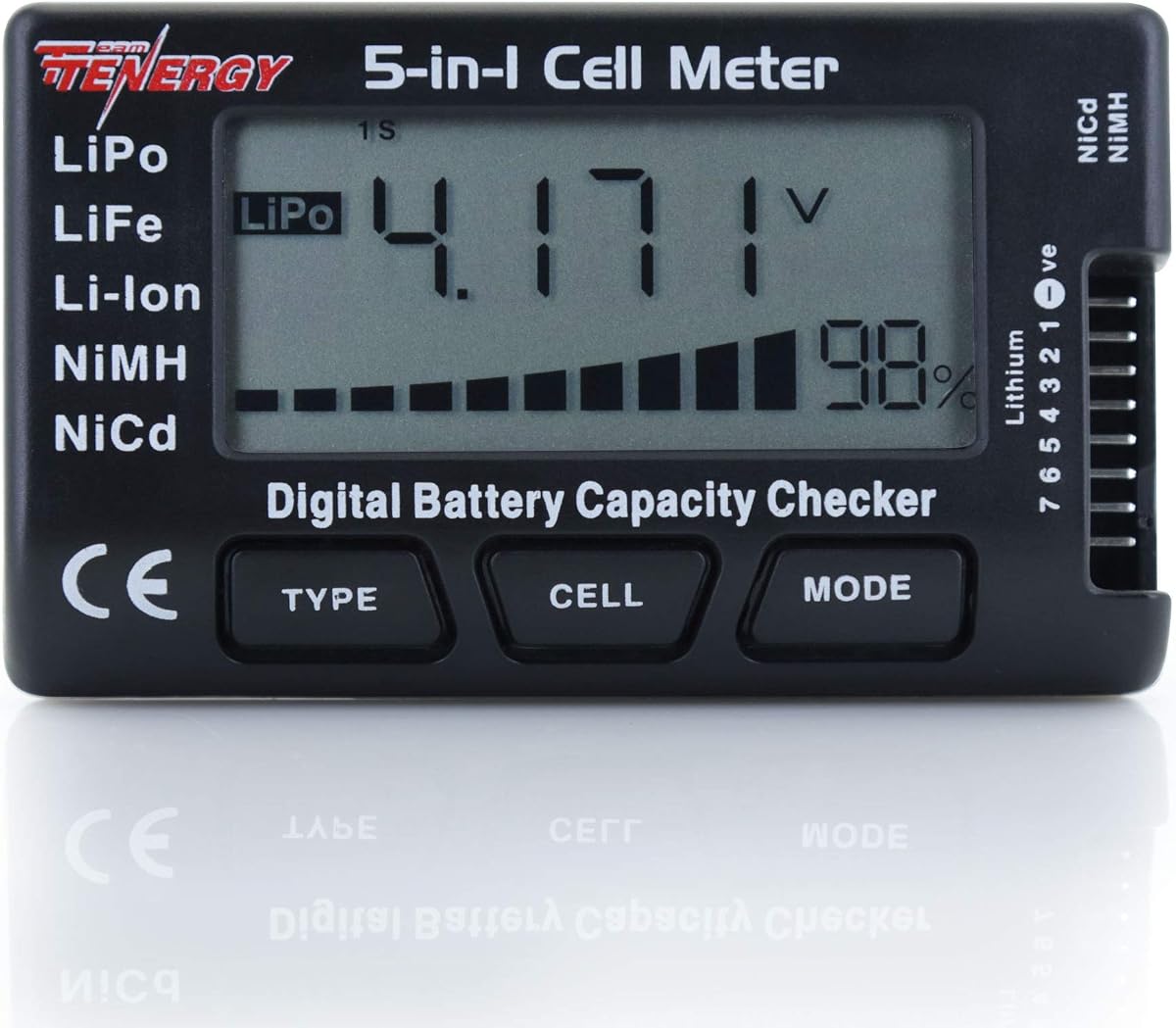
The FLY RC Cellmeter 7 is designed for portability and ease of use with RC vehicles and drones. It displays total voltage cell voltages and the gap between highest and lowest cells giving you a quick health overview.
We may earn a commission when you buy through this link, at no additional cost to you.
Its compact design fits easily into tight spaces and is light enough for daily carry without adding bulk. The device supports LiPo LiFe NiMH and Nicd batteries covering most common chemistries used in modern remote control applications.
While it lacks balance connector support it excels at providing immediate voltage readings and capacity percentage estimates. The low cost makes it an attractive option for casual users who primarily need to verify battery readiness before use.
For pilots and drivers needing a quick check before hitting the track this meter delivers essential data reliably. Its durability and simplicity ensure it remains a practical tool for routine inspections.
Viewing the voltage gap helps identify weak cells quickly allowing targeted replacements or checks.
Lightweight construction ensures the tool does not burden your gear bag during travel to the field.
We may earn a commission when you buy through this link, at no additional cost to you.
The ISDT BG-8S integrates smart technology through BattGO allowing detailed tracking of cycles and working parameters. It supports XT60i connections providing comprehensive battery health insights beyond simple voltage readings for advanced users.
We may earn a commission when you buy through this link, at no additional cost to you.
Functioning as a power bank it can charge mobile devices using the connected battery which adds significant utility in remote locations. The auto balancing algorithm ensures cells remain aligned while the device automatically enters low power mode to save energy.
While the unit is compatible with many connector types relying on XT60i for full smart features may limit its versatility slightly. Users must ensure their battery supports these protocols to unlock the full potential of the interface.
Tech-savvy RC users will find this tester offers deep diagnostics and practical charging utility. It bridges the gap between a simple checker and a comprehensive battery management tool effectively.
Detailed parameter logging helps you monitor battery degradation over time for better replacement planning.
Use the battery to charge phones or cameras ensuring you stay connected during field days.
We may earn a commission when you buy through this link, at no additional cost to you.
This advanced meter includes protocol analysis for PWM PPM and S.BUS allowing you to verify receiver signals alongside battery voltage. It serves as a comprehensive diagnostic tool for complex RC systems requiring precise signal verification.
We may earn a commission when you buy through this link, at no additional cost to you.
The device offers a maximum output of 12V and 2A making it suitable for charging mobile devices in addition to testing packs. Its compatibility with various balance leads ensures flexibility across different battery configurations and brands.
For casual users the advanced features may present a learning curve but they provide immense value for professionals. The receiver signal test ensures your equipment is functioning correctly beyond just the power source.
Enthusiasts building custom drones or vehicles will benefit from the diagnostic depth this meter provides. It simplifies troubleshooting by combining battery health and signal verification into one device.
Test BEC output and control protocols directly to ensure reliable communication between components.
Fast charging support for mobile devices means you can stay powered up during extended sessions.
We may earn a commission when you buy through this link, at no additional cost to you.
This unit offers eight independent channels for simultaneous testing and charging which is ideal for large batches of 18650 cells. The color screen provides real-time data on voltage current and cycles making monitoring intuitive.
We may earn a commission when you buy through this link, at no additional cost to you.
Safety is prioritized with reverse connection protection and active heat dissipation systems to prevent overheating during long cycles. It supports automatic models ensuring seamless charging and discharging sequences without manual intervention.
Users should note that no user rating is currently available so reliability must be judged on specs alone. The complexity of managing eight channels may be daunting for single-user setups but perfect for workshops.
If you maintain a large stock of lithium batteries this tester maximizes efficiency and safety. Its robust feature set makes it a strong candidate for professional or serious hobbyist work.
Test or charge up to eight cells at once significantly reducing wait time for large batches.
The color screen provides clear visual cues for status changes reducing errors during operation.
We may earn a commission when you buy through this link, at no additional cost to you.
The QWORK RC Battery Capacity Checker offers a quick way to verify voltage across LiPo and NiMH packs. It displays total and per-cell voltage clearly ensuring you have the data needed for safe operation.
We may earn a commission when you buy through this link, at no additional cost to you.
Its compact design makes it easy to carry to flight fields or race tracks. The device supports 2-7S packs which covers most common configurations used in drones and RC cars today.
Because it requires balance connectors it does not test single cells or charge batteries making it strictly a reading tool. For field use where speed matters its instant reading capabilities shine brightly.
Pilots looking for a simple no-fuss checker will find this model effective for routine inspections. It provides the essential data needed to prevent crashes caused by undervolted batteries.
A digital screen ensures instant visibility of cell conditions even in bright outdoor light.
Lightweight construction ensures the unit does not add significant weight to your portable gear.
We may earn a commission when you buy through this link, at no additional cost to you.
The ZTS Mini-Battery Load Tester uses pulse load technology to provide accurate results under load rather than just open voltage. This approach identifies failing batteries that might show a good static voltage but fail under usage.
We may earn a commission when you buy through this link, at no additional cost to you.
It requires no switches or settings making it completely automatic and fast with a two-second test cycle. The compact design allows for easy travel and the probe wires store conveniently in the seam of the unit.
While it is limited to standard sizes like AA AAA and 9V it excels in household and general electronic diagnostics. The patented technology ensures reliable results helping you decide when to recycle or keep a battery.
For household management and general electronics troubleshooting this device offers unmatched accuracy for its size. It is a practical tool for keeping track of battery health across all your devices.
Testing under load mimics real-world usage providing a more accurate assessment of remaining capacity.
Stored probes and small size make it easy to pack for trips or emergency kits.
We may earn a commission when you buy through this link, at no additional cost to you.
Selecting the right tester depends on your specific battery types and usage patterns. Consider these factors to ensure you get the tool that fits your needs perfectly.
Ensure the device supports the chemistries you use most such as Li-ion LiPo NiMH or Alkaline. Universal testers are versatile but specific models might offer better accuracy for niche packs.
Check the voltage range carefully to avoid damaging batteries or getting inaccurate readings outside supported limits.
Simple voltage testers give a quick snapshot while capacity testers measure total energy stored through discharge cycles. Decide if you need to know remaining runtime or just current health.
Capacity testing is more time-consuming but provides a deeper insight into battery degradation over time.
If you manage many batteries look for multi-channel units that test several cells simultaneously. Single channel testers are slower but often sufficient for occasional home use.
Multiple channels save significant time for workshops or hobbyists maintaining large inventories of cells.
Verify the device matches the connectors on your battery packs such as balance leads or XT series plugs. Some tools are limited to specific plug types which may require adapters.
Universal connectors increase flexibility but proprietary ones can simplify the testing process for specific devices.
A clear LCD or OLED screen is vital for reading data quickly in different lighting conditions. Look for units that show voltage current and temperature if possible.
Detailed displays help you catch issues before they cause equipment failure or safety hazards during use.
Some advanced testers include balancing or discharge functions which add value for maintaining multi-cell packs. These features help extend the life of your batteries significantly.
Consider if you need a standalone balancer or if an integrated function will suffice for your maintenance routine.
Rechargeable testers reduce long term costs compared to those needing disposable batteries. USB-C charging is now standard and convenient for modern power needs.
For field work a lightweight compact design ensures the device is easy to carry without adding bulk to your bag.
Look for built-in protections such as reverse connection or short circuit protection to safeguard your equipment. Reliable safety features prevent damage during accidental misconnection.
Choosing a device with proven safety ratings ensures peace of mind when handling high-energy lithium batteries.
Begin by matching the tester settings to your battery type and voltage range before inserting the pack. Always ensure connectors are clean and aligned correctly to avoid damage during insertion.
Observe the readings during discharge or charge cycles and note any significant drops in voltage. If a cell drops too quickly it may indicate internal damage requiring replacement or recycling.
Store the device in a cool dry place when not in use to preserve its internal electronics. Regularly clean the contacts with a dry cloth to maintain consistent connections and accuracy.
A simple voltage tester cannot measure total capacity as it only shows electrical potential. Capacity measurement requires a discharge cycle to determine how much energy the battery holds over time.
No you must use a tester specifically rated for lithium chemistries to ensure safety. Using incorrect voltage ranges can lead to inaccurate readings or potential hazards.
Many models support AA AAA and 9V alkalines while others are specialized for rechargeable packs. Check compatibility lists to confirm if it covers your specific household battery needs.
Batteries can show good voltage without load but collapse under usage due to high internal resistance. This is why pulse load or capacity testing is often more reliable.
Keep the connectors clean and store the device away from moisture. If rechargeable ensure the internal battery does not sit discharged for long periods to maintain its lifespan.
If you test frequently or have many cells they save significant time. For occasional use a single channel unit is more cost-effective and easier to operate.
We reviewed ten top models offering everything from budget-friendly options to advanced smart analyzers. Each device serves a specific niche ensuring you can find one that fits your usage level and budget.
Prioritize features like capacity measurement or balancing if you work with large lithium packs regularly. For general household needs a universal voltage tester might be sufficient.
Always verify current pricing and availability before purchasing since retail offers change often. Selecting the right tool ensures your batteries perform safely and last longer in your daily devices.