
Edifier MR3 Powered Studio Monitor, Speaker Hi-Res Active Bluetooth Speaker
4.5Editor score
Hi-Res Audio Certified
Bluetooth multi-point connection
3.5 inch drivers
Discover the top Edm Studio Monitor options for 2026. This guide compares ten leading models based on sound accuracy, connectivity, and room tuning features.
Finding the right Edm Studio Monitor is essential for producers who need accurate sound reproduction. These speakers help you hear every detail in your mix without coloration or distortion.
We compared ten top-rated models based on their drivers, amplification, and room tuning capabilities. Each option offers unique strengths for different budgets and studio environments.
Each pick shows key features and performance traits to help you decide. Please note that prices and availability can change over time on retailer sites.
4.5Editor score

4.8Editor score

4.6Editor score
This side-by-side comparison highlights the core specifications and performance traits of the top ten Edm Studio Monitor models available today.



The Yamaha HS5 stands out as a top choice for EDM producers needing reliable monitoring. With a 4.8 rating, it delivers clear sound without coloration.
We may earn a commission when you buy through this link, at no additional cost to you.
Its bi-amped system provides 70 watts of power ensuring dynamic range. The 5 inch woofer and 1 inch tweeter work together for precise imaging.
While it costs more than entry options, the accuracy justifies the investment. It helps you make better mixing decisions for professional results.
Ideal for home studios seeking reference quality. Its reputation among engineers makes it a safe bet for critical listening tasks.
The Yamaha HS5 emphasizes sonic purity without coloring the original sound. This ensures your mixes translate well across different playback systems.
Equipped with XLR and TRS inputs, the HS5 accepts balanced signals to reduce noise. This is essential for connecting audio interfaces in a studio setup.
We may earn a commission when you buy through this link, at no additional cost to you.
The PreSonus Eris E4.5 offers accurate sound in a compact form. With a 4.5 rating, it is great for smaller desks and budgets.
We may earn a commission when you buy through this link, at no additional cost to you.
It features woven-composite woofers that deliver tight bass. The front headphone output allows quick monitoring without switching cables.
The low end is limited compared to larger monitors. However, tuning controls help adapt the sound to your specific room size.
Perfect for beginners needing reliable reference. Its value and features make it a strong contender for entry level setups.
High and low frequency tuning controls let you customize audio output. This ensures the monitors sound balanced in your specific listening environment.
Back panel inputs include balanced TRS and unbalanced RCA. Plus a front aux input connects phones easily for media reference.
We may earn a commission when you buy through this link, at no additional cost to you.
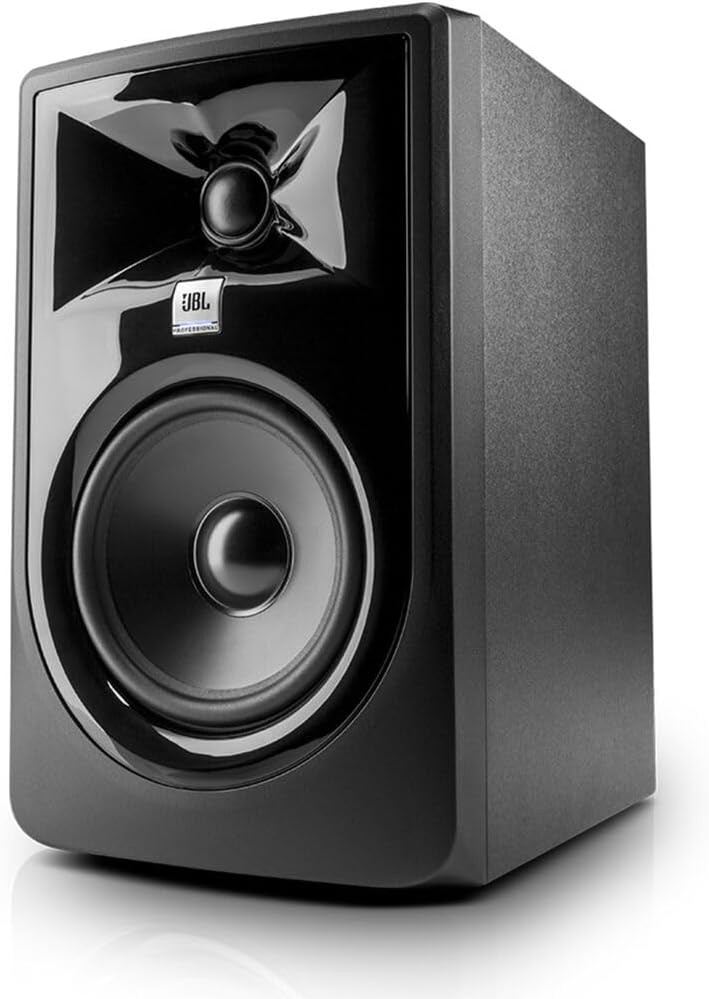
The JBL 305P MkII delivers precise imaging ideal for production. Its 4.7 rating reflects strong performance across various music genres.
We may earn a commission when you buy through this link, at no additional cost to you.
The patented Image Control Waveguide creates a wide sweet spot. Dual 41-Watt amplifiers ensure dynamic range and deep bass.
It lacks a headphone output which is a minor inconvenience. The Boundary EQ feature helps tailor the fit to any room.
Great for producers needing immersive sound. Its robust design ensures reliability for long mixing sessions.
The Waveguide delivers precise, immersive sound ideal for music production. This ensures instruments are placed accurately in the stereo field.
Low and high frequencies can be adjusted to suit any room. This ensures accurate mixes for producers working in non-ideal spaces.
We may earn a commission when you buy through this link, at no additional cost to you.
The Edifier MR3 brings Hi-Res Audio to affordable studio monitors. With a 4.5 rating, it delivers flat response for precise monitoring.
We may earn a commission when you buy through this link, at no additional cost to you.
Bluetooth multi-point connectivity allows easy streaming. The app lets you fine-tune sound for different modes like Music or Monitor.
The small drivers limit low end output. However, for near field mixing in small rooms, the clarity is impressive.
Perfect for budget conscious creators. Its features and price make it a strong choice for casual production.
The monitor delivers a flat response across 52Hz to 40kHz. This ensures accurate monitoring for music creation and everyday listening.
The EDIFIER ConneX app offers in-depth adjustments. This allows you to customize your sound for your specific needs.
We may earn a commission when you buy through this link, at no additional cost to you.
The PreSonus Eris E7 XT offers deep lows and smooth highs. With a 4.8 rating, it provides accurate sound for professional work.
We may earn a commission when you buy through this link, at no additional cost to you.
The EBM waveguide yields a wide sweet spot and solid imaging. Acoustic tuning controls allow tailoring the monitor to your space.
It comes with a valuable software bundle worth over $1000. However, it is sold as a single unit which affects total cost.
Great for those needing more bass. Its precision and features make it an excellent mid-range option.
The EBM waveguide yields a wide sweet spot and solid imaging. This ensures consistent sound quality across different listening angles.
Level, HPF, LF Trim, HF Trim controls allow tailoring to space. This ensures the monitor fits your specific room acoustics.
We may earn a commission when you buy through this link, at no additional cost to you.
The Ortizan C7 offers studio-like sound at a low price. With a 4.6 rating, it captures digital audio well via its DAC.
We may earn a commission when you buy through this link, at no additional cost to you.
Bluetooth 5.3 ensures stable wireless streaming. The balanced input allows connection to professional mixers and consoles.
The build is basic compared to pro models. But for casual listening and light work, it offers great value.
Perfect for those on a tight budget. It brings monitoring features to entry-level users effectively.
The built-in 24-bit DAC captures digital audio directly via USB. This minimizes signal loss and maximizes sound fidelity.
With the TRS balanced input, it can connect to mixers. This allows building a small music production system easily.
We may earn a commission when you buy through this link, at no additional cost to you.
The KALI AUDIO LP-6 V2 provides superior sonic accuracy. With a 4.5 rating, it emits sounds as they are without alterations.
We may earn a commission when you buy through this link, at no additional cost to you.
Its bi-amped system delivers 80 watts of power. The updated boundary EQ ensures high-quality audio output in any setup.
It lacks chuffing and hissing due to noise reduction. However, the low end is limited for an 80 watt system.
Ideal for precise mixing tasks. Its flat frequency response is highly valued by professionals.
The monitor has a robust DSP system for flat frequency response. This ensures sounds are emitted as they are in your mix.
The updated boundary EQ ensures high-quality audio in any setup. This allows you to place monitors on stands or desks.
We may earn a commission when you buy through this link, at no additional cost to you.
The Edifier MR5 delivers high fidelity with 110W RMS power. With a 4.5 rating, it supports LDAC for wireless quality.
We may earn a commission when you buy through this link, at no additional cost to you.
Its 3-way active crossover ensures accurate audio reproduction. Room acoustic tuning via the app tailors sound to your space.
It is expensive and large compared to smaller monitors. But the power and detail justify the cost for serious studios.
Perfect for professionals needing top performance. Its wireless and wired options offer great versatility.
The 110W RMS Class D amplifier delivers 101dB peak SPL. This is ideal for near-field studio use or mid-sized rooms.
It supports 24-bit/96kHz wired and wireless LDAC audio. This ensures crystal-clear high-resolution sound for streaming.
We may earn a commission when you buy through this link, at no additional cost to you.
The Mackie CR4.5BT combines studio sound with gaming features. With a 4.7 rating, it offers transparent response and tone control.
We may earn a commission when you buy through this link, at no additional cost to you.
The tone knob allows shaping sound for parties or gaming. The location switch optimizes the monitors for desktop or bookshelf.
The tone knob adds coloring which is not pure monitoring. But this versatility makes it great for multi-use spaces.
Perfect for hybrid users. Its clean sound and features make it a great choice for gaming.
Use the tone knob to shape the sound for gaming. This adds bass or high-end sparkle for immersive listening.
Flip the switch to optimize for desktop or bookshelf mode. This ensures better sound depending on placement distance.
We may earn a commission when you buy through this link, at no additional cost to you.
The Yamaha HS8 provides deep bass with an 8-inch woofer. With a 4.6 rating, it is a reference standard for producers.
We may earn a commission when you buy through this link, at no additional cost to you.
Its 120W bi-amp system ensures performance across frequencies. The advanced magnetic circuit design supports deep lows.
It is expensive and large which limits small studio fit. But for those needing bass accuracy, it is top tier.
Ideal for mixing and mastering. Its reputation makes it a reliable choice for critical listening.
The 8-inch cone woofer delivers 38Hz to 30kHz response. This ensures you hear deep low frequencies accurately.
Large magnets in an Advanced Magnetic Circuit design support performance. This ensures consistent sound even at high volumes.
We may earn a commission when you buy through this link, at no additional cost to you.
Selecting the right Edm Studio Monitor requires understanding key factors like size, power, and connectivity.
Monitor size impacts the frequency response and bass reproduction. Smaller monitors like 4.5 inches fit tight desks but lack deep lows. Larger 8-inch models provide bass but need more space.
Power ensures dynamic range and volume. Look for bi-amped systems that separate bass and treble drivers. Higher wattage allows louder volumes without distortion.
Connectivity allows connecting various devices. Balanced inputs like XLR and TRS reduce noise. Bluetooth supports wireless streaming for media reference.
Room tuning adjusts the sound to your space. HF and LF trim allow customizing frequencies. This ensures accurate mixing in non-ideal rooms.
Budget dictates your options. Entry-level monitors cost less but lack features. Premium options offer better accuracy and durability for long-term use.
Sound accuracy is crucial for editing. Flat response ensures mixes translate well. Look for models known for transparency and low distortion.
Driver material affects sound quality. Composite or silk dome tweeters provide smooth highs. Look for quality materials for better fidelity.
Sweet spot size ensures clear sound from different angles. Waveguides and designs help widen this area. This is important for collaborative sessions.
Place your monitors at ear level and equidistant from you. Angle them slightly inward to face your head for best imaging.
Use acoustic treatment to reduce room reflections. This ensures you hear direct sound from the monitors without interference.
Clean monitors with a soft dry cloth. Avoid liquids near input panels. Turn off and unplug before moving or cleaning.
A good Edm Studio Monitor provides flat frequency response for accurate sound. It should have balanced inputs, room tuning controls, and enough power for your space.
Connect using TRS or XLR cables from the interface to the monitor inputs. Ensure the monitor volume is low when starting to avoid pops.
Not necessarily. Larger monitors offer more bass but require more space. Choose a size that fits your room and listening distance.
Bluetooth adds convenience but may introduce latency. Use wired connections for precise mixing and Bluetooth for casual listening.
Balanced inputs reduce noise and interference. They are essential for professional audio quality in studio environments.
Yes, especially in non-treated rooms. They help correct sound imbalances caused by your room's acoustics.
50 watts to 80 watts is sufficient for home studios. Larger rooms may require 100 watts or more for adequate volume.
Dust regularly with a soft cloth. Keep away from moisture. Avoid placing heavy objects on top or near the drivers.
Choosing the best Edm Studio Monitor depends on your specific needs and budget. Whether you pick the Yamaha HS5 for accuracy or the Edifier MR3 for value, ensure it meets your requirements.
Prioritize sound accuracy and connectivity options. Room tuning controls are also vital for adapting to your environment effectively.
Check current prices and availability as they can change. Investing in the right monitor ensures better mixes and a smoother production process.