
Luster Leaf 1625 Digital Soil Thermometer
4.2Editor score
Simple dedicated soil thermometer
Ideal for early season planting
Affordable and reliable tool
This guide compares the top digital soil thermometers for accurate temperature readings to help you plant seeds and manage compost effectively.
Finding the right digital soil thermometer helps you monitor root zone conditions for healthier plants and successful gardening projects year round.
We evaluated ten highly rated models based on accuracy, durability, ease of use, and additional features like moisture and pH sensing.
Each pick highlights key strengths and ideal use cases so you can choose the tool that fits your specific gardening needs perfectly.
4.2Editor score

4.2Editor score

4.2Editor score
The following table offers a side by side comparison of all ten models to help you quickly identify the best fit for your garden.




The YAMRON 4-in-1 Soil Moisture Meter stands out as a top choice for gardeners needing comprehensive soil data. With a rating of 4.2 stars it delivers reliable readings across moisture pH temperature and light levels.
We may earn a commission when you buy through this link, at no additional cost to you.
Its standout quality is the combination of multiple sensors in one device allowing you to assess plant health holistically. The large LCD with white backlight ensures you can read values clearly even in low light conditions.
While the probe requires moist soil for accurate readings it avoids damage risks associated with dry hard ground. This trade off is acceptable given the precision and speed of the measurements provided.
This tool is ideal for indoor and outdoor plant owners who want scientific data without complex equipment. It offers a balanced mix of features and ease of use for most gardening needs.
The four in one function lets you track moisture pH temperature and sunlight simultaneously for better plant care decisions.
Visual content design and a rotating head make reading data comfortable and intuitive for all users.
We may earn a commission when you buy through this link, at no additional cost to you.
The Luster Leaf 1625 Digital Soil Thermometer is a straightforward tool designed specifically for checking soil temperatures. It holds a solid 4.2 star rating among users who value simplicity.
We may earn a commission when you buy through this link, at no additional cost to you.
Its key strength lies in its focused purpose helping gardeners determine the right time to plant seeds or transplant seedlings. This dedicated function ensures accuracy where it matters most for early season gardening.
Because it measures only temperature it lacks the versatility of multi-function testers. However this limitation makes it more affordable and easier to operate for those who only need thermal data.
This thermometer is perfect for budget conscious gardeners or those who already have separate tools for moisture and pH. It provides essential data without unnecessary features or complexity.
Designed specifically for determining soil temperature when planting in early season or transplanting for optimal growth.
A budget-friendly option that delivers reliable temperature readings without the cost of additional sensors.
We may earn a commission when you buy through this link, at no additional cost to you.
The Moisture Meter for Plants 7-in-1 offers an extensive range of testing capabilities in a single device. With a 4.4 star rating it appeals to users seeking detailed soil and water quality insights.
We may earn a commission when you buy through this link, at no additional cost to you.
Its key strength is the inclusion of fertility EC and TDS functions which help track nutrient levels alongside temperature and moisture. This comprehensive data supports science-based plant care across various environments.
The device requires soil to be moist before testing to avoid probe damage and ensure accuracy. This step is a minor inconvenience compared to the depth of information it provides.
Ideal for serious gardeners and farmers this kit replaces multiple tools with one versatile unit. It is particularly useful for those monitoring complex growing conditions or hydroponic setups.
Fertility EC and TDS functions allow you to assess soil nutrient levels and water quality effectively.
Extra large screen with backlight makes reading detailed numerical parameters easy in any lighting condition.
We may earn a commission when you buy through this link, at no additional cost to you.
The Reotemp K83B1 is a rugged analog thermometer built for compost and soil temperature tracking. It holds an impressive 4.7 star rating reflecting its reliability and durability among composters.
We may earn a commission when you buy through this link, at no additional cost to you.
Its standout feature is the 12 inch stainless steel stem which penetrates compost piles effectively to monitor heat levels for efficient decomposition. The included guide helps beginners manage their compost successfully.
While it lacks digital display features it is highly durable and waterproof for outdoor use. This makes it suitable for harsh conditions where electronic sensors might fail.
This tool is recommended for compost enthusiasts and gardeners who need a tough and accurate thermometer. It simplifies compost management with clear temperature ranges for active breakdown.
Corrosion resistant stainless steel and waterproof design ensure longevity in wet and active compost environments.
Free digital composting guide included helps users understand temperature ranges for efficient compost production.
We may earn a commission when you buy through this link, at no additional cost to you.
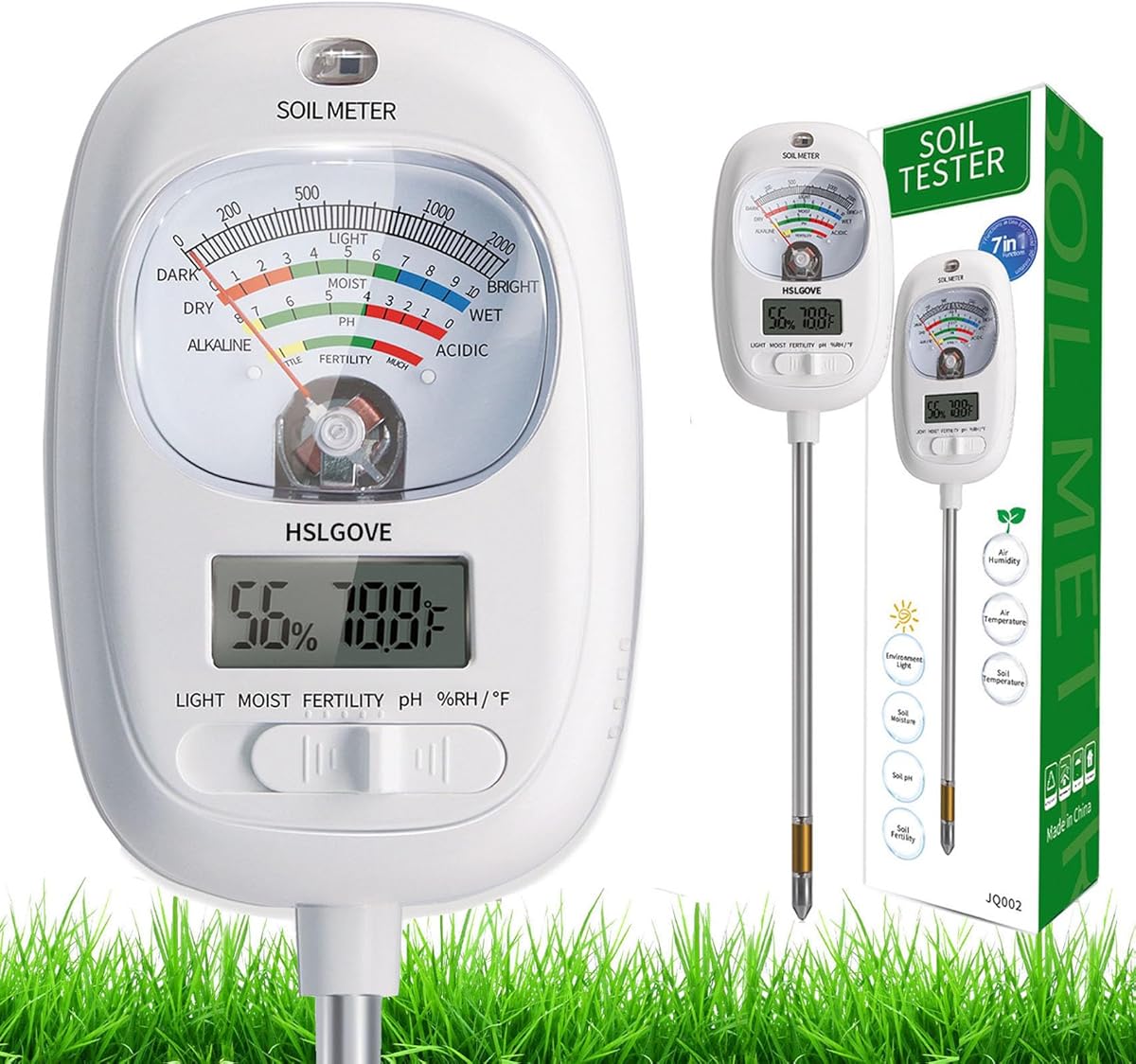
The HSLGOVE Soil Test Kit features a unique dual screen design that displays soil and air conditions simultaneously. With a 4.4 star rating it serves beginners well with its all-in-one approach.
We may earn a commission when you buy through this link, at no additional cost to you.
Its key strength is the ability to monitor both air temperature and soil temperature alongside moisture and pH. This helps in understanding the full microclimate affecting plant growth.
The single probe design is less invasive to roots but requires careful insertion to avoid damage in dry soil. This trade off is worth the convenience of a single tool.
This kit is suitable for home gardeners needing broad environmental data. It simplifies monitoring by combining multiple sensors into one unit.
Separate displays for soil and air temperature provide clear insights into growing conditions.
Three metal material probe ensures accuracy and durability for long-term use in various soils.
We may earn a commission when you buy through this link, at no additional cost to you.
The Urban Worm Soil Thermometer is designed specifically for vermicomposting enthusiasts who need precise temperature control. It holds a 4.6 star rating for its effectiveness in worm bins.
We may earn a commission when you buy through this link, at no additional cost to you.
Its standout feature is the color coded tick marks indicating optimal ranges for worm activity. This visual system makes monitoring simple without needing to interpret numbers.
The 5-inch stem is perfect for standard worm bins but may not reach deep garden soil. This limitation ensures it fits well in its intended use case.
This tool is ideal for anyone managing worm compost systems. It ensures worms stay within their preferred temperature range for healthy decomposition.
Green yellow and red tick marks allow for easy monitoring of worm bin temperatures at a glance.
Five inch stem fits perfectly into worm compost bins for accurate depth measurement.
We may earn a commission when you buy through this link, at no additional cost to you.
The ECOWITT WN34BS offers remote monitoring capabilities that set it apart from standard soil thermometers. It has a 4.2 star rating among tech-savvy gardeners and farmers.
We may earn a commission when you buy through this link, at no additional cost to you.
Its key strength is wireless data transmission to a gateway allowing real-time tracking via apps and email alerts. This enables monitoring of large areas or greenhouse conditions without visiting the site.
The device requires an optional gateway for full smart features which adds to initial cost. However the convenience of remote access justifies the investment for larger setups.
This system is best for advanced users managing multiple locations. It provides detailed historical data and alerts for proactive plant care.
View live data and history via app or website using a compatible Wi-Fi gateway.
Track up to eight channels including separate sensors for soil and water temperature needs.
We may earn a commission when you buy through this link, at no additional cost to you.
The Digital Soil EC Meter specializes in measuring electrical conductivity and temperature for nutrient management. It has a 4.1 star rating for its professional accuracy in soil testing.
We may earn a commission when you buy through this link, at no additional cost to you.
Its key strength is the ability to assess salt content in soil which is crucial for healthy plant growth. The automatic temperature compensation ensures readings stay accurate across varying conditions.
Calibration is required periodically using a specific solution which adds a maintenance step. This ensures long term reliability of the conductivity readings.
This tool suits gardeners focused on optimizing soil nutrients. It provides insights into fertilizer needs and soil quality effectively.
Measure electrical conductivity to understand salt levels and nutrient availability for plants.
Simple automatic calibration ensures accurate readings over time with proper maintenance.
We may earn a commission when you buy through this link, at no additional cost to you.
The 4-in-1 Soil Moisture Meter enables monitoring of multiple plants with a single central display. It holds a 4.5 star rating for its convenience and ease of use.
We may earn a commission when you buy through this link, at no additional cost to you.
Its key strength is the wireless range allowing you to check conditions from indoors or across the yard. This saves time and effort managing large indoor or outdoor collections.
While the display connects to up to 12 sensors additional probes are purchased separately. This scalability makes it ideal for expanding plant collections.
This system is best for gardeners with many pots or beds. It streamlines care by consolidating data into one view.
Check plant conditions from across your home and yard with long wireless range.
Expand your system with up to twelve sensors managed by a single display unit.
We may earn a commission when you buy through this link, at no additional cost to you.
The 7 in 1 Soil Meter uses a five probe system for enhanced precision in varied conditions. It has a 3.9 star rating but offers robust features for demanding environments.
We may earn a commission when you buy through this link, at no additional cost to you.
Its key strength is the durable corrosion resistant probes designed for tough compacted soil. This makes it suitable for commercial farms or rough garden conditions.
It requires a waiting period for pH values to settle which slows testing but improves accuracy. This trade-off is necessary for reliable data in complex media.
This tool is recommended for professional growers. It provides reliable data for large scale farming and diverse soil types.
Five high-quality metal probes optimize calibration for faster and more precise readings.
Built to withstand long-term outdoor exposure without losing sensitivity or durability.
We may earn a commission when you buy through this link, at no additional cost to you.
Selecting the right soil thermometer depends on your specific gardening needs and environment.
Consider whether you need just temperature or combined moisture pH and light readings. Multi-function testers save cost but single focus devices may be more reliable.
Look for stainless steel probes that resist corrosion. Quality probes ensure longevity and accuracy especially in wet soils or compost.
A large LCD screen with backlight is helpful for low light conditions. Ensure numbers are clear enough to read without straining your eyes.
Check if the device uses standard batteries and how often they need replacement. Some models have low battery alerts to prevent unexpected shutdowns.
Wireless sensors allow remote monitoring which is great for large gardens. Consider the range and any gateway requirements before purchasing.
Ensure the thermometer is suitable for your use case such as indoor pots outdoor beds or compost. Waterproof ratings help protect against weather exposure.
Some models require regular calibration for accuracy. Choose a tool that balances precision with user-friendly setup steps.
Advanced meters offer electrical conductivity or humidity tracking. Decide if these metrics are valuable for your specific plant types.
Insert the probe into the soil to the recommended depth usually about 4 inches or 10 centimeters for accurate readings.
Wait for the specified time often around 10 seconds or more for pH values to stabilize before recording the data.
Clean the probe after each use with water and dry it before storage to prevent corrosion and maintain accuracy.
For most applications insert the probe 4 inches to 10 centimeters into the soil. This depth reflects the root zone temperature accurately for plant health.
Most models are not designed for liquid immersion. Use only water-resistant or waterproof models if testing liquid conditions to avoid damage.
Basic models typically do not need calibration but EC meters or advanced testers may require periodic calibration for accurate electrical conductivity readings.
After use wipe the probe clean with a damp cloth and dry thoroughly. Store it in a dry place to prevent rust or corrosion.
Most soil testers use AAA or AA batteries. Check the device manual to know exactly how many and what type your model requires.
If you manage large areas or greenhouses wireless sensors save time by sending data to your phone. They are valuable for remote monitoring.
Temperature readings are usually instant but pH or fertility tests may take up to 60 seconds to settle. Patience ensures accurate results.
Some models support hydroponic substrates but avoid submerging standard probes in water. Check product specifics to confirm compatibility.
The YAMRON and ECOWITT models lead with versatile features and wireless options for modern gardening.
Prioritize durability and display clarity to ensure long-term value and ease of use.
Always check current product availability and features to find the best fit for your specific needs.