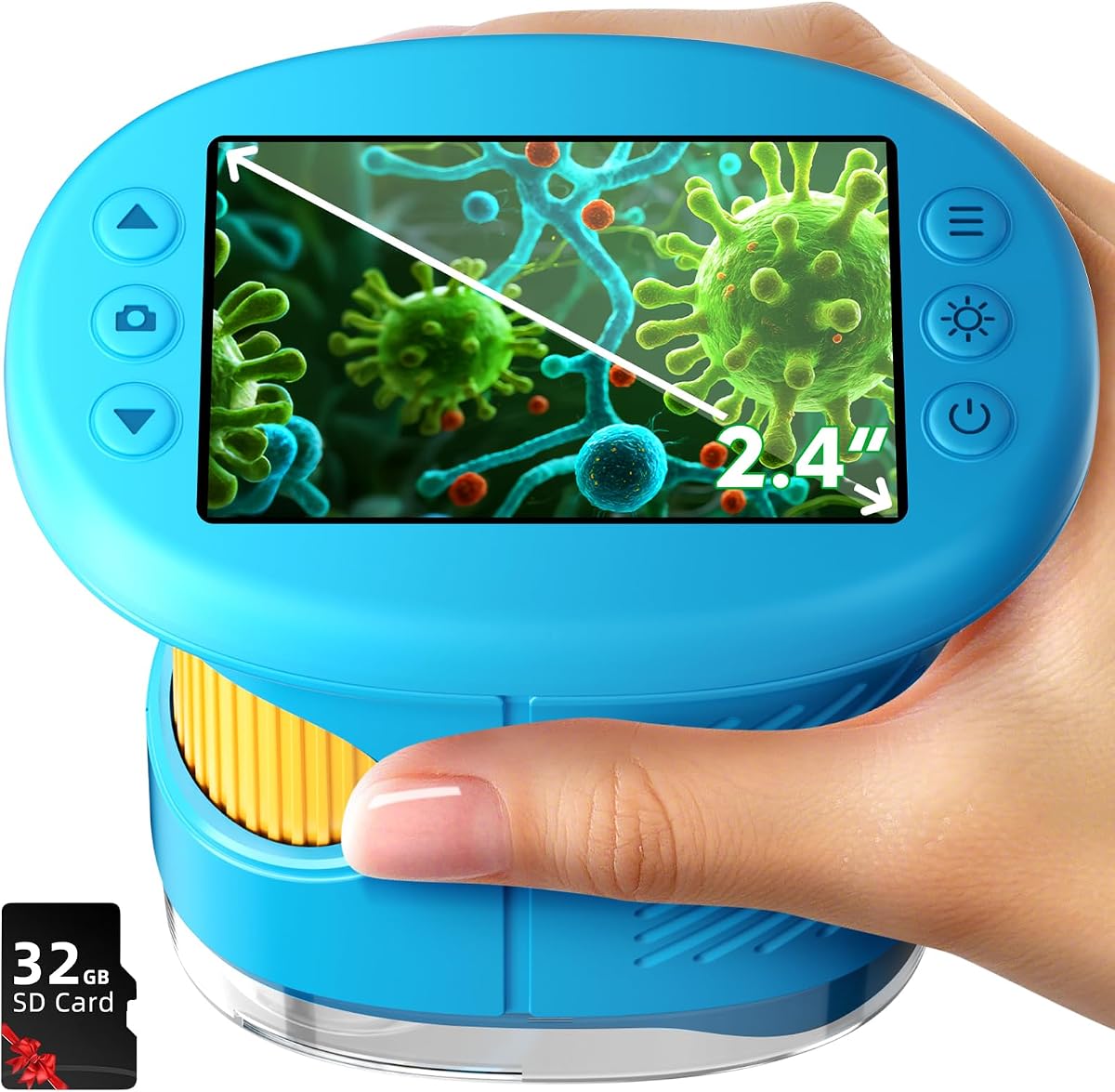
Odatay 4K Digital Microscope
4.5Editor score
4K HD camera and display
Includes 32G storage card
Lightweight portable design
Discovering the hidden world of insects requires the right tools for clear observation. A digital microscope for studying insects brings macro details to your screen, making education and research accessible. These devices combine magnification with digital recording to capture moments that traditional lenses might miss.
We analyzed ten top-rated models focusing on clarity, connectivity, and ease of use for young explorers and hobbyists. Each product was evaluated on magnification range, screen quality, and battery life to ensure reliable performance during field studies. Our goal is to help you find the perfect tool for your specific entomology needs.
Every selection in this guide highlights unique strengths from portable budget options to advanced 4K systems. You will find detailed breakdowns of features, pros, and cons to inform your decision-making process. Prices and availability may vary over time, so checking current listings is recommended before purchase.
4.5Editor score

4.2Editor score

4.5Editor score
As an Amazon Associate we earn from qualifying purchases.
The following table provides a side-by-side comparison of the ten selected digital microscopes. This overview highlights key specifications such as magnification limits, screen types, and connectivity options to help you quickly identify the model that best fits your research or educational requirements.
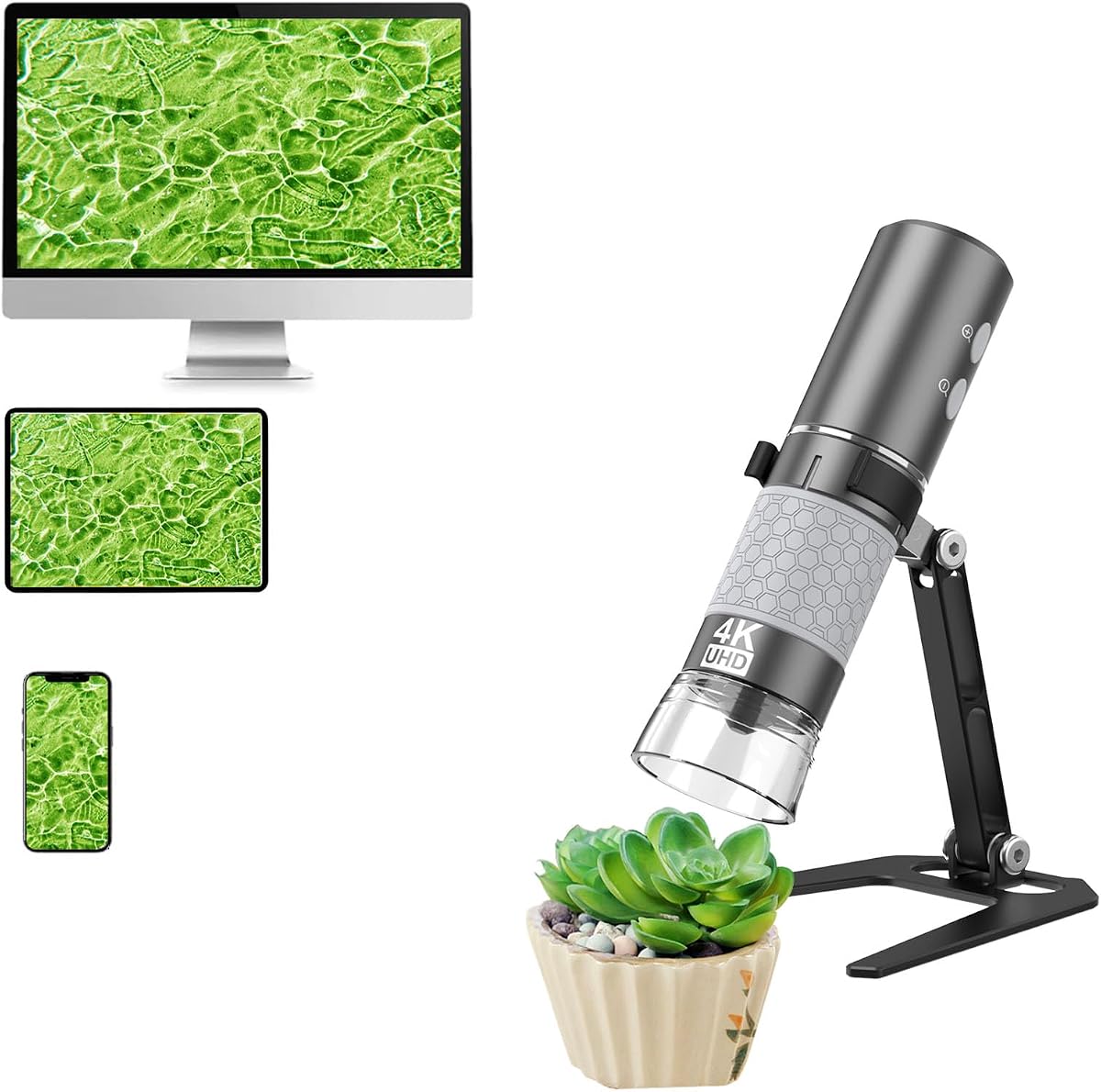



This Skybasic digital microscope offers a versatile entry point for insect study with wireless and USB connectivity. It achieves a 4.2 rating from users who appreciate its flexibility across mobile and desktop devices. The device balances affordability with functional features like HD image capture and adjustable lighting.
We may earn a commission when you buy through this link, at no additional cost to you.
Key strengths include the ability to connect via WiFi to smartphones or USB to computers. This dual mode ensures you can observe specimens in the field or analyze data in the lab. The eight adjustable LED lights provide consistent illumination crucial for viewing translucent insect wings or small details.
However, the fixed focus range of 3 to 60mm limits use to very close observations. Users must be patient to maintain this distance during outdoor walks. Additionally, older software versions may have connectivity issues, so downloading the latest app is essential for smooth operation.
This model is ideal for educators and hobbyists who want a portable tool without investing in a full lab setup. It serves well for classroom demonstrations where sharing images on a phone is convenient. For casual entomology enthusiasts, it provides the perfect balance of cost and capability.
The WiFi hotspot feature allows direct streaming to mobile devices without cables, enhancing portability during field trips.
Eight LEDs offer customizable brightness to reduce glare on shiny insect exoskeletons while maintaining detail clarity.
We may earn a commission when you buy through this link, at no additional cost to you.
Designed with young explorers in mind, the Odatay microscope offers impressive 4K clarity at an affordable price point. It holds a strong 4.5 rating from parents who value educational tools that inspire curiosity. The device simplifies the learning process with intuitive controls and a built-in screen.
We may earn a commission when you buy through this link, at no additional cost to you.
Its standout feature is the inclusion of a 32G card and prepared slides right out of the box. This complete kit allows immediate use without needing extra accessories. The 4K camera ensures that even fine details like insect antennae are captured clearly for later review or sharing.
While excellent for kids, the lack of WiFi means data transfer requires physical connections or the included card. The design is optimized for smaller hands with a lightweight build that resists drops. It is less suited for advanced researchers who need computer connectivity for measurement software.
This microscope is a fantastic gift for children eager to learn biology outdoors. It encourages independent exploration and builds foundational scientific skills. For families on a budget seeking high-quality imaging, it delivers exceptional value and performance for its target audience.
Prepared slides and a lanyard make it ready for classroom or backyard use without additional purchases.
Weighing only 0.5 pounds, it is easy for children to carry during long nature walks without fatigue.
We may earn a commission when you buy through this link, at no additional cost to you.
The Andonstar AD246S-M is a robust tool designed for serious hobbyists and educational settings. It earns a 4.5 rating for its comprehensive kit that includes three specialized lenses. The microscope supports HDMI output for large displays, making group study sessions much more effective.
We may earn a commission when you buy through this link, at no additional cost to you.
Its lens system allows switching between observation needs like whole coins or detailed biological slides. The metal stand is sturdy enough for high-temperature tasks like soldering, adding utility beyond biology. Users can record 2160P video to capture insect movements in real time for analysis.
The higher cost reflects the advanced hardware and accessories included like the remote and measurement software. It is not as portable as handheld models due to the stand and monitor requirements. This setup is best suited for fixed labs or classrooms rather than field use.
Investors in this model gain a multi-purpose device that grows with user skills. It bridges the gap between consumer toys and professional lab equipment. For those needing detailed analysis of insect structures, the precision and screen size provide unmatched utility.
Three lenses cater to different magnification needs ranging from general inspection to detailed slide analysis.
Connect to TVs or monitors for group viewing which enhances teaching and collaborative observation.
We may earn a commission when you buy through this link, at no additional cost to you.
This wireless microscope delivers stunning image quality with true 4K capability for detailed insect study. It holds a 4.5 rating for its impressive battery life which supports extended field sessions. The flexible bracket adds stability for hands-free viewing which is useful for photography.
We may earn a commission when you buy through this link, at no additional cost to you.
The software compatibility extends to Linux and Chrome OS unlike many competitors. This broad support ensures it works in diverse educational environments. Users can record videos or take photos instantly without interrupting the observation flow thanks to the one-button controls.
While the sensor supports 4K the final image quality depends on the device screen. If your phone does not support 4K you will see the highest pixel rate supported by that screen. Focus is limited to close objects so larger specimens require careful positioning.
Ideal for tech-savvy users seeking high resolution without a wired setup. The long battery life makes it perfect for outdoor excursions away from power outlets. It balances modern connectivity features with essential optical performance effectively.
Four hours of continuous power allows for full day usage without needing to recharge frequently.
Software compatibility includes Linux and Chrome OS which is rare in this price range for flexibility.
We may earn a commission when you buy through this link, at no additional cost to you.
This handheld microscope prioritizes safety with triple certifications and a smooth shock absorbent design. It earns a 4.5 rating from parents who want reliable tools for young children. The oversized dials are designed for small hands to operate easily without frustration.
We may earn a commission when you buy through this link, at no additional cost to you.
The anti-shake feature ensures clear images even when children are excited. Internal storage holds over 200 photos allowing kids to build a digital portfolio of their discoveries. The diffuser on the LEDs prevents glare which is common when studying shiny beetle shells.
Battery life is shorter than premium models lasting about two hours of active use. It requires USB charging which is convenient but means planning for recharges during long trips. Focus control is manual which helps learning but requires steady hands for best results.
Perfect for toddlers and early elementary students starting their science journey. The gift-ready packaging and warranty add value for parents seeking a stress-free purchase. It transforms backyard play into structured learning through tangible scientific observation.
ABS plastic and safety certifications ensure the device is safe for children aged three and older.
Exclusive stabilization keeps specimens visible even during movement reducing blurry images for kids.
We may earn a commission when you buy through this link, at no additional cost to you.
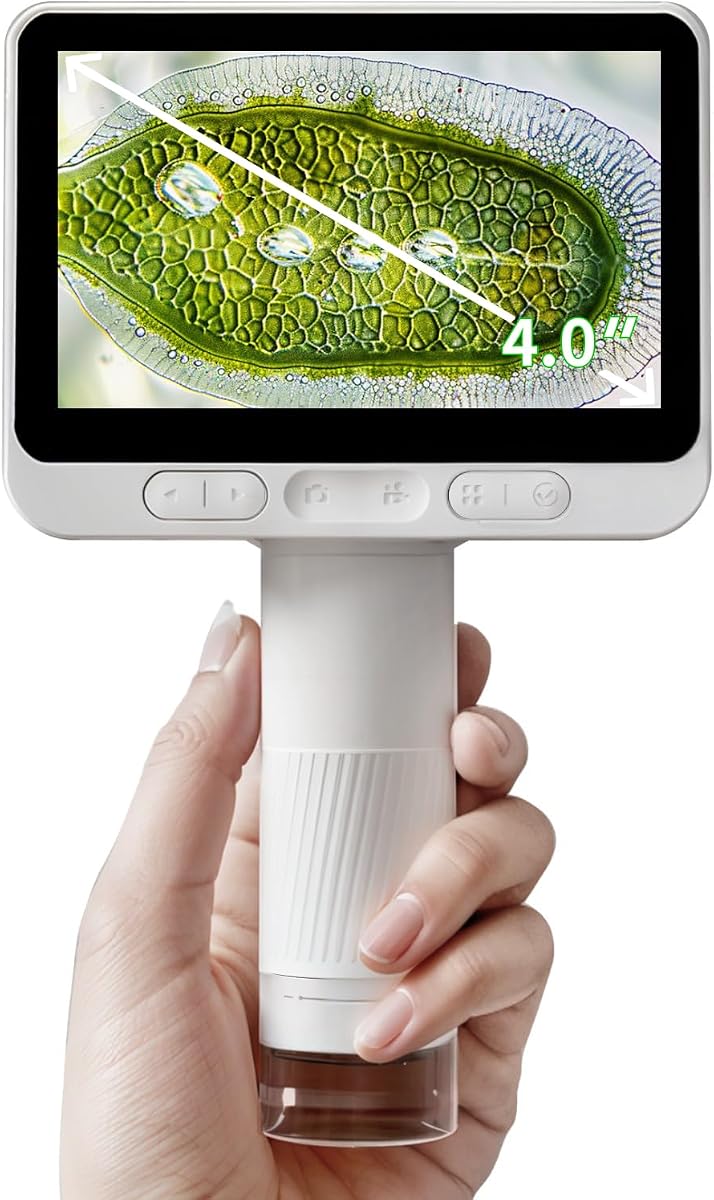
The BEAVERLAB Finder features a generous 4-inch screen that rivals tablets for viewing quality. It receives a 4.6 rating for this visual clarity which makes identification easier for students. The large display eliminates the need to squint through small eyepieces during observation.
We may earn a commission when you buy through this link, at no additional cost to you.
With a zoom range up to 1600X this model offers more magnification than most handhelds. The built-in hotspot allows easy file transfer to phones for social sharing or saving. It is light enough to fit in a pocket for spontaneous exploration trips.
Battery capacity is moderate so users should carry a power bank for all-day use. Software is basic focused on capturing images rather than measurement or analysis. This keeps the interface simple for kids but limits advanced research options.
Great for classrooms where visibility is key for group learning. The large screen supports interactive lessons on insect anatomy or plant structures. For young explorers who want to see more detail on a screen, this is a top choice.
A 4-inch display makes viewing comfortable for groups and reduces eye strain during long sessions.
Built-in hotspot allows quick upload to phones for sharing discoveries with friends or teachers instantly.
We may earn a commission when you buy through this link, at no additional cost to you.
Designed for outdoor adventures, this microscope focuses on stability and durability for kids. It holds a 4.4 rating for its rugged build and ease of use in natural environments. The stabilization design helps maintain focus even when holding the device on uneven terrain.
We may earn a commission when you buy through this link, at no additional cost to you.
Modern USB-C charging makes recharging simple with standard cables. The anti-glare diffuser ensures comfortable viewing under bright sunlight which is common during insect hunting. Internal storage saves files without SD cards simplifying the user experience for younger children.
The smaller screen is a trade-off for portability and weight. It is lighter than many competitors making it easier to carry in small backpacks. Lack of WiFi means sharing images requires connecting to a computer after the trip.
Ideal for campers and young hikers who need a reliable tool. The durability ensures it survives drops while the battery lasts through several hours of exploration. For outdoor-focused learning this balance of ruggedness and clarity is hard to beat.
Shock absorbent casing and stability design keep images clear even when moving across rough ground.
Uses USB-C cables which are widely available and easy to replace for convenient power access.
We may earn a commission when you buy through this link, at no additional cost to you.
This Elikliv microscope stands out with AI auto-focus technology that tracks moving insects. It earns a 4.4 rating for its advanced sensor capabilities that adjust focus automatically. The 8-inch screen provides ample space for detailed review of captured images.
We may earn a commission when you buy through this link, at no additional cost to you.
The TOF sensor measures distance accurately for quick focal adjustments. Split-screen functions allow comparing two images which is useful for tracking changes in specimens. It supports HDMI and USB outputs for professional lab integration or large group viewing.
The large size makes it less portable than handhelds. It is designed more for fixed study stations than field work. The higher price reflects the sensor technology and display quality which are premium features in this category.
Perfect for serious researchers needing precise tracking of moving subjects. The auto-focus saves time during long observation sessions. For labs or advanced home users, the investment in technology pays off in clarity and efficiency.
Algorithms continuously adjust focus even with moving objects reducing manual intervention needs.
Display multiple images side by side for easy comparison of different insect angles or stages.
We may earn a commission when you buy through this link, at no additional cost to you.
This 4K microscope excels in compatibility supporting iOS, Android, Linux, and Chrome OS seamlessly. It holds a 4.2 rating for its universal connectivity which works across any smart device. The wide angle lens helps capture larger specimens without moving the camera too much.
We may earn a commission when you buy through this link, at no additional cost to you.
Wireless streaming to phones allows immediate sharing of discoveries. The software is professional grade yet simple enough for home users. Long focal length options allow safe viewing without touching dangerous or fragile specimens.
Zoom buttons may not work on computer systems requiring app interaction for adjustments. There is no built-in screen so you rely on external devices for viewing which can be tricky without a tablet. It depends heavily on your device quality for the final experience.
Best for users with multiple devices needing a unified viewing experience. The broad compatibility ensures it works even as you upgrade phones or computers. For schools with mixed tech environments, this model offers reliable connectivity without complex setups.
Compatible with almost every operating system including Linux and Chrome which is rare for microscopes.
Allows observation from a safer distance ideal for delicate or hazardous specimens.
We may earn a commission when you buy through this link, at no additional cost to you.
This powerhouse microscope delivers up to 5000X magnification for extreme detail work. It receives a 4.3 rating for its professional features like the X-Y stage. The multiple lenses allow switching between biological slides and larger objects easily.
We may earn a commission when you buy through this link, at no additional cost to you.
The X-Y stage lets you move the specimen precisely for detailed viewing. It supports 2160P video which is sharp enough for professional presentations. The included remote control enables hands-free operation during demonstrations or long sessions.
Setup is more complex than handheld models and requires more space. The high zoom range is often unnecessary for basic insect study which may be overkill for some. It is a significant investment best reserved for advanced hobbyists or educational labs.
Ideal for those needing lab-grade precision without a full microscope lab. The range of lenses covers almost any observation need. For deep research into insect morphology, this tool provides unparalleled versatility and optical power.
Moveable stage allows precise positioning of specimens for detailed examination from all angles.
Highest magnification available in this list enables viewing of minute cellular structures on insects.
We may earn a commission when you buy through this link, at no additional cost to you.
Choosing the right digital microscope involves balancing features with your specific needs. This guide breaks down the essential factors to consider for optimal performance in insect study.
Magnification determines how large you can see your subjects. For insects, a range of 50X to 1000X is usually sufficient to see details like wings and legs. Higher magnification like 5000X is useful for cellular details but requires precise lighting and stability.
Ensure the model offers enough zoom to see insect features clearly without losing image quality due to digital interpolation.
High resolution ensures sharp images. Look for 1080P or 4K sensors for clarity. A larger screen like 4 inches helps view details without straining eyes. If using a phone, the device screen resolution will impact how the image appears.
Prioritize 1080P minimum resolution and a screen size that matches your viewing comfort needs.
Connectivity affects how you view and store data. WiFi allows wireless streaming to phones while USB connects to computers. Some models have both which offers flexibility. Check if your device is supported by the microscope software.
Select a model with connection types that fit your workflow whether wireless or wired.
Battery life matters for outdoor use. Look for at least two to three hours of continuous operation. Rechargeable batteries are standard. If you plan long field trips, consider models with USB charging capabilities or spare battery packs.
Choose a battery capacity that matches your typical usage duration to avoid interruptions.
Insect study often involves movement. A durable shell like ABS plastic protects against drops. Lightweight designs reduce fatigue during long trips. Check for certifications like CE or FCC to ensure safety especially for children.
Opt for sturdy materials and safety certifications to ensure longevity and safe usage.
Software should be easy to use on your operating system. Some support Mac, Windows, Android, iOS, and Linux. Features like measurement tools or video recording add value. Ensure the app is regularly updated for best performance.
Verify software compatibility with your devices to guarantee a smooth user experience.
Proper lighting is critical for seeing translucent insect parts. Adjustable LEDs allow brightness control. A diffuser helps reduce glare on shiny surfaces. Some models offer multiple intensity levels for different specimens.
Ensure the lighting system is adjustable to highlight details without blinding glare.
Prices vary from budget-friendly to professional grade. Determine your budget based on your needs. A cheaper model might suffice for kids while researchers need advanced features. Check included accessories like cards or stands to assess total value.
Balance cost against features to find the best value for your specific goals.
Start by charging the battery fully before first use. For handheld models, ensure the lens is clean and free of dust using a microfiber cloth. Place your insect specimen on a flat surface or a slide provided in the kit.
Turn on the device and adjust the focus wheel slowly until the image appears clear on the screen. Move the microscope up or down manually to find the best focal distance. For wireless models, connect to the WiFi hotspot on your phone or tablet.
Capture photos or videos using the designated button on the device or app. Store files on the internal memory or SD card. After use, wipe the lens again and store the device in a cool dry place to avoid moisture damage.
Yes, many models work well for live specimens provided you have adequate lighting. Use a shallow dish or slide to contain the insect. Ensure the microscope is stable to avoid blurring. Move quickly but gently to keep the subject in focus.
Not all of them. Many handheld models have built-in screens for standalone use. Others connect wirelessly to phones. Some professional models require a computer for advanced software features. Check the connectivity options before buying.
Magnification between 200X and 500X is ideal for viewing wing patterns clearly. Higher magnification might show cellular details but requires very close focus. Use adjustable LEDs to highlight the veins without glare.
Use a soft dry microfiber cloth to wipe the glass gently. Avoid using harsh chemicals that might damage the coating. If there is stubborn dirt, use a tiny amount of lens cleaning solution on the cloth not directly on the lens.
Yes, models with HDMI output or WiFi streaming are perfect for classrooms. They allow multiple students to view the same image simultaneously. Look for durable builds that can withstand daily student handling.
Most models allow exporting photos to your phone or computer via USB or WiFi. You can then share files through email or social media. Ensure you save files in common formats like JPG or MP4 for easy access.
Some kits include prepared slides especially those targeting kids. Others might not include them so you may need to buy them separately. Check the package contents before purchasing to ensure you have what you need for starting.
This guide reviewed ten top digital microscopes suitable for insect study ranging from budget-friendly handhelds to advanced lab systems. Each model offers unique strengths whether in magnification power or ease of connectivity for varied educational needs.
Consider your primary use case before buying. If you need portability and simplicity a handheld model is best. For detailed analysis or classroom use, look for HDMI or software options that support larger screens and measurement tools.
Prices and availability may change so always check current listings before purchasing. Verify the latest firmware support and warranty details to ensure long-term satisfaction. With the right tool, exploring the microscopic world becomes an engaging and educational experience.