
Berkeley Varitronics Octopus 4G LTE
4.6Editor score
True RSRP RSRQ RSSI
No subscriptions required
Designed in USA
Finding the right cellular signal meter for antenna aiming is crucial for installing boosters and ensuring optimal network performance. These tools help you measure signal strength accurately so you can position antennas effectively for the best possible connection quality.
We compared ten real products based on their frequency coverage, measurement accuracy, portability, and ease of use. Our selection includes dedicated meters for cellular bands as well as broader spectrum analyzers that cover multiple wireless standards for comprehensive testing capabilities.
Each pick highlights key features and ideal use cases to help you choose the right tool for your specific needs. Keep in mind that product availability and pricing can change over time so verify details before making your final purchase decision online.
4.6Editor score

4.3Editor score

3.9Editor score
As an Amazon Associate we earn from qualifying purchases.
The following table provides a side by side comparison of all ten products evaluated in this guide to help you quickly identify the best match for your specific installation or testing requirements.


The SureCall Five-Band RF Signal Meter stands out as a top choice for anyone installing cell phone signal boosters. With a solid rating of 4.3 stars it is praised for its ability to detect signal strength across five distinct cellular bands including PCS Cellular AWS and LTE frequencies.
We may earn a commission when you buy through this link, at no additional cost to you.
Its high receiving sensitivity of minus 110dBm ensures you can spot even faint signals when aiming outdoor antennas. The rechargeable design using four AAA NiMH batteries offers a long working time of 2.5 to 3.5 hours which is plenty for most installation jobs.
While it does not cover every possible frequency like a full spectrum analyzer its focus on cellular bands makes it efficient for booster setup. Users appreciate the controllable backlight which aids visibility when working in dark attics or crawl spaces.
If you need a reliable tool specifically for installing cellular boosters this meter delivers excellent value and performance. It simplifies the aiming process so you can achieve the best possible signal for your indoor units.
This meter supports 1930-1995 PCS 869-894 Cellular 2110-2155 AWS and two LTE bands ensuring compatibility with most US carriers.
The rechargeable NiMH battery design and controllable backlight make it comfortable to use in various lighting conditions during installation.
We may earn a commission when you buy through this link, at no additional cost to you.
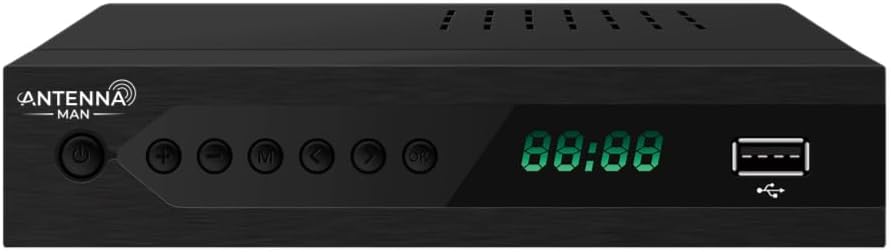
The Antenna Man Signal Meter is primarily designed for optimizing over-the-air TV antennas rather than cellular signals. It features a simple plug and play setup that allows users to see real-time signal strength instantly without complex configuration.
We may earn a commission when you buy through this link, at no additional cost to you.
Its ability to help you get more channels by identifying optimal antenna positions makes it useful for home theater setups. The device acts as an ATSC digital converter box with a TV tuner and recording capabilities extending its utility beyond just signal measurement.
While it is not a cellular signal meter it offers an affordable way to tune antenna alignment for broadcast TV. Users report that the real-time feedback helps them avoid guesswork when placing indoor or outdoor antennas.
Consider this option if your goal is to improve TV reception instead of cellular connectivity. It provides a straightforward solution for maximizing your local broadcast signal strength efficiently.
The device displays real-time signal strength allowing you to adjust your antenna position immediately for better channel reception.
Beyond signal metering it includes a TV tuner and recording features making it a multi-purpose tool for home entertainment.
We may earn a commission when you buy through this link, at no additional cost to you.
The Berkeley Varitronics Octopus 4G LTE is a premium tool designed for professional installers working on EV charging stations cell boosters and wireless IoT devices. It provides precise measurements including true RSRP RSRQ and RSSI data which are essential for advanced network diagnostics.
We may earn a commission when you buy through this link, at no additional cost to you.
One of its major advantages is that it requires no subscriptions SIM cards phones or apps to function. This independence ensures that your testing workflow remains uninterrupted and cost-effective over the long term without hidden monthly fees.
It supports all major US carriers including AT&T Verizon and T-Mobile as well as regional providers making it a versatile choice for various deployment scenarios. The device is also designed and manufactured in the USA which speaks to its build quality and reliability.
For professionals who need accurate LTE signal data without relying on consumer devices this meter is an outstanding investment. Its robust feature set and domestic manufacturing make it a top tier choice for critical installations.
It measures true RSRP RSRQ and RSSI providing detailed insights into network quality that generic meters cannot offer.
The device operates without SIM cards or subscription plans ensuring your testing process remains simple and cost-free indefinitely.
We may earn a commission when you buy through this link, at no additional cost to you.
The RF Explorer Pro Spectrum Analyzer is a powerful all-in-one RF measurement platform that combines a spectrum analyzer power meter and tracking generator. With a frequency range from 15MHz to 6.1GHz it covers a vast array of wireless signals including cellular Wi-Fi and more.
We may earn a commission when you buy through this link, at no additional cost to you.
Its 8-inch high definition touchscreen offers clear visualization of RF signals and measurement data with features like 2D and 3D waterfall displays. The modular design allows you to choose your frequency range to match specific needs while maintaining portability for field use.
Advanced RF analysis tools include GPS heatmap and frequency coordination modes which are incredibly useful for interference analysis and site surveys. However the device is best suited for RF professionals who need detailed spectrum insights beyond basic signal strength.
This analyzer is an excellent choice for engineers and technicians requiring comprehensive RF analysis capabilities in a portable package. Its large display and flexible configuration make it a top tool for professional environments.
Features like 2D and 3D waterfall displays and GPS heatmaps provide deep insights into signal behavior over time and location.
You can select from 3.3 GHz 6 GHz or 7.5 GHz configurations to align the hardware with your specific project requirements.
We may earn a commission when you buy through this link, at no additional cost to you.
The NetAlly AirCheck G3 Pro Kit is a professional-grade tool designed for advanced Wi-Fi and Bluetooth testing. It supports Wi-Fi 6 and 6E networks and includes an external directional antenna for precise physical location detection of access points and clients.
We may earn a commission when you buy through this link, at no additional cost to you.
Efficient site surveys are possible with remote collaboration features that allow off-site engineers to troubleshoot with on-site technicians. This reduces travel costs and speeds up problem resolution for complex network environments.
The kit includes the AirCheck-G3-PRO mainframe with AllyCare support a shoulder sling bag and a NXT-2000 tri-band spectrum analyzer. Centralized data management via Link-Live helps consolidate and analyze field test data seamlessly.
While it is not a cellular signal meter this kit is the best choice for optimizing enterprise Wi-Fi networks. Its advanced capabilities and collaboration tools make it invaluable for professional network engineers.
Tri-band physical location detection helps you quickly find Wi-Fi access points and clients on 2.4GHz 5GHz and 6GHz bands.
Link-Live collaboration and reporting features allow you to consolidate analyze and manage field test data efficiently.
We may earn a commission when you buy through this link, at no additional cost to you.
The Extech 480836 RF EMF Strength Meter is designed for high frequency measurement across a range of 50MHz to 3.5GHz. It is ideal for EMF measurements of mobile phones base stations and microwave leakage making it useful for safety assessments and field inspections.
We may earn a commission when you buy through this link, at no additional cost to you.
Its non-directional isotropic measurement with a three-channel triaxial probe ensures you capture signal strength from all directions accurately. This is critical for safety evaluations where signal direction is unknown or variable.
The device allows manual store and recall of up to 99 measurement sets which helps in documenting readings over time. While it is not a cellular-specific antenna aiming tool it provides valuable data on RF exposure levels.
Choose this meter if your priority is EMF safety or broad high frequency monitoring rather than precise cellular signal aiming. It offers reliable performance for general RF environment assessments.
The triaxial measurement probe ensures non-directional isotropic measurements capturing signal strength from all directions reliably.
Manual store and recall of up to 99 sets allows you to document and compare field measurements over time.
We may earn a commission when you buy through this link, at no additional cost to you.
The MINI1300 Antenna Analyzer features a 4.3 inch large-screen LCD touching screen display that simplifies operation. Its frequency range covers 0.1 to 1300MHz providing continuous coverage for HF VHF and UHF bands which is useful for various antenna types.
We may earn a commission when you buy through this link, at no additional cost to you.
Measurement modes include single point measurement scanning frequency sweep and TDR mode offering flexibility for different diagnostic tasks. The device is portable and compact making it easy to operate and carry to different locations.
It is important to note that the firmware cannot be updated as doing so may damage the original function. Despite this limitation the analyzer provides reliable SWR measurements with a range of 1.0 to 19.99 in single point mode.
This tool is best suited for users who need SWR and frequency sweep capabilities without a large investment. Its broad frequency coverage and portable design make it a practical choice for hobbyists and technicians.
The 0.1 to 1300MHz range ensures continuous coverage across HF VHF and UHF bands for diverse antenna testing needs.
Support for single point measurement scanning and TDR mode allows you to choose the best approach for your specific task.
We may earn a commission when you buy through this link, at no additional cost to you.
The SA6 6GHz Portable Spectrum Analyzer is a 2-in-1 device that integrates a spectrum analyzer and a built-in signal generator. This allows you to switch modes instantly for RF testing making it versatile for analyzing and generating signals on the go.
We may earn a commission when you buy through this link, at no additional cost to you.
With a frequency range of 35 to 6200MHz it supports Wi-Fi 2G 3G 4G LTE GSM CDMA and GLONASS. The 3.2 inch full-color resistive touchscreen and physical buttons provide convenient control for field environments or workshops.
It features a rechargeable battery with approximately 3 to 4 hours of continuous use and USB Type-C connectivity for charging and PC logging. The tracking generator supports frequency response measurements for filters and amplifiers adding to its utility.
This analyzer is an excellent value for technicians needing both analysis and signal generation capabilities in one handheld unit. Its portability and wide frequency support make it a strong option for general RF testing.
The built-in signal generator allows instant switching for RF testing without needing separate external devices for signal input.
Compact and lightweight at 380g with a rechargeable battery it is designed for on-site RF testing and analysis.
We may earn a commission when you buy through this link, at no additional cost to you.
This handheld spectrum analyzer covers 35 to 6200MHz supporting WiFi 4G LTE GSM and other common wireless technologies. It is designed for field and lab signal evaluation making it suitable for technicians and maintenance teams working in tight spaces.
We may earn a commission when you buy through this link, at no additional cost to you.
The integrated tracking generator delivers stable output which enables SWR and return loss measurements with optional accessories. Real-time spectral measurement with a fixed 200 kHz resolution ensures rapid RF environment assessment.
Its compact rugged design measures about 5.9 by 3 by 0.9 inches and is built for energy efficiency. The device includes an internal battery extension cables and data cables to start analyzing immediately.
This tool is ideal for rapid RF environment assessment and repeater diagnostics where portability and speed are key. Its comprehensive frequency range and tracking features provide a complete solution for many wireless applications.
Fast full-span scan of less than 0.25 sec below 100 MHz allows for quick assessment of RF environments.
The package includes battery charging extension cables data cable and stylus to start analyzing right away.
We may earn a commission when you buy through this link, at no additional cost to you.
The Channel Master TV Antenna Signal Strength Meter is designed for precise OTA antenna alignment and installation. It supports all over-the-air ATSC TV frequencies within the USA making it a practical tool for homeowners setting up TV antennas.
We may earn a commission when you buy through this link, at no additional cost to you.
It displays both RF signal level and signal to noise ratio which are key metrics for determining optimal antenna placement. The color touch-screen display and built-in rechargeable battery add convenience and readability during installation tasks.
The package includes a stylus pen and protective carrying case to ensure the device stays safe during transport. While it is not a cellular meter it offers excellent value for those focused on TV signal optimization.
This meter is an ideal budget-friendly option for anyone installing a TV antenna who needs clear visual feedback. Its support for all US ATSC frequencies ensures compatibility with major broadcast networks.
Displays both RF signal level and signal to noise ratio to help you find the best position for clear reception.
Includes a stylus pen and protective carrying case for convenient and secure transport during installation.
We may earn a commission when you buy through this link, at no additional cost to you.
Selecting the right cellular signal meter requires understanding your specific needs whether for home boosters professional installs or general RF analysis. This guide outlines key factors to consider before making your decision.
Ensure the meter supports the specific cellular bands used by your carrier. Look for devices that cover PCS Cellular AWS and LTE frequencies to guarantee compatibility with current networks.
Prioritize tools that explicitly list supported bands in their specifications to avoid purchasing a meter that misses your carrier's frequencies.
Professional installations often require true RSRP RSRQ and RSSI metrics which provide deeper insight into signal quality than simple strength bars. These metrics are critical for optimizing high performance booster systems.
Choose a device that offers detailed signal parameters if you need precise data for critical applications or complex network environments.
For field work the device should be lightweight and have a long battery life. Rechargeable batteries or standard AA/AAA options ensure you can work all day without interruptions.
Check the estimated runtime to confirm it matches the duration of your typical installation or testing sessions.
A clear display such as a color touchscreen or large LCD helps you read values easily in various lighting conditions. Physical buttons alongside touch controls can improve usability in gloves or harsh environments.
Opt for models with intuitive interfaces that allow quick switching between bands or modes without complex navigation.
High receiving sensitivity such as minus 110dBm allows you to detect weaker signals that might otherwise be missed. This is essential when aligning outdoor antennas in areas with marginal coverage.
Select a meter with high sensitivity to ensure accurate aiming even in challenging signal conditions.
Features like backlighting GPS heatmaps or spectrum analysis expand the utility of the device beyond basic signal strength. These add-ons can help with troubleshooting interference or documenting signal distribution.
Evaluate whether advanced features align with your needs to avoid paying for capabilities you won't use.
Some devices require SIM cards apps or subscriptions which can add cost and complexity. Tools that operate independently without these dependencies are more flexible for field technicians.
Look for standalone meters that work without external accounts to keep your workflow simple and cost-effective.
Rugged housings and protective cases are important for equipment used on rooftops or in construction sites. A durable device ensures longevity and reliability in demanding conditions.
Check for reviews mentioning build quality and warranty support to confirm the device can withstand professional use.
Start by powering on the meter and selecting the correct frequency band for your carrier. Allow a few moments for the device to calibrate and lock onto available signals before beginning your measurement.
Hold the meter near your antenna connector or mount while slowly rotating the antenna to observe changes in signal strength. Aim for the position that shows the highest stable reading rather than fluctuating peaks.
Store the meter in its protective case when not in use to prevent physical damage. Keep the battery charged and avoid exposing the device to extreme temperatures or moisture to ensure long-term accuracy.
Many professional cellular signal meters do not require a SIM card as they measure RF signals directly. However some consumer-grade devices may rely on a connected phone or app which can limit portability. Always check the product specifications to confirm SIM requirements before purchasing.
Signal strength indicates the power level of the incoming signal while SNR measures the signal to noise ratio which reflects signal quality. A strong signal with poor SNR can still result in slow data speeds making both metrics important for antenna aiming.
Yes most cellular signal meters work for both indoor and outdoor antennas as they measure RF signals at the connection point. Ensure you use the appropriate adapter to connect the meter to your specific antenna cable type.
You know the antenna is properly aligned when the meter shows the highest consistent signal strength reading. Move the antenna in small increments until the reading peaks and remains stable before tightening the mount.
Cellular signal meters focus on measuring signal strength for specific bands while spectrum analyzers display the entire RF spectrum to identify interference. Analyzers are more versatile but signal meters are often simpler and more affordable for dedicated tasks.
Rechargeable batteries are generally preferred for field work as they reduce ongoing costs and waste. However standard AA or AAA batteries can be a reliable backup option for extended trips where charging is not possible.
We have reviewed ten top cellular signal meters ranging from budget-friendly options to professional-grade analyzers. Whether you need a simple tool for home boosters or a sophisticated meter for EV charging stations there is a fit for your needs.
Prioritize frequency coverage and measurement accuracy to ensure your chosen device delivers reliable results. Also consider portability and ease of use to streamline your installation process and reduce setup time.
Remember that product availability and features can change so always verify current details before purchasing. With the right meter you can achieve optimal antenna alignment and enjoy stronger more reliable cellular connections.