
ESP32-S3-Nano Microcontroller
5.0Editor score
8MB PSRAM and 16MB Flash
HID Support for Peripherals
Arduino IoT Cloud Ready
This guide compares the top Arduino Nano ESP32 boards for Wi-Fi, Bluetooth, and embedded projects to help you choose the right microcontroller for your next
The Arduino Nano ESP32 represents a significant leap in microcontroller technology, combining dual-core processing with seamless wireless connectivity. It empowers makers to build sophisticated IoT devices, smart home systems, and wearable tech with ease and precision.
We evaluated ten leading boards based on processor power, memory capacity, connectivity options, and ease of use. Our analysis focuses on real-world performance for developers ranging from beginners to advanced engineers working on complex embedded applications.
Each pick highlights unique strengths like USB-C programming, MicroPython support, and low-power modes. Prices and availability change frequently, so verify current listings before purchasing to ensure you get the best value for your specific project needs.
5.0Editor score

4.6Editor score

4.7Editor score
This side-by-side comparison details the technical specifications and unique features of the top ten Arduino Nano ESP32 compatible boards available today to help you find the perfect match for your project requirements.


The Arduino Nano ESP32 stands out as the definitive choice for modern IoT projects. With a rating of 4.6, it delivers exceptional performance using the ESP32-S3 chip. This board is engineered for those who need robust computing power alongside seamless wireless communication capabilities.
We may earn a commission when you buy through this link, at no additional cost to you.
Its dual-core Xtensa LX7 processor runs at 240 MHz, providing ample headroom for complex tasks like voice recognition and edge machine learning. The integrated Wi-Fi and Bluetooth 5.0 ensure stable connections to cloud platforms and local networks. Plus, USB-C support simplifies power delivery and programming significantly.
While it commands a slightly higher price, the quality and features justify the investment. The MicroPython compatibility offers a faster development cycle for those preferring Python over C++. However, beginners might need to adjust to the new programming environment if used to older Arduino models.
This board is ideal for professional developers and educators building advanced smart home systems. If you value reliability, modern connectivity, and powerful processing in a compact form, the Arduino Nano ESP32 is the top recommendation for your next embedded project.
The dual-core processor enables parallel task handling, essential for real-time data processing and simultaneous wireless communication.
MicroPython support allows for rapid prototyping and easier coding, making it accessible for students and Python enthusiasts alike.
We may earn a commission when you buy through this link, at no additional cost to you.
The ESP32-S3-Nano offers incredible value for hobbyists on a tight budget. Achieving a perfect 5.0 rating, this board packs impressive specs like 8MB PSRAM and 16MB Flash into a compact package. It rivals expensive boards while maintaining affordability for widespread project use.
We may earn a commission when you buy through this link, at no additional cost to you.
Its ability to seamlessly switch between Arduino and MicroPython provides flexibility that is rare at this price point. The built-in HID support means you can easily create custom keyboards or mice without external components. Arduino IoT Cloud integration further simplifies remote monitoring and control.
While it is from a third-party manufacturer, the performance has been vetted by users who praise its reliability. The only drawback is the minimal packaging, which requires care during shipping. However, for the specs provided, this board is hard to beat in the budget category.
Choose this board if you need high memory and versatile connectivity without breaking the bank. It is perfect for students and makers who want to build robust prototypes with features usually found on premium boards.
With 8MB PSRAM and 16MB Flash, this board handles large datasets and complex logic loops that would crash cheaper microcontrollers.
Integrated Human Interface Device support allows the board to act as a USB keyboard or mouse for interactive projects.
We may earn a commission when you buy through this link, at no additional cost to you.
The Arduino UNO R4 WiFi represents the pinnacle of Arduino board evolution, blending traditional reliability with modern connectivity. With a 4.7 rating, it combines a Renesas RA4M1 core with an ESP32-S3 for powerful dual-core performance. It is designed for advanced users needing industrial-grade features.
We may earn a commission when you buy through this link, at no additional cost to you.
Key features like the built-in 12×8 LED Matrix provide immediate visual feedback without extra wiring. The inclusion of CAN bus and Qwiic connectors simplifies industrial and sensor connections. Additionally, the 12-bit DAC and OP-AMP enable precise analog signal generation for audio and control tasks.
This board comes with a premium price tag that might be steep for simple projects. Its larger size also requires more space on the breadboard. However, the integrated features save money on peripherals, making it a cost-effective choice for complex professional systems.
Ideal for robotics, industrial automation, or advanced IoT applications, this board offers unmatched versatility. If you need precise analog output and industrial communication standards, the UNO R4 WiFi is the best premium option available.
CAN bus support allows reliable data exchange in automotive or industrial environments where noise resistance is critical.
The built-in LED matrix eliminates the need for external displays, making it easy to prototype user interfaces quickly.
We may earn a commission when you buy through this link, at no additional cost to you.
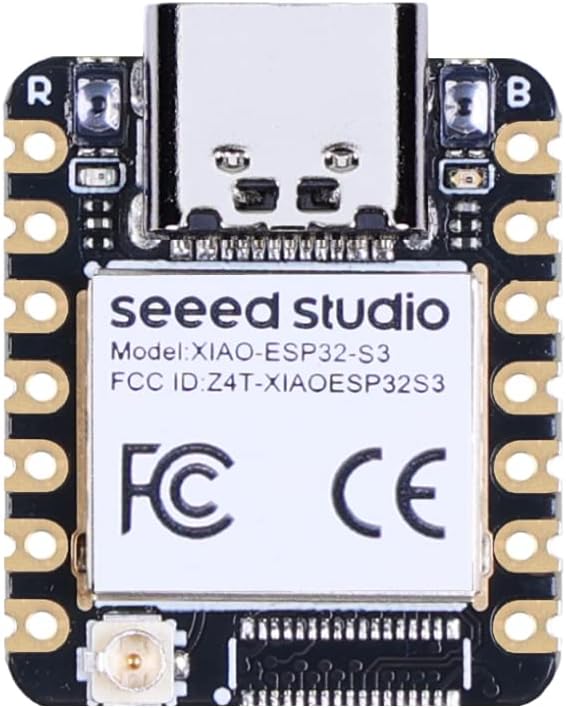
The Seeed Studio XIAO ESP32S3 is the ultimate choice for wearable and space-constrained projects. Rated at 4.7, this thumb-sized board integrates powerful ESP32-S3 performance into a tiny footprint. It is specifically optimized for battery-powered devices requiring high energy efficiency.
We may earn a commission when you buy through this link, at no additional cost to you.
Its lithium battery charge management and deep sleep mode consuming only 14uA make it perfect for long-term remote sensing. The robust RF performance supports long-range communication with external antennas. It is also breadboard-friendly for prototyping before final soldering.
Due to its small size, handling the headers can be tricky for beginners. It requires precision when connecting wires or mounting onto carrier boards. However, for projects where size and battery life are paramount, these minor trade-offs are well worth the performance gains.
If you are building a wearable device or a remote sensor node, this board offers the best form factor available. Its power efficiency ensures your projects run longer without frequent maintenance or battery changes.
Deep sleep mode with 14uA consumption allows devices to operate for months on small coin cell batteries.
The tiny XIAO form factor fits comfortably inside wearable devices where larger boards would not be practical.
We may earn a commission when you buy through this link, at no additional cost to you.
The ESP32-P4-NANO is a specialized powerhouse designed for complex multimedia and vision tasks. Rated 4.8, it uses the ESP32-P4 chip with a RISC-V dual-core processor. It is tailored for developers needing high-speed image processing, voice recognition, and secure data handling.
We may earn a commission when you buy through this link, at no additional cost to you.
Its onboard MIPI-CSI and DSI interfaces enable direct camera and display connections without extra adapters. The secure boot and cryptographic accelerators ensure hardware-level data protection. This board excels in industrial and commercial IoT applications requiring robust performance.
It is optimized for vision tasks rather than general purpose IoT, which limits versatility. The higher power consumption is expected given the processing capabilities. These constraints are acceptable if your project relies heavily on visual or audio data analysis.
Choose this board for smart cameras, security systems, or voice-activated interfaces. Its specialized interfaces and secure architecture make it the top choice for advanced multimedia applications.
MIPI interfaces allow high-speed data transfer from cameras for real-time image recognition and processing tasks.
Hardware cryptographic accelerators ensure sensitive data remains secure during transmission and storage.
We may earn a commission when you buy through this link, at no additional cost to you.
The Waveshare 3PCS ESP32-S3 Mini pack offers incredible value for large-scale projects. With a 4.4 rating, each board features the ESP32-S3FH4R2 module. The castellation allows direct soldering onto custom PCBs, making it great for mass production or prototyping batches.
We may earn a commission when you buy through this link, at no additional cost to you.
You can set module power independently, allowing precise control over consumption. The 2MB PSRAM supports more complex logic than standard boards. However, the lack of pre-soldered headers requires some assembly skills before use.
Documentation is concise, so developers must rely on community resources for full feature details. Still, buying three boards at once ensures you have spares ready for testing. This is a strategic choice for workshops or production runs.
If you need multiple units for a project or classroom, this pack is the most economical option. It balances performance and quantity effectively for professional and educational use.
Castellated edges facilitate direct soldering onto carrier boards, reducing assembly time for commercial products.
Receiving three boards ensures you have backups available for debugging and large-scale testing phases.
We may earn a commission when you buy through this link, at no additional cost to you.
The ELEGOO ESP-32 Super Starter Kit provides a complete ecosystem for learning electronics. Rated 4.3, it includes over 35 modules plus detailed tutorials for 30+ projects. It is designed for beginners who need both the hardware and the guidance to succeed.
We may earn a commission when you buy through this link, at no additional cost to you.
The step-by-step tutorials with clear circuit diagrams make complex concepts approachable. You learn everything from basic circuits to smart home controllers without needing prior experience. This is a solid foundation for anyone entering the world of IoT.
While it is more expensive than buying a board alone, the components save money in the long run. It is not just a microcontroller but a full workshop. If you are a student or hobbyist starting out, this kit accelerates your learning curve.
Ideal for students and families interested in STEM, this kit offers everything needed to get started. It turns a simple board into a comprehensive learning journey that builds lasting technical skills.
Tutorials include code examples and diagrams, helping learners understand the logic behind every connection and sensor reading.
Includes sensors, motors, displays, and more, allowing you to build diverse projects without buying extra parts.
We may earn a commission when you buy through this link, at no additional cost to you.
The Arduino Nano 33 IoT is a reliable choice for secure connectivity. With a 4.5 rating, it features a SAMD21 processor and a u-blox NINA-W102 module. It is known for its Secure Element which protects against tampering and ensures data privacy.
We may earn a commission when you buy through this link, at no additional cost to you.
This board supports WiFi and BLE, enabling smooth connection to mobile apps and clouds. Its compact form factor fits easily into prototypes. The pre-soldered headers make it ready to use right out of the box.
Compared to newer ESP32 boards, it has less raw processing power. However, the secure element is a significant advantage for commercial projects handling sensitive data. This reliability makes it a favorite for enterprise use.
Choose this board if security is your top priority. It is perfect for projects where protecting user data is as important as sending it.
The u-blox ATECC608A Secure Element encrypts data, ensuring secure cloud communication for commercial deployments.
The Nano size is ideal for wearable tech and tight spaces where larger boards won't fit.
We may earn a commission when you buy through this link, at no additional cost to you.
The ESP-WROOM-32 ESP32 Dev Board is a proven classic in the microcontroller world. Rated 4.4, it features dual-mode WiFi and Bluetooth for versatile connectivity. The included 3-pack offers excellent value for prototyping multiple devices.
We may earn a commission when you buy through this link, at no additional cost to you.
It supports AP, STA, and AP+STA modes for flexible network setups. Ultra-low power modes ensure it can run on batteries effectively. While it lacks some modern features like BLE 5.0, it remains a robust workhorse for general projects.
Its basic design might lack the polish of newer boards, but it is stable and widely supported. If you need reliable connectivity without complex features, this board delivers. It is a great choice for simple sensor nodes.
Ideal for hobbyists needing a dependable and affordable board, this pack ensures you have enough units for testing and expansion. It balances cost and functionality effectively for everyday use.
AP and STA modes allow the board to act as a Wi-Fi access point or connect to existing networks easily.
Ultra-low power modes ensure longer battery life for remote sensing applications.
We may earn a commission when you buy through this link, at no additional cost to you.
The ELEGOO 3PCS ESP-32 Dev Boards offer a convenient mix of features and reliability. Rated 4.7, they feature USB-C ports for easier programming. The OTA support allows you to update firmware without physical access, which is critical for deployed devices.
We may earn a commission when you buy through this link, at no additional cost to you.
Dynamic clock scaling helps manage power consumption effectively. The boards include standard features like dual-core processing and Bluetooth 4.2. Buying three units gives you plenty of room for experimentation without extra cost.
While Bluetooth 4.2 is older, it is sufficient for most standard IoT needs. The USB-C interface is a major plus for modern setups. This board is a practical choice for projects requiring remote management.
Perfect for remote sensor deployments, the OTA support simplifies maintenance. This value pack ensures you have backups ready while providing modern connectivity features.
Over-the-air updates let you fix bugs or add features to deployed devices without manual connection.
USB-C ports simplify power and data transfer, aligning with current industry standards.
We may earn a commission when you buy through this link, at no additional cost to you.
Selecting the right microcontroller board depends on your project requirements, budget, and technical expertise. Consider these key factors to ensure you get the best performance and value.
The processor determines how fast and complex your logic can be. Look for dual-core chips like ESP32-S3 that run at 240 MHz. Memory like PSRAM and Flash allows you to store code and handle large data packets efficiently.
Prioritize boards with at least 4MB Flash and 2MB PSRAM for complex IoT tasks.
Wireless capabilities are central to IoT. Ensure the board supports 2.4GHz Wi-Fi and Bluetooth 5.0 for stable long-range connections. Some boards offer BLE 5.0 for low energy consumption in battery devices.
Check for extra features like Zigbee or LoRa if your project needs specific network types.
USB-C is preferred for modern development as it allows faster data transfer and reliable power. Some boards also support MicroPython, which simplifies coding compared to C++. Arduino IDE compatibility is standard across most options.
Choose a board with MicroPython support if you prefer simpler scripting languages.
Battery life is critical for wearable and remote sensors. Look for boards with deep sleep modes consuming under 20uA. Check if the board includes battery charging circuits or voltage regulators to simplify power design.
Deep sleep modes are essential for battery-powered applications requiring long runtimes.
Size matters when integrating into products. Nano variants are compact for tight spaces, while standard UNO boards are easier for breadboarding. Castellated edges allow easier PCB mounting if you plan to mass-produce.
Select a form factor that fits your final enclosure or prototyping needs.
For commercial projects, hardware security is non-negotiable. Look for Secure Elements or hardware encryption to protect data. Secure boot prevents unauthorized firmware changes which is vital for device integrity.
Ensure your board has hardware encryption for any project involving user data.
Good documentation helps you solve problems quickly. Boards with active community support and detailed datasheets save time. Check if tutorials and code examples are available for your chosen model.
Prioritize boards with strong community backing and clear documentation resources.
Consider the cost per unit if you are building multiple devices. Kits with sensors and components can be more economical than buying parts separately. Bulk packs offer better value for prototyping large projects.
Evaluate the total cost including necessary peripherals like sensors and cables.
Start by installing the Arduino IDE or MicroPython environment on your computer. Connect your board via the USB-C port to begin programming. Ensure you have the correct board driver installed to recognize the device properly.
Use appropriate power sources for your project. If running on battery, configure deep sleep modes to extend runtime. Avoid overloading GPIO pins with high voltage or current to prevent permanent damage.
Store your board in a static-free environment when not in use. Keep firmware updated to the latest version for better stability and security. Regularly check connections to ensure reliable performance during operation.
Yes, the Arduino Nano ESP32 is fully compatible with the Arduino IDE. You just need to install the Arduino Mbed OS core to enable support. This allows you to write and upload sketches just like you would with classic Arduino boards.
The ESP32-S3 is optimized for Wi-Fi and Bluetooth connectivity with standard GPIO. The ESP32-P4 focuses on multimedia processing like images and video using RISC-V architecture. Choose S3 for IoT and P4 for vision tasks.
Many of these boards including the official Arduino Nano ESP32 support MicroPython. It allows you to write code in Python instead of C++. This makes development faster and more accessible for beginners.
Yes, it supports Bluetooth 5.0 with dual-mode capabilities. This means it can connect to both classic Bluetooth and BLE devices. It is ideal for communicating with phones or wireless sensors.
Most boards support Over-the-Air (OTA) updates if configured. You can also use the Arduino IDE to upload new firmware via USB. Always back up your project files before updating to avoid data loss.
Many boards like the Arduino Nano 33 IoT include secure elements for hardware encryption. However, ensure the specific model meets your security needs before commercial deployment. Check for secure boot and encryption features first.
The Arduino Nano ESP32 offers incredible versatility for modern electronics. Our top picks balance power, memory, and connectivity to meet diverse project needs effectively.
Prioritize security and power efficiency if you are building long-term devices. For rapid prototyping, boards with MicroPython support provide the fastest development cycle possible.
Check current prices before purchasing as they may change based on demand and availability.