
ST to LCU Fiber Optic Adapter
5.0Editor score
Single Mode 9/125um
Ceramic Sleeves
Compact Design
This guide compares the top Lc to St Fiber Optic Adapter options for reliable connectivity across singlemode and multimode fiber networks in 2026.
Finding the right fiber optic adapter is crucial for maintaining signal integrity in modern network infrastructures. Whether you are upgrading legacy systems or connecting new equipment, the right adapter ensures seamless communication between different connector types without losing data speed or quality.
We evaluated ten top-rated adapters based on insertion loss, durability, and compatibility with standard telecom tools. Our analysis includes hybrid converters, patch cables, and multi-connector kits to help you select the best fit for your specific fiber optic project needs today.
Each pick highlights key specs, pros, and cons to streamline your decision process. Prices and availability change frequently, so always verify current listings before purchasing. This guide aims to save you time and money by pointing you toward verified reliable solutions for your network.
5.0Editor score

4.8Editor score

5.0Editor score
The following table compares all ten products side by side. Look at connector types, core diameters, and included features to find the best match for your network setup and testing requirements.
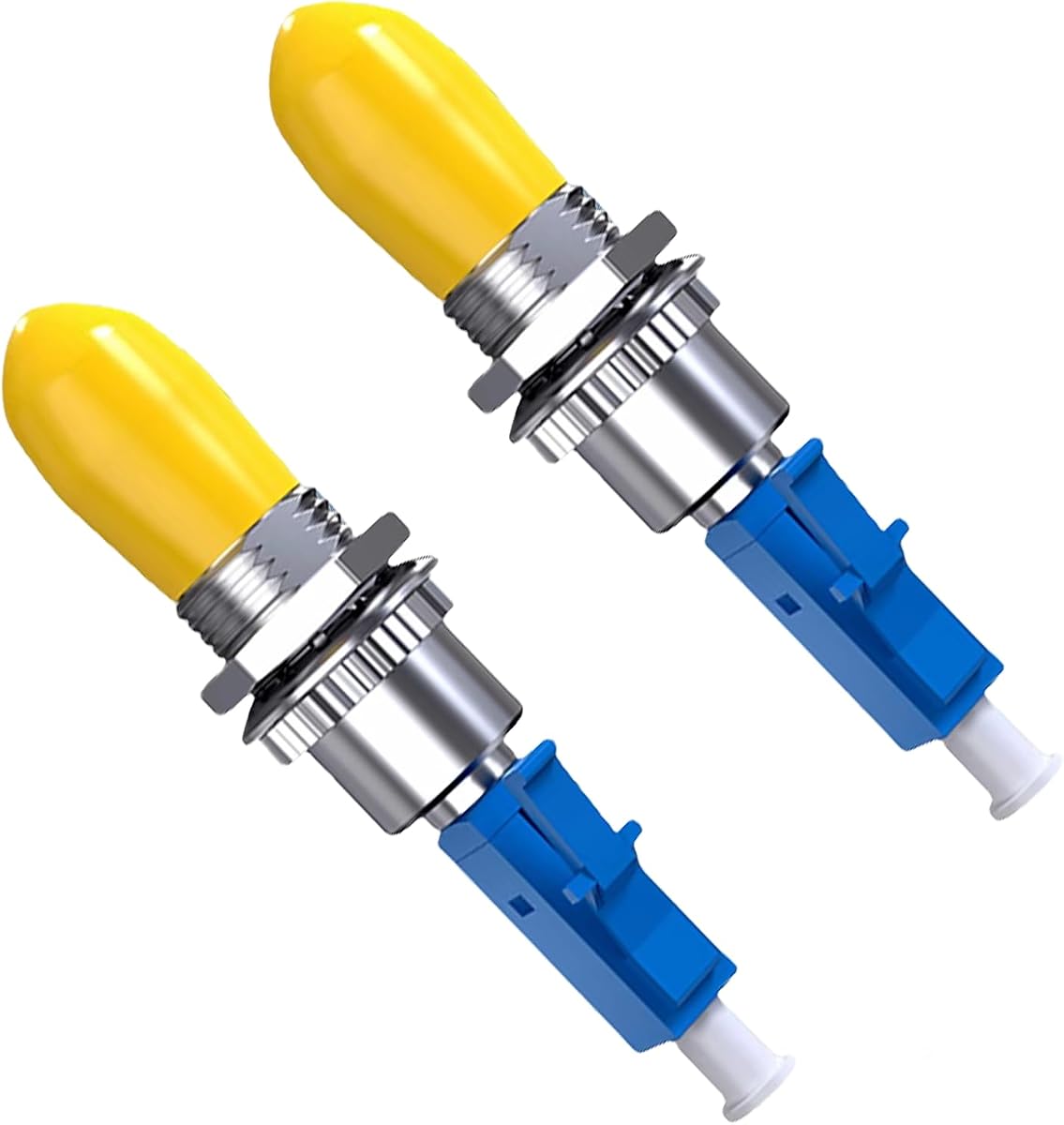


This adapter converts ST male to LC female connections efficiently. With a 4.8 rating, it offers reliable performance for optical measurements and network maintenance tasks.
We may earn a commission when you buy through this link, at no additional cost to you.
It features ceramic and metal sleeves for durability and stability. The insertion loss stays low under 0.2dB ensuring signal quality across 1310nm and 1550nm wavelengths.
While it lacks dust caps, the robust housing resists high temperature and impact. This makes it suitable for field testing and frequent plugging in various environments.
Buy this if you need a cost effective single mode hybrid solution. It is ideal for telecom engineers and network technicians upgrading legacy ST systems to modern LC interfaces.
Connects legacy ST ports with modern LC cables without signal degradation.
Flame retardant and high impact materials support demanding environments.
We may earn a commission when you buy through this link, at no additional cost to you.
This LC to ST adapter supports reverse conversion needs effectively. It maintains the same high specs as its sibling model but focuses on LC to ST transitions.
We may earn a commission when you buy through this link, at no additional cost to you.
The design supports both single mode and multimode fiber testing tools. It ensures stable connectivity for optical power meters and visual fault locators used in LAN setups.
Its lightweight construction makes it easy to carry during inspections. However, it uses standard UPC polish which may not suit APC specific applications requiring angled connectors.
Choose this for reliable and affordable network maintenance. It is a solid choice for technicians needing to interface LC patch cords with legacy ST equipment.
Ensures accurate testing when connecting power meters to fiber lines.
Supports mixed infrastructure setups in local area network environments.
We may earn a commission when you buy through this link, at no additional cost to you.
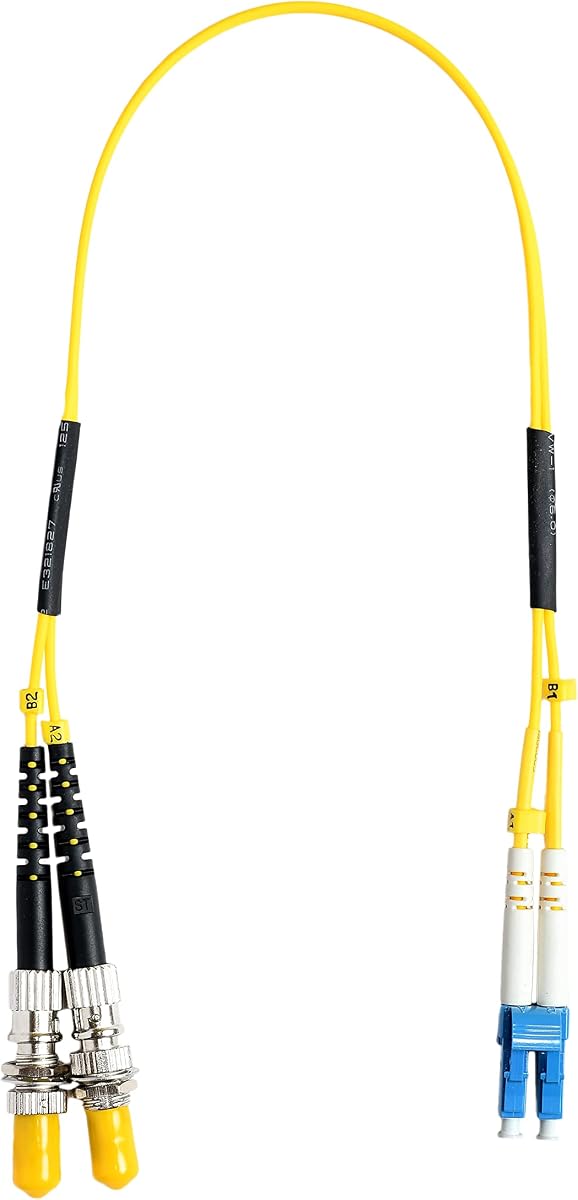
This product is a complete duplex adapter cable instead of a standalone coupler. It offers a plug and play solution for connecting two distinct ports with fixed spacing.
We may earn a commission when you buy through this link, at no additional cost to you.
The cable uses LSZH jacketing which reduces harmful smoke during fire risks. It is tested for link loss and return loss ensuring certified performance right out of the box.
While convenient, the fixed 1 foot length may restrict routing in tight spaces. It is best used where short patching is required rather than long runs or flexible setups.
Invest in this for safety and convenience in controlled environments. It suits data centers and labs where certified cabling and low smoke emissions are mandatory.
LSZH material prevents toxic smoke release in indoor server areas.
Factory tested for link and return loss before shipping.
We may earn a commission when you buy through this link, at no additional cost to you.
This adapter cable is designed specifically for multimode fiber systems. It bridges LC male to ST female connectors with a sturdy duplex duplex cord structure.
We may earn a commission when you buy through this link, at no additional cost to you.
The 62.5/125 core size matches older multimode infrastructure needs. It operates at 850nm which is standard for short range multimode transmissions in LANs.
Although it uses standard zip cord it offers reliable durability for indoor use. It is less expensive than LSZH options but lacks the fire safety benefits of premium jackets.
Select this for legacy multimode network upgrades. It works well for existing setups that rely on 62.5 micrometer fiber and require simple short patch connections.
Matches 62.5/125 core fiber found in older network hardware.
Keeps two fiber strands together for organized short patch connections.
We may earn a commission when you buy through this link, at no additional cost to you.
This kit provides a broad range of adapter options including ST to LC types. It supports both single and multimode fibers making it a one stop solution for testers.
We may earn a commission when you buy through this link, at no additional cost to you.
Metal housings ensure structural stability and corrosion resistance. The precise manufacturing keeps insertion loss low and return loss high for accurate measurements.
It simplifies field work by removing the need to buy separate adapters. However the price is higher than buying single adapters so consider your total needs first.
Use this for comprehensive network testing and maintenance. It is ideal for professionals who encounter various connector types like FC and SC alongside ST and LC.
Covers major fiber optic types reducing the need for multiple purchases.
Designed to meet the demands of OTDR and optical power meter tests.
We may earn a commission when you buy through this link, at no additional cost to you.
This adapter offers a reliable conversion from legacy ST to modern LC ports. It features a robust metal housing and precision ceramic sleeves for stable signal transmission.
We may earn a commission when you buy through this link, at no additional cost to you.
The design supports seamless interoperability with all standard ST and LC connectors. It fits standard adapter panels which helps optimize space in high density patch setups.
While it is very budget friendly the packaging is basic. It still delivers strong performance for network upgrades and mixed infrastructure deployments without issues.
Choose this for cost effective single mode integration. It works well for extending network life while maintaining signal integrity in telecom and enterprise backbones.
Threaded ST coupling resists vibration in demanding environments.
Compact size allows fitting more adapters in limited space.
We may earn a commission when you buy through this link, at no additional cost to you.
This cable provides a female to male adapter solution for specific setups. It connects LC female ports to ST male connectors with multimode duplex cabling.
We may earn a commission when you buy through this link, at no additional cost to you.
It is tailored for 850nm multimode systems used in local area networks. The standard zip cord offers durability and ease of handling for short patch tasks.
The fixed length simplifies installation but limits flexibility in complex paths. It is best for direct connection where routing distance is minimal and controlled.
Use this when you need a specific LC female to ST male bridge. It is suitable for legacy systems that require reverse polarity patching for connectivity.
Supports unique network setups requiring specific connector orientations.
Matches 62.5/125 fiber standards for accurate transmission.
We may earn a commission when you buy through this link, at no additional cost to you.
This adapter cable is built for singlemode fiber applications at 1310nm. It connects LC male to ST female ports with a fixed duplex zip cord for stability.
We may earn a commission when you buy through this link, at no additional cost to you.
It is designed for setups requiring precise singlemode signal transfer. The 9/125 core size ensures compatibility with standard singlemode fiber networks used in telecom.
Its rating is slightly lower which might suggest less durability or higher loss. It lacks LSZH jacketing which means it may not meet all fire safety codes for buildings.
Select this for simple singlemode connections where length is not flexible. It works for labs or test benches where fixed cables are acceptable and safety needs are standard.
Matches 9/125 core fiber for long range and high speed.
Provides stable 1 foot patching without excess slack.
We may earn a commission when you buy through this link, at no additional cost to you.
This adapter focuses on exceptional optical performance with very low loss. It features UPC contacts that ensure clean light transmission across 1310 and 1550nm bands.
We may earn a commission when you buy through this link, at no additional cost to you.
The return loss exceeds 50dB which indicates excellent signal reflection control. It works well with red light pens and optical power meters for detailed fiber checks.
Its compact design makes it easy to fit into tight panels. However it only supports simplex connections and has basic housing which may feel less premium than metal options.
Choose this for performance focused testing and maintenance. It is ideal for projects where signal integrity is critical and minimal loss is required for accuracy.
Very low insertion loss maintains signal strength across short runs.
Works with red light pens and power meters for continuity checks.
We may earn a commission when you buy through this link, at no additional cost to you.
This cable supports singlemode fiber transitions from LC female to ST male. It uses a standard duplex zip cord for secure and organized patch connections.
We may earn a commission when you buy through this link, at no additional cost to you.
It operates at 1310nm which is standard for singlemode transmissions in telecom. The product provides consistent specs matching other cables in the Ultra Spec brand family.
While it uses standard zip cord it is reliable for indoor lab or office use. It lacks LSZH jacketing so check fire codes before installing in public buildings.
Use this for fixed singlemode patch needs requiring reverse polarity. It is suitable for test benches where specific connector orientation is needed for accurate signal flow.
Matches specs of other Ultra Spec cables for predictable performance.
Plug and play design requires no tools or complex setup.
We may earn a commission when you buy through this link, at no additional cost to you.
Selecting the right adapter depends on your fiber type, connector orientation, and environmental needs. Use these factors to narrow down options and avoid compatibility issues.
Single mode adapters work with 9/125um fiber while multimode versions match 62.5/125 or 50/125um sizes. Mixing these can cause high signal loss or no connection so always check your cable core.
Match the adapter to your existing fiber type to ensure signal quality and system performance.
Adapter direction matters as some models convert LC male to ST female while others do the opposite. Verify which gender is on each side to match your patch cables correctly.
Confirm connector gender on both ends before buying to prevent needing extra couplers later.
Insertion loss shows how much signal is lost passing through the adapter. Look for values below 0.2dB to ensure minimal attenuation in your network links and test results.
Choose lower loss models for high speed data paths where signal strength is critical.
Return loss measures how much light reflects back to the source. High values above 50dB mean less reflection and better signal stability especially for laser based systems.
Prioritize high return loss for stable optical power measurements and long range links.
Most adapters support 1310nm and 1550nm for single mode or 850nm for multimode. Check that the adapter covers the wavelengths your network or test tool uses.
Ensure wavelength compatibility to avoid signal errors in your network or test setup.
Ceramic sleeves offer better precision and heat resistance than plastic ones. Metal housings add durability for field use while plastic is lighter and more budget friendly.
Pick ceramic or metal sleeves for environments requiring frequent plugging or heat resistance.
Some kits include dust caps to keep fiber ends clean. Uncovered adapters can gather dust causing loss or damage during idle times so check inclusion details.
Look for included caps or buy them separately to protect your connectors when not in use.
Field tested gear needs rugged builds and low insertion loss for reliability. Indoor office use may allow simpler designs with basic plastic housing if cost is a factor.
Choose rugged adapters for outdoor or industrial sites and simple ones for stable indoor labs.
Insert the adapter into the panel first and ensure it clicks into place. Then plug the ST side into your patch cable and the LC side into the matching device port.
Clean both connector ends with a lint free cloth before connecting. Dust on the fiber face can cause high loss or damage to the connector end face.
Avoid bending the fiber patch cables too tightly near the adapter. Keep bend radius above 30mm to prevent core fractures and maintain signal integrity.
It means an adapter that lets you connect LC connectors on one side to ST connectors on the other. This helps switch between modern and legacy network hardware. It supports both single mode and multimode depending on the model.
Check your fiber cable label. Single mode uses 9/125um core and works for long distance. Multimode uses 62.5/125 or 50/125um for short distances. Using the wrong type causes high signal loss.
Yes many technicians use these adapters with optical power meters. It lets you link legacy ST ports to modern test tools. Just ensure the adapter supports your test wavelength.
Most adapters use UPC polish with flat tips. APC uses angled tips which should not mix with UPC. Always check the end face shape to avoid damage or high reflection.
Insertion loss shows how much signal power drops when passing through the adapter. Too much loss can break a network link. Choose low loss adapters below 0.2dB for best results.
Yes dirt on connector faces causes loss. Use a fiber optic cleaner or cloth before each test. Clean often to avoid repeat issues or equipment damage over time.
The Poyiccot 3-pack and Sabary kit lead our list for value and versatility. These options offer reliable specs for both testing and daily network use.
Focus on fiber mode and insertion loss when picking your adapter. Matching your fiber type to the adapter will save you time on troubleshooting.
Prices change often so check current listings before buying. Always verify compatibility with your gear to ensure seamless connectivity from day one.