
National Geographic Circuit Kit for Kids with 120 Electrical Projects
4.7Editor score
Over 120 diverse projects
Kid-friendly video instructions
No tools required setup
Explore our expert guide on the best electricity learning kits for students. We compare top kits for projects, safety, and educational value in October 2026.
Electricity learning kits provide hands-on ways for students to understand circuits and magnetism. Good kits include clear manuals, safe components, and diverse projects that build real engineering skills.
We compared ten top-rated kits based on project variety, component quality, and educational depth. Our analysis covers options for different ages and skill levels to help you find the right fit.
Each pick highlights unique strengths and trade-offs to guide your choice. Prices and availability change often, so check current listings before purchasing to ensure you get the best value.
4.7Editor score

4.5Editor score

4.6Editor score
This side-by-side comparison highlights the key specifications and project capabilities of the top ten electricity learning kits available today for students and educators.



This kit stands out with its extensive collection of over 56 electricity components and 21 magnetism items. Rated 4.5 stars, it offers a robust learning experience for high school students seeking depth in physics experiments.
We may earn a commission when you buy through this link, at no additional cost to you.
The full-color manuals guide students through understanding basic principles like Ohm's law and electromagnetism. Projects range from fruit batteries to hand crank generators, encouraging deep exploration of how circuits and magnetic fields interact.
While it lacks included batteries, this omission helps keep costs reasonable and allows users to select preferred battery types. The storage bag keeps all parts organized, making setup and cleanup efficient for classroom or home use.
Best suited for grades 9 to 11, this kit supports serious study of electrical and magnetic concepts. It is an excellent choice for students who want to build complex models and understand underlying physics principles thoroughly.
The inclusion of 77 total items ensures students can explore a wide variety of experiments without needing additional purchases immediately.
Full-color manuals explain not just how to build but why experiments work, fostering deeper conceptual understanding beyond simple assembly.
We may earn a commission when you buy through this link, at no additional cost to you.
Designed for ages 8 and up, this kit simplifies electricity learning through eight distinct circuit experiments. Rated 4.5 stars, it focuses on engagement and ease of use for younger learners or beginners.
We may earn a commission when you buy through this link, at no additional cost to you.
The detailed circuit book provides guided learning with easy-to-follow instructions. Projects like saltwater power generation and fruit batteries make abstract concepts tangible and fun for kids interested in engineering.
Although it offers fewer projects than premium kits, the simplicity ensures high success rates for young students. This encourages confidence and curiosity without overwhelming them with complex wiring or parts management.
This kit is ideal for home or classroom use where simplicity and fun take priority. It serves as a great introduction to electrical concepts before moving on to more advanced systems.
The included circuit book breaks down complex ideas into manageable steps suitable for children starting their science journey.
Using everyday items like fruits and saltwater helps kids connect scientific principles to real-world objects they recognize.
We may earn a commission when you buy through this link, at no additional cost to you.
With over 120 fun projects, this kit offers unmatched variety for exploring electricity and electronics. Rated 4.7 stars, it is an award-winning choice that keeps kids occupied and learning for hours.
We may earn a commission when you buy through this link, at no additional cost to you.
The kit includes a QR code linking to video instructions, adding a modern twist to traditional manuals. Components snap together easily without tools, ensuring safety and convenience for younger users.
Projects range from building a keyboard mode to creating a sound system, fostering creativity alongside technical knowledge. The safe design and U.S. support team provide peace of mind for parents and educators.
Ideal for those seeking maximum value through project count, this kit supports long-term exploration. It is perfect for households that want a single purchase to last through various stages of learning.
Video instructions accessed via QR code make assembly intuitive and accessible for visual learners of all ages.
The wide range of projects covers music, light, and sound, showing electricity's role in multiple types of technology.
We may earn a commission when you buy through this link, at no additional cost to you.
This kit offers more than 50 do-it-yourself experiments designed to introduce kids to electricity and magnetism. Rated 4.4 stars, it balances educational value with affordability for families and schools.
We may earn a commission when you buy through this link, at no additional cost to you.
Unique items like a light control led and magnetic switch provide interesting ways to explore circuits. The well-written manual explains not just what to do but why experiments work, encouraging critical thinking.
The solid storage case keeps everything organized and ready for outings or classroom sharing. Each item has a fixed place, making packing easy and reducing the risk of lost parts.
Best for students looking for a comprehensive introduction to physics concepts, this kit is a strong choice. It supports hands-on learning that can be easily transported between home and school environments.
The manual guides students to discover and explore on their own rather than just following rigid instructions step by step.
The organized storage case makes it easy to take experiments to friends or study groups for collaborative learning.
We may earn a commission when you buy through this link, at no additional cost to you.
Focused on motors and circuit basics, this kit includes two motors and five bulbs for versatile experiments. Rated 4.2 stars, it is a budget-friendly option for curious kids eager to build inventions.
We may earn a commission when you buy through this link, at no additional cost to you.
The kit allows for various configurations using rocker switches and propellers. It is designed to inspire creativity, letting children turn new ideas into reality through simple electrical connections.
Users should note voltage limits to prevent overheating, which ensures safety during longer experiments. While not the most comprehensive, it provides enough variety for school projects or quick at-home builds.
Ideal for children aged 8 and up, this kit serves well as a back to school gift. It helps teach basic circuit knowledge and offers a safe way to interact with electrical components under supervision.
The variety of motors and propellers allows children to experiment with different fan and movement configurations.
Adult supervision is required due to small parts and potential heat generation during prolonged circuit usage.
We may earn a commission when you buy through this link, at no additional cost to you.
This comprehensive STEM kit includes 50 pieces for exploring circuits and electromagnetism. Rated 4.4 stars, it encourages parent-child discovery and fosters critical thinking through hands-on interaction.
We may earn a commission when you buy through this link, at no additional cost to you.
The 40-page full-color manual guides users through 18 hands-on experiments including electric bells and hand crank generators. Components like ammeters and voltmeters provide realistic tools for measuring electrical properties.
Designed for durability and safety, this kit is ideal for birthdays or school projects. It creates opportunities for family science activities that build observation skills and curiosity together.
Best for families looking to engage in joint learning, this kit balances education with fun. It serves as a strong foundation for children 8 and older to explore physics concepts safely.
The kit is designed to encourage adults and children to work together, strengthening bonds through shared discovery.
Inclusion of measuring tools like ammeters adds a realistic element to learning that mirrors real engineering work.
We may earn a commission when you buy through this link, at no additional cost to you.
Targeting junior and senior high school students, this kit features unique items like a sensitive ammeter and Joule's first law module. Rated 4.5 stars, it supports deeper exploration of circuits and magnetic fields.
We may earn a commission when you buy through this link, at no additional cost to you.
The manual covers specific content and explains operation steps, guiding students to discover and think independently. Items like magnetically controlled switches allow for advanced experiments beyond basic circuit building.
All components are packed in a sturdy double-layer storage box with fixed positions. This organization makes it convenient to carry for school projects or collaborative study sessions with classmates.
This kit is best for students ready to move beyond basics into measurable physics concepts. It serves well as a learning starter that bridges textbook knowledge with practical laboratory experience.
The inclusion of a sensitive ammeter allows for precise current measurements, teaching students about electrical quantification.
Guides students to design interesting experiments beyond the manual, fostering creativity and problem-solving skills.
We may earn a commission when you buy through this link, at no additional cost to you.
An excellent introductory kit for electricity, this model helps students consolidate textbook knowledge through hands-on practice. Rated 4.6 stars, it is designed to improve hands-on ability and awareness of electricity.
We may earn a commission when you buy through this link, at no additional cost to you.
The English instructions make assembly easier for students in various environments. By setting up simple series and parallel circuits, learners gain a deeper understanding of current and circuit rules.
All accessories are packed in a plastic storage box, keeping parts safe when not in use. The simplicity ensures that students focus on learning basics rather than struggling with complex setups.
Best for 7th to 9th-grade science projects, this kit is ideal for schools and home study units. It offers a safe and budget-friendly way to explore electrical basics effectively.
The clear English instructions ensure that language barriers do not prevent students from enjoying the learning experience.
Building circuits helps bridge the gap between reading about concepts in books and seeing them work in reality.
We may earn a commission when you buy through this link, at no additional cost to you.
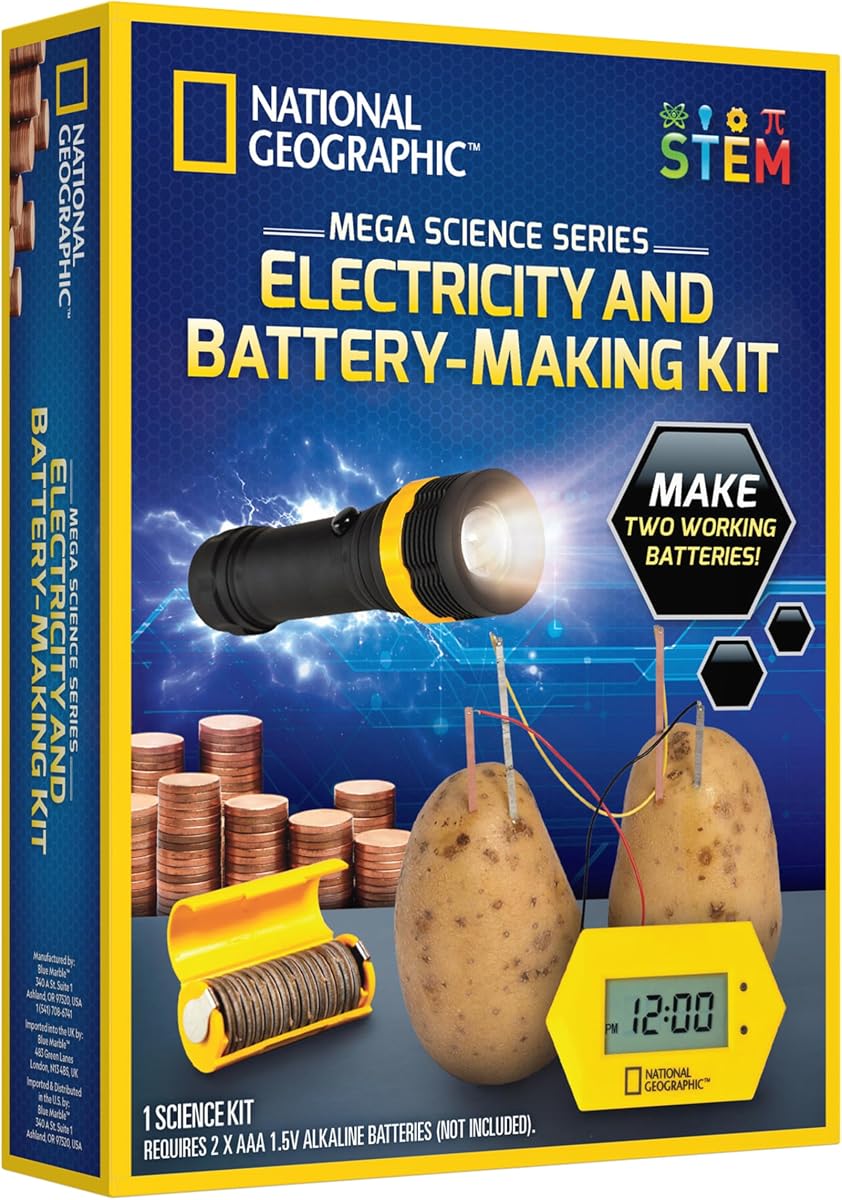
This kit focuses on the science of batteries with two engaging projects including a DIY potato clock and a penny flashlight. Rated 4.5 stars, it provides a memorable way to learn about electrical engineering.
We may earn a commission when you buy through this link, at no additional cost to you.
Easy-to-follow instructions let kids start right away with items like potatoes or included coins. The detailed learning guide offers fascinating insight into why these things work, enhancing the educational value.
Although it has fewer projects than other kits, the depth of learning is high. Kids build a battery and a complete electrical circuit, seeing the result come to life immediately upon activation.
Ideal for curious kids who love to build, this kit is a great science gift. It encourages memorable experimentation that leaves a lasting impression on how power sources function.
Unlike broader kits, this focuses deeply on how batteries create power, teaching a specific and vital concept.
Creating a clock from a potato makes the learning experience fun and unforgettable for young students.
We may earn a commission when you buy through this link, at no additional cost to you.
This upgrade kit is ready right out of the box for building simple electrical and magnetic models. Rated 4.4 stars, it offers projects like a wind power car and traffic light to engage students.
We may earn a commission when you buy through this link, at no additional cost to you.
The transparent storage box keeps all different parts organized and visible for easy access. It includes switches, wires, bulbs, and LEDs to support a range of experiments and models.
While similar to the basic version, the upgrade adds more complex projects like traffic lights and double switch circuits. This makes it suitable for teachers looking to challenge students further.
Best for grades 7 to 11, this kit supports both teachers and students in learning and exploring. It provides the tools needed to build models and understand principles effectively.
Adding traffic light and wind power car projects allows for a more advanced exploration of circuits than standard kits.
The transparent storage and organized parts make classroom management and distribution of materials easier for educators.
We may earn a commission when you buy through this link, at no additional cost to you.
Selecting the right kit involves considering safety, project variety, and educational depth to match the student's age and interest level.
Safety is paramount when choosing an electricity learning kit. Look for components designed with child-friendly features such as no sharp edges, secure connections, and clear warnings about voltage limits. Kits that emphasize kid-friendly instructions and safe materials ensure that students can focus on learning without unnecessary risks.
Prioritize kits with clear safety guidelines and components that reduce burn or shock hazards.
A diverse range of projects keeps students engaged over time. Kits offering experiments from simple series circuits to complex projects like fruit batteries or electromagnets provide broader educational value. Variety ensures that learners can explore different aspects of electricity and magnetism without becoming bored quickly.
Choose a kit with enough projects to sustain interest and cover multiple electrical concepts.
Clear instructions are essential for successful learning experiences. Full-color manuals with illustrations help students visualize steps and understand the underlying principles rather than just following assembly lines. Some kits even offer video instructions which can further assist visual learners in complex builds.
Look for manuals that explain why experiments work to deepen conceptual understanding.
Durable components ensure the kit lasts longer and performs reliably during experiments. High-quality wires, bulbs, and connectors prevent frustration from breakage or poor conductivity. Investing in a kit with robust materials will save money and hassle in the long run.
Check for durable items and well-organized storage to maintain kit integrity.
Selecting a kit that matches the student's age and skill level is crucial for engagement. Younger children benefit from simpler kits with snap-together parts, while older students can handle detailed wiring and measurement tools. Ensuring the complexity matches their ability prevents discouragement.
Verify the recommended age range and complexity of projects before purchasing.
Organized storage solutions help keep all parts together and accessible. A sturdy case with fixed positions for each item makes it easy to store the kit after use or transport it to school. Good organization prevents lost parts and maintains the value of the kit.
Prefer kits with solid storage cases to keep everything safe and organized.
While price varies, the best kits offer good value through quality components and educational depth. Budget options may lack some features but can still teach basics effectively. Evaluate the cost against the number of projects and component quality to ensure a fair deal.
Compare the number of experiments and included parts to determine overall value.
Some kits require extra tools like screwdrivers or soldering irons which add to the initial cost. Ideally, choose a kit that is ready to use out of the box or includes all necessary accessories. This ensures that the focus remains on learning rather than searching for tools.
Check if additional tools are needed to complete the projects as described.
Begin by reading the manual thoroughly to understand the components and basic safety guidelines. Organize all parts in the storage case before starting to ensure everything is accessible during experiments.
Connect circuits carefully according to the instructions, ensuring secure connections to prevent short circuits or loose wires. If using batteries, check polarity to avoid damaging components or causing leaks.
After each session, disconnect power sources and store components properly in the case. Regularly inspect wires and bulbs for wear and tear to maintain safety and functionality for future projects.
Most kits do not include batteries to allow users to choose their preferred type. It is best to check the product specifications before purchasing to ensure you have the required batteries ready for experiments.
These kits are generally recommended for children aged 8 and up. However, specific kits may target younger kids or high school students depending on the complexity of projects and wiring involved.
Yes, adults can definitely use these kits to refresh their knowledge of electricity or teach others. The hands-on nature makes it suitable for educators and hobbyists interested in basic electrical engineering.
Most kits are designed with safety in mind and are suitable for classroom use. Always ensure adult supervision is present and that students follow the safety guidelines provided in the manual.
Some manufacturers offer customer support for missing parts. It is advisable to keep all packaging and reach out to the seller or manufacturer if a critical component is lost during use.
Many kits are designed to be tool-free with snap-on components. However, some advanced sets might require simple tools like screwdrivers so check the product details to be sure.
We reviewed ten top-rated kits offering a range of options from simple beginners to advanced high school projects. Each kit provides unique benefits suited to different learning styles and educational needs.
When choosing, prioritize safety features and project variety to ensure long-term engagement. Consider the components included and the quality of instructions to support effective learning.
Prices and availability may vary so verify current listings before purchasing. This ensures you receive the best value for your investment in educational electronics.