
ELEGOO UNO R3 Project Super Starter Kit
4.7Editor score
22+ guided lessons included
No soldering required
Includes servo and stepper motors
This guide compares the top electronics kits for teens covering robotics Arduino coding soldering and STEM learning to help parents choose the perfect
Finding the right electronics kits for teens can transform a hobby into a lifelong passion for engineering and coding. These kits provide hands-on experience with real components like sensors, motors, and microcontrollers that build practical skills. Whether your teen loves building robots or learning circuit design, there is a kit tailored to their specific interests and skill level.
We evaluated ten top-rated products based on component variety, ease of assembly, tutorial quality, and project range. Each kit was assessed for its ability to engage teenagers while teaching fundamental concepts in electronics and programming. Our selection includes options ranging from simple snap-together circuits to advanced programmable robot car systems for various budgets.
Each pick below highlights key features, pros, cons, and who benefits most from the kit. Please note that stock availability and pricing can change frequently online so check current listings before purchasing. We aim to provide honest insights to help you invest in a product that will inspire creativity and technical growth.
4.7Editor score

4.7Editor score
4.8Editor score
The following table provides a side-by-side comparison of the ten best electronics kits for teens selected for this guide. It highlights core specifications and project capabilities to help you quickly identify the best fit for your needs.


The ELEGOO Mega 2560 R3 Project Kit stands out as the top choice for teens ready to dive deep into electronics. With a rating of 4.7 stars, it offers over 35 guided projects that range from simple LED blinking to complex motor control systems. The kit includes more than 200 components ensuring users have everything needed for extensive prototyping without additional purchases.
We may earn a commission when you buy through this link, at no additional cost to you.
Its standout quality lies in the Mega board itself which provides 54 digital I/O pins and 256 KB flash memory. This allows for larger and more complex builds than standard starter kits. The organized storage case and pre-soldered modules reduce setup time significantly letting teens focus on learning logic and coding rather than searching for loose parts.
Honest trade-offs include the larger physical size of the Mega board compared to smaller variants which might be bulky for small desks. Additionally the sheer number of projects requires time commitment to fully explore every lesson. However these are acceptable given the depth of learning and versatility offered for serious STEM enthusiasts.
This kit is ideal for teens who have a basic understanding of Arduino or want to grow into it quickly. It is perfect for school robotics clubs or serious hobbyists aiming to build interactive displays and environmental monitors. We recommend this as the best overall option for those seeking a complete and expandable learning experience.
With over 200 parts including sensors motors and displays this kit eliminates the need for extra purchases during the learning journey.
The 35 guided lessons with example code allow teens to progress from basic concepts to advanced projects systematically and confidently.
We may earn a commission when you buy through this link, at no additional cost to you.
The ELEGOO UNO R3 Project Most Complete Starter Kit offers a balanced introduction to electronics for teens new to coding. It comes with a 4.7 rating and features over 30 guided projects covering essentials like LCD displays and RFID access. This kit is designed to help beginners transition smoothly from simple tasks to more complex interactive systems.
We may earn a commission when you buy through this link, at no additional cost to you.
A key strength is the inclusion of a 9 V power supply and breadboard power module which simplifies the initial setup process. Users do not need to source basic accessories separately saving time and effort. The organized storage case and small-parts box help keep the 200 components across 63 types easy to manage between different experiments.
Trade-offs include having fewer I/O pins compared to the Mega version which limits the scale of large-scale simultaneous projects. Some users report that the sheer volume of parts can be overwhelming without careful organization. However these minor issues do not detract from the overall educational value and accessibility for new learners.
This kit is best suited for teens starting their journey in electronics and want a comprehensive set of parts. It is excellent for coding clubs or classroom settings where multiple students need consistent setups. We suggest this option for those prioritizing ease of use and broad project variety over maximum pin count.
Included power supplies and cables ensure you can start building immediately without visiting an electronics store for basic essentials.
With sensors ranging from ultrasonic to environmental monitoring this kit covers a wide array of STEM learning applications.
We may earn a commission when you buy through this link, at no additional cost to you.
The ELEGOO UNO R3 Smart Robot Car Kit V4 transforms coding and engineering into a tangible working robot car. Rated at 4.5 stars this kit allows teens to assemble program and drive their own vehicle. It includes an onboard camera for FPV viewing making the learning experience feel like a professional engineering challenge rather than a simple toy.
We may earn a commission when you buy through this link, at no additional cost to you.
Its standout feature is the combination of line tracking obstacle avoidance and FPV video capabilities controlled via an app or remote. The keyed XH2.54 connectors significantly reduce wiring mistakes during assembly which is crucial for beginners. The included rechargeable lithium-ion battery ensures the robot can run multiple times without needing constant battery changes.
Trade-offs include the complexity of assembly which is recommended for ages 8+ with adult guidance for first-time builders. The time required to wire and test the car can be significant compared to simpler plug-and-play kits. However the practical application of physics and coding makes these challenges worth the effort for interested students.
This kit is perfect for teens interested in robotics competitions or engineering careers. It bridges the gap between theoretical coding and physical motion control effectively. We recommend it for families looking for a weekend project that results in a fun and functional toy they can use immediately.
View live video through the onboard camera to understand how robots perceive and interact with their physical environment.
Modify code to control movement and reactions turning abstract programming concepts into visible physical behaviors.
We may earn a commission when you buy through this link, at no additional cost to you.
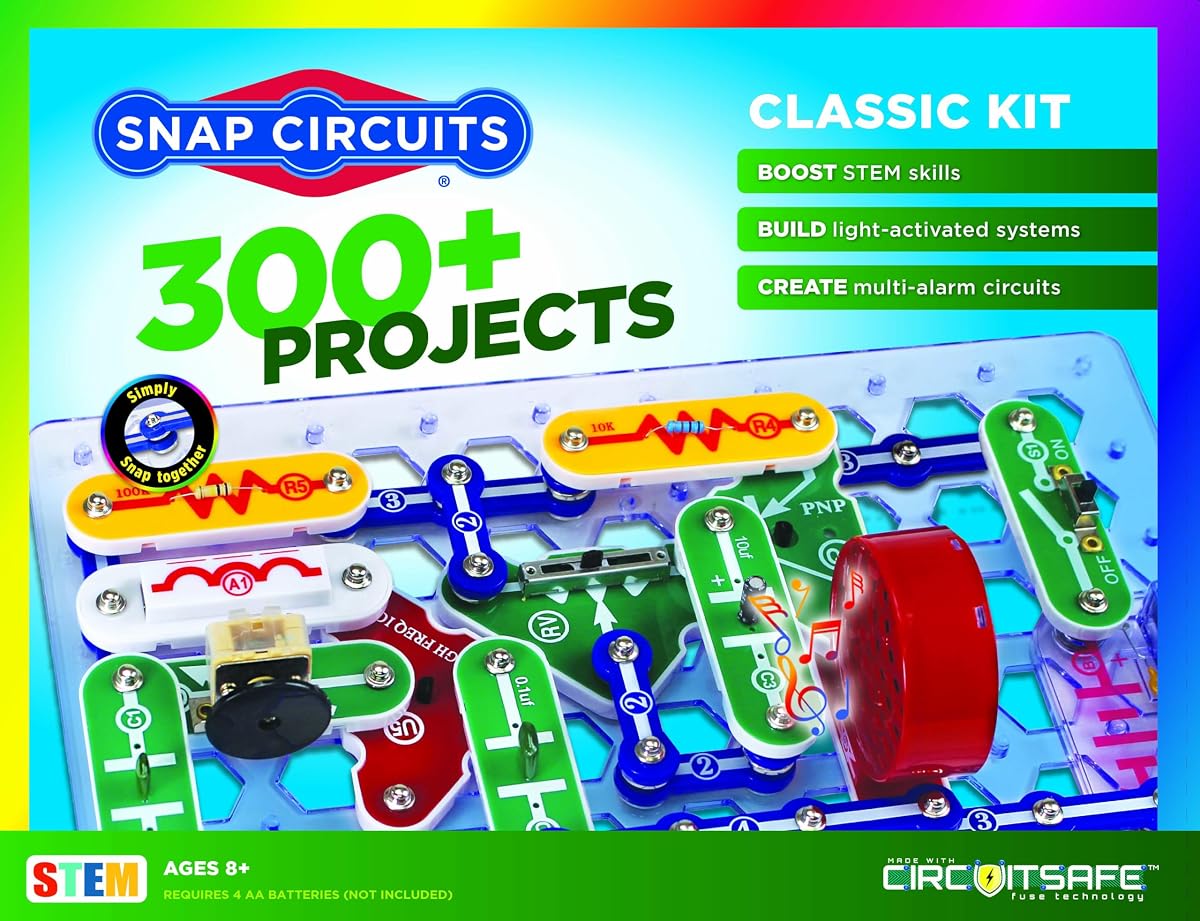
The SNAP CIRCUITS Classic SC-300 holds the highest rating of 4.8 stars among all reviewed kits. It offers over 300 exciting projects that introduce electrical engineering basics without any soldering or tools. This makes it an ideal choice for teens who want to understand circuits safely and quickly without the frustration of complex wiring.
We may earn a commission when you buy through this link, at no additional cost to you.
Its premium quality is evident in the durable snap-together design and color-coded pieces that ensure accurate assembly every time. The instruction book guides users through building gadgets like AM radios and burglar alarms which keeps engagement high. It has won numerous awards including the Specialty Toy of the Year confirming its educational merit.
Trade-offs include a lack of coding components as this kit focuses purely on physical circuits and electricity flow. Small parts can be lost if not stored carefully which might interrupt project continuity. However these limitations are acceptable for the primary goal of teaching circuit logic and component function safely.
This kit is best for teens who prefer physical building over software coding or need a safe introduction to electronics. It is excellent for homeschooling or as a supplement to other STEM activities. We recommend it for those seeking a high-quality durable experience with endless project possibilities.
Snap together parts eliminate the need for soldering irons or screwdrivers making it safe for all ages and skill levels.
Build over 300 different projects from simple lights to complex radios ensuring long-term engagement and learning.
We may earn a commission when you buy through this link, at no additional cost to you.
The MiOYOOW DIY Bluetooth Speaker Kit focuses on practical utility by letting teens build a functional speaker they can use daily. With a rating of 3.9 stars this kit emphasizes hands-on soldering practice and circuit knowledge. The end result is a portable speaker with dual 3W speakers and an acrylic enclosure that looks professional.
We may earn a commission when you buy through this link, at no additional cost to you.
Its key strength is the practical application where teens learn amplifier circuits and soldering techniques to create a usable device. It supports Bluetooth TF card and USB playback making it versatile for dorm rooms or desks. The pre-soldered amplifier board simplifies the process allowing focus on the more challenging LED board and enclosure assembly.
Trade-offs include a lower rating compared to other kits suggesting some users found it challenging or the audio quality average. It requires foundational electronics knowledge making it less suitable for absolute beginners. However for those aiming to improve soldering skills specifically this kit offers a meaningful and rewarding project.
This kit is ideal for teens interested in audio tech or those needing to practice soldering for school projects. It works well as a holiday gift or back-to-school project for motivated learners. We recommend it for users who want a tangible gadget at the end of their learning journey.
Build a speaker that serves a real purpose allowing you to enjoy music while learning technical assembly skills.
Focus on connecting wires and LED boards to refine your soldering technique with real components.
We may earn a commission when you buy through this link, at no additional cost to you.
The ELEGOO UNO R3 Project Super Starter Kit is the top budget option offering a high rating of 4.7 stars. It includes over 22 guided lessons that teach core concepts like LEDs blinking and temperature reading. This kit is designed to be affordable while still providing quality components like stepper motors and IR remotes.
We may earn a commission when you buy through this link, at no additional cost to you.
Its affordability comes from a streamlined selection of essential parts that avoid unnecessary extras. The PDF tutorial and example code make it easy to understand digital inputs and outputs. It allows teens to learn logic and then create their own projects by changing thresholds or sequences in the code.
Trade-offs include having fewer components than the Mega version which means fewer complex project variations. The project scope is limited to foundational skills rather than large systems. However this focus makes it less overwhelming for younger teens or those on a strict budget looking for a starter kit.
This kit is perfect for families wanting to introduce Arduino without a large financial commitment. It is great for homeschool units or coding clubs needing multiple sets. We recommend it as the best value option for those prioritizing core learning over extensive component libraries.
Get access to essential components and tutorials at a fraction of the cost of premium kits.
Detailed PDF guides ensure you have the necessary steps to succeed without frustration.
We may earn a commission when you buy through this link, at no additional cost to you.
The DIY Bluetooth Speaker Kit with LED Light Show is designed for teens who want visual feedback during their projects. It has a 4.7 rating and includes a 10-LED visualizer that pulses with music creating a vibrant light show. This makes the learning experience more engaging than standard audio-only kits.
We may earn a commission when you buy through this link, at no additional cost to you.
Its visualizer feature is a standout because it turns sound into light which helps understand signal processing concepts. The illustrated manual uses high-resolution photos to ensure smooth assembly even for beginners with basic soldering skills. It includes dual 2-inch speakers and an acrylic enclosure to keep the build secure.
Trade-offs include the requirement for basic soldering skills which might be a barrier for absolute novices. The audio output is functional but not high-fidelity which fits the educational focus. However the visual element adds significant value and fun to the project encouraging completion and use.
This kit is ideal for teens who respond well to visual stimuli and want a fun project. It works well for parties or personal entertainment setups. We recommend it for those who want to practice soldering while creating something that looks cool and lights up.
Watch your music come to life with LED lights that pulse in sync creating an immersive listening experience.
High-clarity photos in the manual make it easy to follow assembly without getting lost in text instructions.
We may earn a commission when you buy through this link, at no additional cost to you.
The MicroKits Theremin Electronics Kit allows teens to build their own electric field instrument. Rated at 4.5 stars this kit focuses on sound creation without requiring soldering or tools. It teaches the physics of electrical capacitance as you wave your hands around to produce music.
We may earn a commission when you buy through this link, at no additional cost to you.
Its unique nature sets it apart from standard electronics kits by focusing on sound and physics. The colorful 22-page instructional booklet guides step-by-step assembly with breaks to check work. Batteries are included making it ready to use immediately after building on the breadboard.
Trade-offs include a learning curve to play the instrument correctly since it relies on hand proximity. It is limited to one type of instrument compared to general-purpose kits. However the novelty and educational focus on physics make it a fantastic addition for creative and curious students.
This kit is perfect for teens interested in music technology or physics. It is great for science fairs or unique hobbies. We recommend it for those wanting to explore how electricity can create sound waves in an interactive way.
Play music by waving your hands around electric fields creating a magical connection between movement and sound.
Learn about electrical capacitance practically by seeing how proximity affects the pitch and volume of sound.
We may earn a commission when you buy through this link, at no additional cost to you.
The ELEGOO 37-in-1 Sensor Modules Kit is an essential expansion set rated at 4.7 stars. It adds motion, distance, light, and sound sensors to existing projects. This kit is designed to be used alongside controllers like Arduino UNO or MEGA to create complex systems.
We may earn a commission when you buy through this link, at no additional cost to you.
Its strength lies in the sheer variety of 37 modules covering inputs like tilt Hall and temperature. The tutorial materials include wiring diagrams and example code to help integrate these sensors easily. It allows teens to upgrade their existing projects without buying multiple individual sensors.
Trade-offs include the fact that controller boards and wires are not included which means it is a secondary purchase. It requires you to already have a board and breadboard to use effectively. However this modularity makes it a flexible and cost-effective way to expand capabilities.
This kit is ideal for teens who already have a starter kit and want to go further. It is perfect for classroom labs or makerspaces needing diverse inputs. We recommend it for those who have the base components and want to explore advanced sensor applications.
Plug in different sensors to change your project functions without replacing your main controller board.
Access nearly every type of input sensor needed for modern robotics and environmental monitoring.
We may earn a commission when you buy through this link, at no additional cost to you.
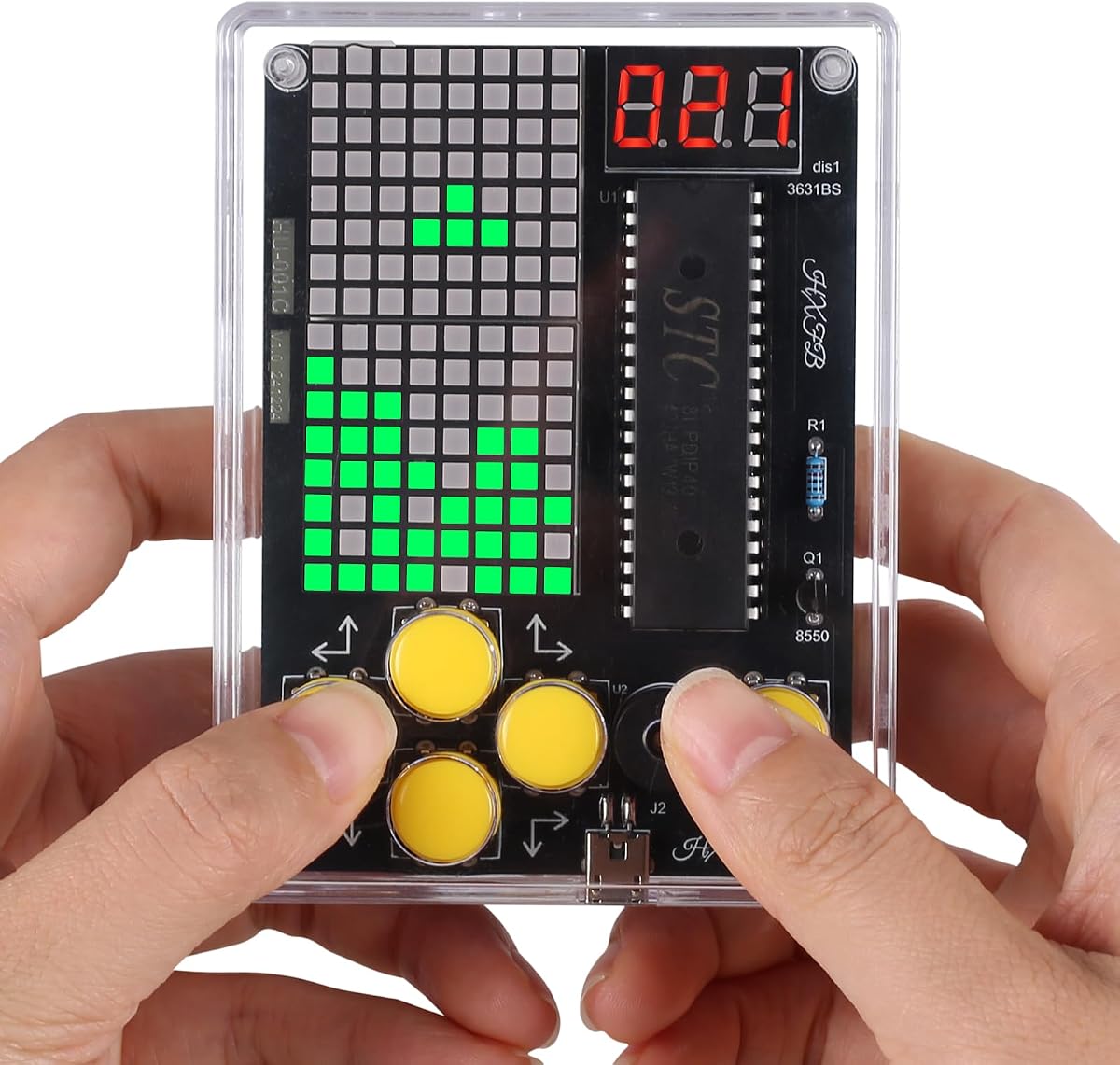
The PEMENOL 7-in-1 DIY Game Soldering Kit offers a unique approach with seven built-in interactive functions. Rated at 4.1 stars it allows teens to choose from three difficulty levels based on their experience. This structured learning path helps users progress from basic component placement to advanced assembly.
We may earn a commission when you buy through this link, at no additional cost to you.
Its key strength is the video guidance and step-by-step manual which ensures users can complete the project even if they struggle with static images. The game aspect keeps motivation high while you practice soldering and assembly. It is designed for ages 15+ so it suits older teens looking for realistic engineering tasks.
Trade-offs include a lower rating compared to general Arduino kits suggesting it might be more challenging or niche. It focuses heavily on soldering which might not appeal to those preferring coding first. However for targeted skill development this kit offers a clear and engaging path to mastery.
This kit is ideal for teens needing specific soldering practice for a trade or school course. It works well for workshops or group learning with supervision. We recommend it for those ready to move beyond breadboards and into permanent circuit construction.
Start with easy difficulty and move to harder levels as your confidence and skill with the soldering iron grow.
Video guidance helps clarify complex steps that text instructions might miss ensuring a higher success rate.
We may earn a commission when you buy through this link, at no additional cost to you.
Choosing the right kit involves understanding your teen's current skill level and interests. This guide outlines the key factors to consider before making a purchase.
Always assess whether your teen is a beginner or has some coding experience. For absolute beginners choose kits like SNAP CIRCUITS that require no soldering. For those ready to code opt for Arduino-based options that offer programming tutorials.
Decide if you want them to learn soldering skills immediately or start with breadboards. Solder-free kits provide instant gratification while soldering kits build precision skills. If unsure look for kits with pre-soldered modules to bridge the gap.
Look for kits offering 30+ projects to keep interest high over time. A wide range from simple lights to robots ensures they do not get bored quickly. Check if the kit allows modifications so they can create their own unique versions.
Ensure all parts meet safety standards and are durable. Plastic parts should be sturdy and connectors labeled clearly to avoid mistakes. Avoid kits with loose wires that tangle easily as this causes frustration during assembly.
Prioritize kits with structured lessons that explain concepts like circuits and sensors. The materials should connect the task to real-world applications like environmental monitoring. This context helps teens see the relevance of what they are building.
High-quality instruction manuals with clear diagrams are crucial for independent learning. Look for video guides or online communities where users can get help. Comprehensive documentation reduces the need for external technical support.
Set a budget but consider if you will need to buy extra parts later. Scalable kits that allow adding more sensors over time offer better long-term value. Sometimes spending slightly more upfront saves money by preventing future purchases.
Check the recommended age range to match the complexity to your teen. Most kits for teens are recommended for ages 12+. Ensure small parts are handled safely if younger siblings are in the home.
Start by reading all instructions and gathering all components on a clean flat workspace. Organize wires and parts using the provided storage cases or small containers to keep track of components between sessions.
Follow the tutorial steps sequentially without skipping ahead to ensure correct wiring and logic setup. Test each small section as you build rather than waiting until the end to identify issues early.
Store your kit in a dry cool place away from direct sunlight to preserve electronics and plastic parts. Keep manuals and code guides safe so they can be referenced easily during future projects.
The ELEGOO Mega 2560 R3 and UNO R3 Project Kits are ideal for coding as they work with the Arduino IDE. They include guided lessons that teach C++ programming through practical examples. These kits allow teens to modify code to create custom behaviors for their projects.
No prior experience is needed for beginner-friendly kits like SNAP CIRCUITS which require no coding. However more advanced kits like the Robot Car V4 benefit from basic guidance. Most include manuals that assume zero knowledge so beginners can start immediately.
Yes all selected kits meet standard safety regulations for educational use. Kits with soldering require adult supervision during that specific step to avoid burns. Snap-together kits are completely safe for unsupervised play once assembled.
These kits are excellent for science fairs and robotics clubs due to their structured lessons. They provide real engineering principles that teachers can align with curriculum standards. The variety of sensors allows for diverse research topics and data collection.
Choose kits with visual outputs like lights or motors to maintain engagement. The ELEGOO Robot Car Kit is great for this as it results in a moving toy. Breaking projects into smaller milestones helps maintain momentum and sense of accomplishment.
Some kits like the Theremin and Robot Car include batteries while others like the Arduino kits require separate AA batteries. Check the component list carefully before purchasing to know what extras you need to buy. Most require common battery sizes found in stores.
Many kits like the ELEGOO Sensor Modules are designed to expand existing builds. Adding more parts is easy with standard Arduino compatibility. This scalability ensures that teens can continue learning as they advance in skills.
No several kits like SNAP CIRCUITS and the Robot Car V4 avoid soldering entirely. Others like the Bluetooth Speaker kits focus on soldering practice for skill building. You can choose based on whether you want to introduce heat tools immediately.
We have explored ten exceptional kits offering diverse ways for teens to learn electronics and coding. The ELEGOO Mega 2560 R3 Project Kit stands out as the top choice for comprehensive learning and flexibility. It provides a complete package for serious enthusiasts ready to dive deep into STEM.
When choosing prioritize kits that match your teen's current confidence level to ensure success. Whether they want to build robots or learn circuit logic there is a perfect fit here. Investing in the right kit can spark a lifelong interest in engineering.
Remember that availability and pricing change frequently so verify stock before purchasing. Check current listings online to ensure you get the best deal for the chosen model. We hope this guide helps you find the perfect tool for your teen's technical growth.