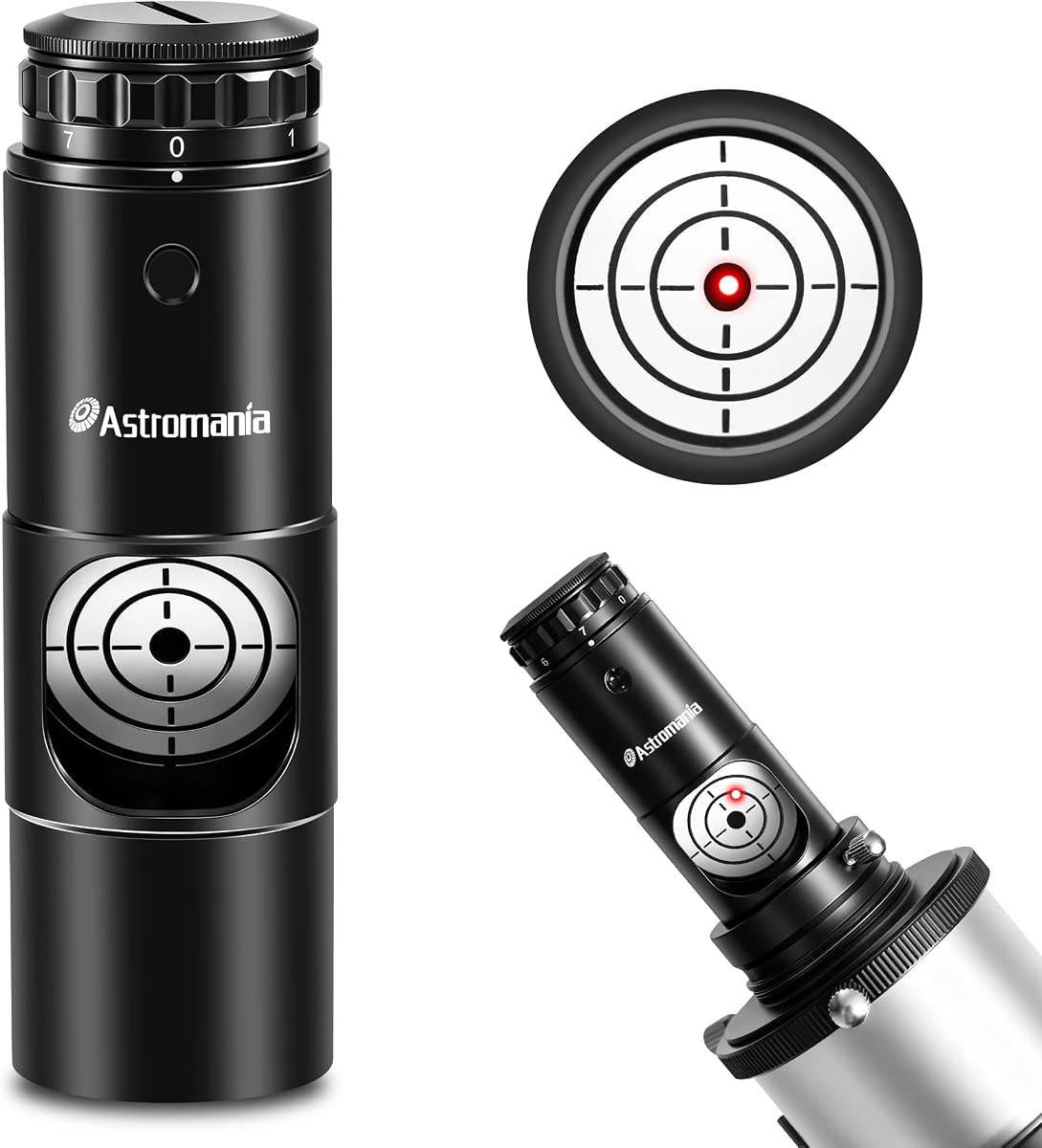
Astromania Laser Collimator 1.25 for Newtonian Marca Telescope Alignment
4.5Editor score
Compact design fits palm easily
Compatible with 1.25 focusers
Includes CR2032 lithium battery
This guide compares the top laser collimator for telescope alignment tools to help you achieve precise optical alignment for Newtonian and reflector telescopes
Achieving sharp celestial views requires precise optical alignment of your telescope mirrors. A laser collimator for telescope alignment simplifies this process by projecting a beam that reveals misalignment instantly. These tools are essential for Newtonian and reflector telescopes to ensure optimal performance.
We compared ten highly rated collimators based on build quality, ease of use, and alignment accuracy. Our analysis focuses on features like adjustable brightness, adapter compatibility, and calibration stability. Each product offers unique benefits for beginners and experienced astronomers seeking clearer images.
Each pick highlights key strengths and ideal use cases to help you choose the right tool. Prices and availability change frequently so verify current listings before purchasing. Investing in a reliable collimator ensures your telescope delivers the best possible views of the night sky.
4.5Editor score

4.5Editor score
4.7Editor score
The following table provides a side-by-side comparison of all ten collimators evaluated in this guide. Review key specifications like compatibility, features, and ratings to find the best fit for your telescope setup.


This Astromania collimator stands out as the top choice for most users due to its versatility and ease of use. With a solid 4.5 star rating it delivers reliable performance for Newtonian telescopes. The dual adapter support ensures compatibility with standard and large focusers without extra purchases.
We may earn a commission when you buy through this link, at no additional cost to you.
Key strengths include its seven adjustable brightness levels allowing use in varying light conditions. The 635 to 655 nm wavelength provides a clear visible beam while meeting Class 3R safety standards. The metal construction resists wear and tear making it a reliable investment for stargazers.
Honest trade-offs involve potential calibration shifts if dropped and a slightly tricky battery cap. These are acceptable given the affordable price point and overall performance. The side window aids quick checks without removing the tool from the focuser.
Beginners and experienced astronomers alike should consider this tool for accurate alignment. It simplifies the process significantly compared to traditional methods. For the price it offers exceptional value and performance for clear telescope views.
The removable 2 inch adapter makes this unit versatile for various telescope setups without buying separate collimators.
Seven adjustable levels ensure the laser beam is visible in bright rooms and dark skies alike for precise alignment.
We may earn a commission when you buy through this link, at no additional cost to you.
This budget-friendly collimator from Astromania delivers solid performance for telescopes with standard 1.25 inch focusers. It shares many features with the dual adapter version but removes the cost of extra adapters. Users appreciate its simplicity and reliability for routine collimation tasks.
We may earn a commission when you buy through this link, at no additional cost to you.
The unit features the same seven brightness levels and 635 to 655 nm laser wavelength for clear visibility. Its compact design fits naturally in the palm allowing smooth movement within the focuser. The included battery means you can start aligning immediately.
Trade-offs include lack of 2 inch adapter compatibility which limits future upgrades. For users with only 1.25 inch setups this is a minor issue. The metal construction ensures longevity despite the lower price.
Ideal for beginners or those on a tight budget seeking precise alignment without overspending. It simplifies collimation significantly and ensures sharper views quickly. This is a smart entry point for amateur astronomers.
Offering core features at a lower price makes this an ideal first collimator for new telescope owners.
The ergonomic shape allows easy manipulation with one hand during alignment without needing a partner.
We may earn a commission when you buy through this link, at no additional cost to you.
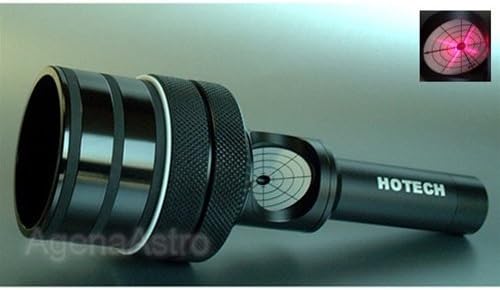
The HoTech collimator is the premium choice for users demanding maximum precision. It addresses a common industry problem of slop in the adapter mechanism between the laser and focuser. This patented technology ensures the beam stays true during alignment.
We may earn a commission when you buy through this link, at no additional cost to you.
It comes with both 1.25 and 2 inch adapters pre-installed in a SCA adapter setup. The higher rating reflects its reliability among serious astronomers who need consistent results every session. Includes CR123 battery which offers longer life than CR2032.
Trade-offs include higher cost and battery type. These are justified by the precision engineering and elimination of alignment errors caused by mechanical gaps. For imaging or high-power viewing this accuracy matters.
Best for advanced users or imaging enthusiasts requiring repeatable alignment accuracy. The initial investment pays off in sharper images and time saved during setup. This is the tool for those who prioritize perfection.
Patented mechanism prevents off-axis installation issues that destroy precision in standard collimators.
Works with both 1.25 and 2 inch focusers ensuring future proofing as you upgrade your optics.
We may earn a commission when you buy through this link, at no additional cost to you.
SVBONY offers a robust collimator designed to make alignment less tedious for users of all skill levels. The triple cemented lens enhances beam stability ensuring the dot remains consistent during adjustments. Its 4.5 rating reflects consistent performance.
We may earn a commission when you buy through this link, at no additional cost to you.
Key features include removable 2 inch adapter compatibility and seven brightness levels. The metal body resists wear making it suitable for field use and storage. Users report clearer images after collimation compared to uncollimated scopes.
Trade-offs include slightly lengthy instructions and cap tightness which may frustrate some. These are minor issues given the overall build quality. The lens design provides better beam quality than standard alternatives.
Ideal for users seeking reliable performance without premium pricing. It balances features and durability effectively. For those new to collimation the clear guidance helps avoid common mistakes.
Triple cemented lens design ensures the laser dot remains steady for accurate alignment checks.
Solid metal construction ensures the unit withstands regular use and transport to observing sites.
We may earn a commission when you buy through this link, at no additional cost to you.
This bundle combines a laser collimator with a telescope eyepiece offering added value for telescope owners. The included 62 degree eyepiece provides a wide field of view for better observing sessions. It is designed for reflector telescopes with standard focusers.
We may earn a commission when you buy through this link, at no additional cost to you.
The laser portion features seven brightness levels and output power under 5mW meeting safety standards. Users benefit from both collimation and viewing capabilities in one package. The adjustable nature ensures adaptability to different conditions.
Trade-offs include lack of specific product rating which makes performance harder to gauge. Bundle contents may differ by region. However the eyepiece addition is a unique selling point for new observers.
Best for users looking for collimator and eyepiece together without separate purchases. It streamlines setup for better viewing experiences. A convenient choice for gift buyers or new astronomers.
Includes 62 degree aspheric eyepiece for wide field observation alongside collimation capabilities.
Output power compliant with Class I safety standards ensuring user eye protection during use.
We may earn a commission when you buy through this link, at no additional cost to you.
Alstar offers a straightforward collimator designed for users prioritizing simplicity and portability. The front opening emits the beam while the side window allows reflection monitoring without extra tools. It maintains a solid 4.5 rating among buyers.
We may earn a commission when you buy through this link, at no additional cost to you.
Features include 635 to 655 nm wavelength and 7 brightness levels. The metal body resists wear ensuring long term use. Clear English and German instructions help newcomers get started quickly.
Trade-offs include lack of included battery and 2 inch adapter compatibility. Users must source their own CR2032 battery. Despite this the unit performs reliably for standard 1.25 focusers.
Ideal for users needing a compact reliable tool for routine alignment. The straightforward design avoids complexity. Good for budget conscious buyers who already have batteries.
Side window with disk allows checking if laser reflects back on itself for precise alignment.
Compact design makes it easy to carry in your astronomy kit for field use.
We may earn a commission when you buy through this link, at no additional cost to you.
Alstar presents a mid-range option that balances features and cost. The removable adapter adds versatility for different focuser sizes. The 4.0 rating indicates good performance though some users report minor adjustments.
We may earn a commission when you buy through this link, at no additional cost to you.
It shares many specs with Astromania including brightness levels and wavelength. The triple cemented lens ensures beam stability. Battery inclusion is a plus for immediate setup upon arrival.
Trade-offs include slightly lower ratings compared to Astromania suggesting variability in quality control. Battery cap issues are common across models. Overall it remains a solid functional choice.
Best for users who need 2 inch compatibility at a lower price point. It performs well for standard collimation needs. A reliable option for budget focused buyers.
Removable adapter ensures compatibility with both standard and large focusers without extra purchases.
Triple cemented lens design minimizes beam jitter for more accurate alignment checks.
We may earn a commission when you buy through this link, at no additional cost to you.
This bundle includes a smartphone adapter for astrophotography alongside the collimator. Users can capture images through the eyepiece using standard phones. The 4.4 rating reflects satisfaction with both collimator and photo capabilities.
We may earn a commission when you buy through this link, at no additional cost to you.
The phone clamp fits most models from iPhone to Samsung. It uses a steel bolt instead of spring mechanism for secure clamping. The collimator portion remains standard with 2 inch adapter compatibility.
Trade-offs include higher price and phone clamp limitations for certain models. However the imaging capability adds value. It simplifies both setup and shooting for one price.
Best for users interested in mobile astrophotography. It combines alignment and imaging in one package. A smart choice for beginners wanting to start capturing the night sky.
Includes phone clamp adapter allowing users to capture images through telescope eyepieces easily.
High density EVA pads protect phone screen during clamping preventing scratches during use.
We may earn a commission when you buy through this link, at no additional cost to you.
This bundle combines laser collimator with a Cheshire eyepiece for comprehensive alignment options. Cheshire eyepieces require no batteries and offer mechanical alignment verification. The 5 star rating indicates high satisfaction.
We may earn a commission when you buy through this link, at no additional cost to you.
Users appreciate having both laser and mechanical tools to cross verify alignment. The Cheshire eyepiece features a bright mirror and clear crosshairs for precision. Laser portion remains standard with brightness and adapter options.
Trade-offs include higher cost and weight in the kit. However having both tools ensures accurate results. It covers users who prefer traditional methods alongside laser alignment.
Ideal for users wanting redundancy in alignment tools. The complete package removes need for separate purchases. Best for those seeking high precision through multiple verification methods.
Bundle includes laser and Cheshire tools to verify alignment mechanically and electronically for accuracy.
Cheshire eyepiece requires no batteries and offers precise optical alignment without electronic dependency.
We may earn a commission when you buy through this link, at no additional cost to you.
The Ocal Pro V4.0 offers cutting-edge electronic alignment capabilities for modern users. It features factory centered precision ensuring consistent results without calibration drift. The software guided circles assist in quick axis adjustments.
We may earn a commission when you buy through this link, at no additional cost to you.
Designed for both Newtonian and Schmidt Cassegrain scopes. This broad compatibility adds value over single scope types. The all-in-one design simplifies field adjustments without extra tools.
Trade-offs include lack of established rating due to being newer. Price is higher than traditional collimators. However the precision and compatibility appeal to tech-savvy users.
Best for users seeking modern tools with software assistance. It simplifies complex setups for imaging. Ideal for those who trust digital calibration over manual tools.
Built-in software circles guide adjustments with factory centered precision for consistent results.
Compatible with both Newtonian and Schmidt Cassegrain telescopes providing broader utility than standard collimators.
We may earn a commission when you buy through this link, at no additional cost to you.
Selecting the right collimator depends on telescope type budget and desired features. This guide explains key factors to consider for informed decision making.
Check if your telescope has 1.25 inch or 2 inch focusers before buying. Dual adapters add versatility and future-proof your purchase for upgrades.
Ensure the collimator fits your focuser snugly to prevent slop during alignment.
Adjustable brightness ensures the laser beam is visible in all light conditions. Seven levels allow use in bright rooms and dark skies.
Look for models offering adjustable intensity for versatile alignment sessions.
Metal construction with anodized finish resists wear and tear for longevity. Durable bodies survive field use and transport to dark sites.
Choose models with robust materials to ensure consistent calibration over time.
CR2032 and CR123 are common batteries. CR123 lasts longer but is less common to buy. Check if battery is included.
Select units with included batteries to start using immediately.
Precision engineering keeps the laser aligned over time. Units with sealed adjustments maintain calibration integrity for consistent results.
Prioritize models with secure adjustment mechanisms to avoid frequent recalibration.
Look for Class 3R or Class I compliance to protect eyes. Laser power should be under 5mW for safe use.
Ensure safety standards are met for safe alignment practices.
Some bundles include eyepieces or phone adapters. These add value for astrophotography but increase price. Assess if needed.
Consider bundles if you need both collimation and imaging tools.
Clear step-by-step instructions help beginners align properly. Multi-language support aids international users. Check manual quality.
Prioritize models with detailed instructions to avoid common setup mistakes.
Insert the collimator into the focuser and tighten gently to secure. Turn on the laser to project the beam onto the primary mirror. If your unit has a side window check for reflection alignment.
Adjust telescope screws until the beam hits the center spot on the primary mirror. Repeat for secondary mirror alignment until the dot remains centered when rotating focuser. Turn off laser after use to save battery.
Store the collimator in a protective case to prevent scratches. Clean the laser window occasionally for clear beam output. Avoid dropping the unit to maintain calibration accuracy.
Yes if you own a Newtonian or reflector telescope. Manual alignment is time-consuming and less precise. A laser collimator ensures accurate optical alignment for sharp views.
Ideally before every observing session or after transport. Collimation may shift due to movement or temperature changes. Regular checks ensure consistent optical performance.
Yes many collimators have adjustable brightness for daytime use. Indoor alignment works well in low light conditions. However accuracy is better in darker environments.
They are best for Newtonian and reflector telescopes. Refractors and SCTs may need different tools. Check product compatibility for your specific optical setup.
CR2032 is common and easy to find. CR123 offers longer life. Choose based on availability and usage frequency for convenience.
Yes most models include adjustment screws for recalibration. Follow instructions carefully to maintain accuracy. Regular checks ensure reliable results over time.
Yes if they meet Class 3R safety standards. Avoid staring directly into the beam. Proper use ensures safe alignment without eye risks.
Yes accurate alignment improves contrast and detail for all targets. Deep sky imaging benefits most from precise collimation. Ensures optimal light gathering capability.
Our top picks include the Astromania collimators for budget users and HoTech for precision seekers. Each offers distinct advantages depending on telescope setup and skill level.
Prioritize compatibility and build quality when selecting a tool. Ensure the unit matches your focuser size to avoid alignment errors or extra costs.
Check current prices and availability before purchasing as they change frequently. Investing in a reliable collimator ensures your telescope performs at its best for clear celestial views.