
XLUX Plant Soil Moisture Meter
4.4Editor score
No battery required
Slim single-probe design
Color-coded dial display
Discover the top digital soil moisture meters for indoor and outdoor plants. We compare features, accuracy, and value to help you choose the right tool for
Finding the right watering tool is essential for keeping your plants healthy and thriving. Digital soil moisture meters provide precise readings to help you avoid overwatering or underwatering your green friends effectively.
We reviewed ten top-rated models ranging from affordable analog tools to advanced wireless sensors. Our comparison focuses on accuracy, ease of use, durability, and special features like pH and light tracking for informed decisions.
Each pick highlights specific strengths for different gardening styles and budgets. Remember that prices and availability can change frequently, so check the latest deals before making your final purchase decision today.
4.4Editor score

4.2Editor score

4.2Editor score
This side-by-side comparison highlights the key specifications and capabilities of each model to help you find the perfect fit for your specific gardening requirements and environment.




The YAMRON 4-in-1 Soil Moisture Meter stands out as a top choice for gardeners seeking comprehensive data without breaking the bank. It holds a solid rating for its ability to track moisture, pH, temperature, and sunlight simultaneously.
We may earn a commission when you buy through this link, at no additional cost to you.
Its large backlight LCD display ensures you can read values even in low light conditions or shaded garden areas. The 45-degree rotating head is a thoughtful ergonomic feature that saves your back when checking plants on lower shelves.
While the probe length is standard and batteries are not included in the box, these are minor inconveniences given the overall functionality. The visual design helps novice growers understand soil conditions quickly without needing complex technical knowledge.
This meter is ideal for homeowners with mixed indoor and outdoor plant collections who want a single device to monitor multiple factors. We recommend it for those who value versatility and ease of use in their gardening routine.
The rotating head allows you to view the screen at an angle that fits your posture comfortably.
Tracking sunlight and pH alongside moisture helps you create a complete care plan for your plants.
We may earn a commission when you buy through this link, at no additional cost to you.
This 7-in-1 Digital Soil Tester Kit expands on standard moisture meters by adding fertility and water quality metrics like TDS and EC. It is designed for users who want deeper insights into their soil health beyond just water levels.
We may earn a commission when you buy through this link, at no additional cost to you.
The large LCD screen with white backlight makes data clearly visible in any lighting condition. Its 2025 probe technology promises quick and accurate readings for pH, moisture, temperature, and light intensity.
While it offers extensive features, the additional metrics might require some learning to interpret correctly for casual gardeners. The warranty support from the seller adds peace of mind for your investment in this tool.
Consider this kit if you manage a garden where nutrient balance and water quality are critical factors for plant health. It is particularly useful for those growing specific plants that need precise environmental control.
EC and TDS functions help you understand dissolved solids in water for better irrigation decisions.
Seven functions in one device reduce the need to buy multiple testers for different soil parameters.
We may earn a commission when you buy through this link, at no additional cost to you.
The RAINPOINT Large Display Digital Soil Moisture Meter focuses on ease of reading and continuous monitoring. Its always-on display feature allows you to keep an eye on plant health without frequent manual checks.
We may earn a commission when you buy through this link, at no additional cost to you.
The intuitive color-coded gauge makes it simple for beginners to know when to water without interpreting complex numbers. It is designed to stay in the soil, reducing the need to repeatedly insert and remove probes.
One trade-off is that you must manage the battery life carefully since the display stays active. However, the slim profile ensures it does not weigh down delicate plants or tip over easily in loose soil.
This device is perfect for indoor plant owners who want a set-and-forget monitoring solution. If you prefer quick visual cues over detailed scientific data, this model offers excellent usability for daily plant care.
Leaving the meter in the soil helps track changes over time without disrupting the plant roots.
The color-coded design removes confusion by showing clear dry moist and wet zones at a glance.
We may earn a commission when you buy through this link, at no additional cost to you.
The General Tools DSMM500 is built for commercial and agricultural users who demand high precision. It features an 8-inch probe capable of reaching deep soil layers where root zones are active.
We may earn a commission when you buy through this link, at no additional cost to you.
With an IP65 rating and CE approval, this meter can withstand field conditions and heavy daily use. It also includes memory functions to hold maximum and minimum readings for later analysis or record keeping.
The cost is significantly higher than consumer models, which may not be necessary for casual indoor plant owners. However, for large gardens or professional landscaping, the accuracy and durability justify the investment.
We recommend this for serious growers or facility managers who need reliable data for large-scale irrigation planning. It is a long-term solution designed to withstand wear and tear over many seasons.
The 8-inch probe reaches deeper than standard meters to check moisture where roots actually drink.
IP65 resistance protects the internal electronics from water spray and dust in outdoor environments.
We may earn a commission when you buy through this link, at no additional cost to you.
The XLUX Plant Soil Moisture Meter is a classic choice for those seeking simplicity and affordability. Its battery-free design means it works whenever you insert it, with no need to replace power sources.
We may earn a commission when you buy through this link, at no additional cost to you.
With over 60,000 verified ratings, this model has a long track record of satisfying users across American households. The color-coded dial is large and easy to read even for those with declining eyesight.
The slim needle design is gentle on delicate roots, reducing soil disturbance when you check moisture levels. While it lacks digital features, its consistent performance makes it a reliable tool for everyday watering needs.
This meter is perfect for beginners or anyone who wants a no-fuss device to prevent overwatering. Its low price point allows you to buy multiple units for different pots without spending much money.
By relying on a simple analog mechanism this meter eliminates battery waste and replacement costs entirely.
The slim single probe slides easily into soil minimizing stress on the plant's root system.
We may earn a commission when you buy through this link, at no additional cost to you.
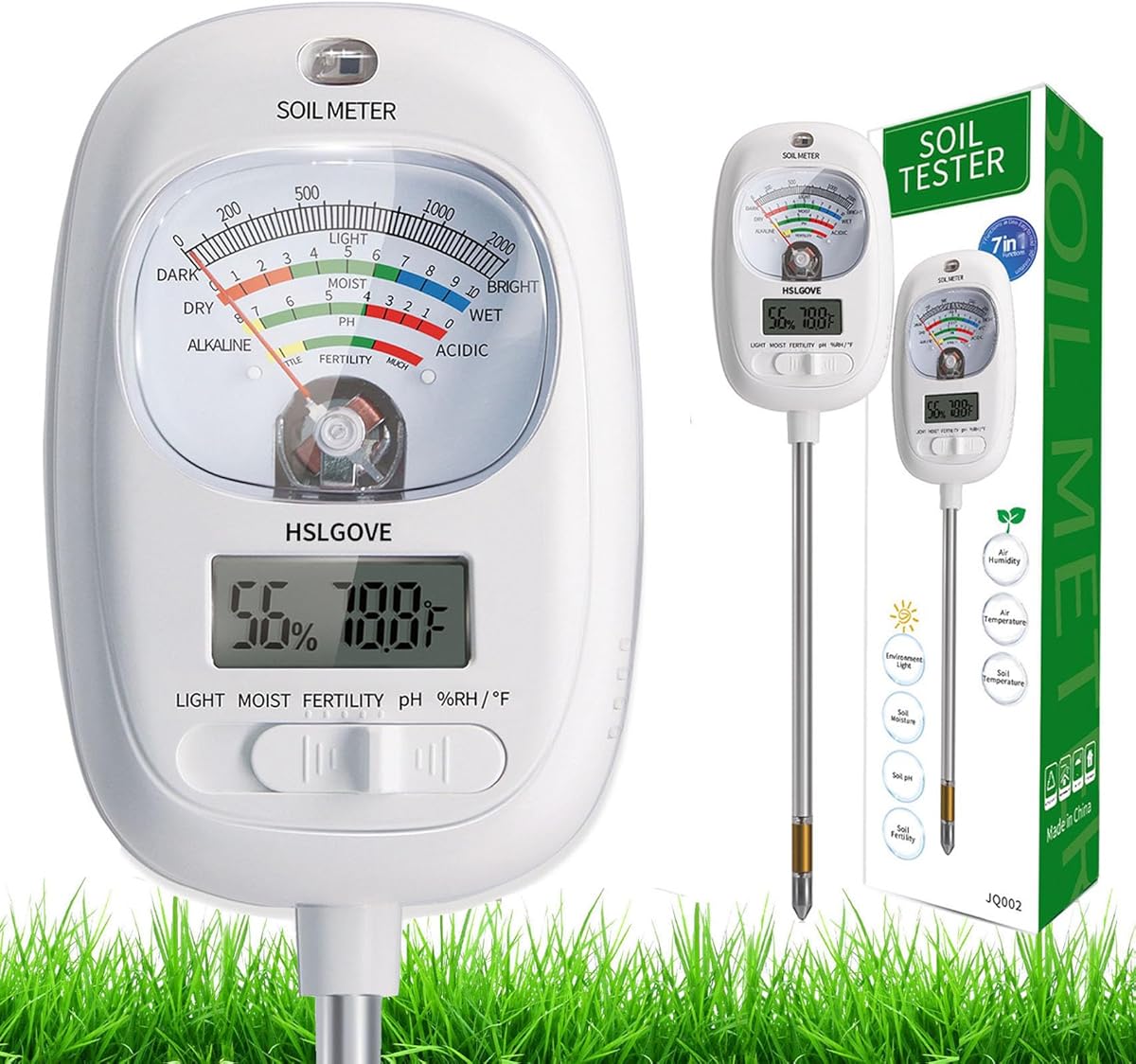
The HSLGOVE Soil Test Kit combines soil moisture analysis with air temperature and humidity readings in a dual dial design. This allows you to monitor both root zone and ambient conditions in one go.
We may earn a commission when you buy through this link, at no additional cost to you.
Its 1.6 inch chip board ensures accurate results when switching between functions. The 6.8 inch probe is long enough for medium to large potted plants to ensure deeper soil assessment.
Some users might find the battery replacement process slightly complex compared to simpler models. However, the comprehensive data helps cultivate seedlings scientifically by giving you a full picture of the microclimate.
This device is ideal for gardeners who want to understand how air humidity affects soil moisture levels. It is also a great gift for plant lovers who enjoy tracking multiple variables for optimal growth.
Tracking air humidity and soil temp helps you identify when plants might be stressed by environmental changes.
Accurate readings are crucial for young plants that need precise conditions to establish strong root systems.
We may earn a commission when you buy through this link, at no additional cost to you.
The RAINPOINT Smart Digital Wireless Plant Moisture Meter allows you to check plant hydration via an app when connected to a WiFi hub. It uses a capacitive probe to resist rust and maintain accuracy over time.
We may earn a commission when you buy through this link, at no additional cost to you.
You can leave this device in the soil for continuous monitoring without worrying about water damage thanks to its IPX5 waterproof rating. It detects moisture changes every three minutes automatically.
The need to purchase a separate hub might be a barrier for some users. However, for those who travel or work long hours, being able to see plant status remotely is incredibly convenient.
We recommend this for tech-savvy gardeners who want smart home integration. It helps ensure plants never get neglected even when you are away from home for a few days.
The app sends alerts when moisture drops below a set level so you know exactly when to water.
The capacitive probe does not corrode easily which extends the lifespan of the sensor in wet soil.
We may earn a commission when you buy through this link, at no additional cost to you.
This leave-in Soil Moisture Meter is unique in its ability to track Daily Light Integral over time rather than just instant brightness. It uses dual stainless steel probes for a more representative reading of the root zone.
We may earn a commission when you buy through this link, at no additional cost to you.
It can record moisture history for up to six months independently without needing a constant connection to a phone. This helps you understand watering cycles and seasonal changes in your garden environment.
The initial Bluetooth setup is needed for data retrieval but it works independently after that. This balance of smart features and offline reliability makes it a robust tool for serious plant monitoring.
If you want to know how your plants are adapting to light changes over months this is a great choice. It helps optimize placement by showing if a spot is truly full sun or shade.
Recording trends helps you see how fast soil dries after watering so you can adjust your schedule.
Knowing the exact light level helps you move plants to spots where they get the right amount of sun.
We may earn a commission when you buy through this link, at no additional cost to you.
The Extech MO750 is a rugged handheld meter built for professionals who need reliable moisture data in tough conditions. It features an 8-inch stainless steel probe to measure deep beneath the soil surface.
We may earn a commission when you buy through this link, at no additional cost to you.
Its large LCD screen provides clear results without tiny analog dials making it easy to read quickly in the field. The lightweight body ensures it is comfortable to carry on large property inspections.
While it focuses mainly on moisture accuracy, it is trusted by landscapers and greenhouses for consistent performance. The simple design means fewer parts to break during daily work in demanding environments.
Consider this for agricultural or environmental work where data reliability is non-negotiable. It is a premium tool that pays for itself by preventing costly watering mistakes or crop damage.
The portable design and AAA battery power mean you can take it anywhere without needing special chargers.
Engineered sensors ensure you get accurate data quickly to support better decision-making for crops.
We may earn a commission when you buy through this link, at no additional cost to you.
The Nexuslab Wireless Soil Moisture Meter uses advanced TDR technology to deliver professional-grade accuracy across large gardens. It supports monitoring up to 12 zones with a powerful signal range of 230 feet.
We may earn a commission when you buy through this link, at no additional cost to you.
Each sensor tracks moisture, temperature, and light providing a full picture of plant conditions. The receiver offers clear visual alerts when moisture drops below thresholds so you never miss a watering window.
While the initial cost is higher it offers expandability and robust connectivity for complex garden layouts. The sensors are waterproof and ready to use with batteries included for immediate setup.
This system is perfect for large outdoor gardens or commercial setups where manual checking is difficult. It saves time by bringing data to an indoor receiver without needing to walk around each zone.
Starting with two included sensors you can easily add more to track every bed or row independently.
The 230 ft signal lets you check data from inside your home or workshop without stepping outside.
We may earn a commission when you buy through this link, at no additional cost to you.
Selecting the right meter depends on your garden size and the level of detail you need for plant care.
Accuracy varies based on the sensor technology used. Resistive sensors are common but may corrode over time while capacitive and TDR sensors offer better long-term reliability for precise readings.
Look for models with professional ratings if you are growing valuable plants. Consistent results help prevent guesswork and ensure your plants receive the exact amount of water they need.
Choose a display that is easy to read in your specific lighting conditions. Large LCD screens with backlights are helpful for shaded areas or nighttime checks.
Analog dials are simple and require no batteries but digital displays provide more precise numerical data. Consider your eyesight and preference when making this choice.
Battery-powered meters offer digital features but need regular replacements. Battery-free models use analog technology and save on long-term maintenance costs.
If you choose a digital device ensure it has a clear low battery indicator. This prevents unexpected failures when you need to check moisture levels urgently.
Probe depth matters for plants with deep roots. Longer probes allow you to check moisture at the actual root zone rather than just the surface.
Slim probes cause less disturbance to delicate roots. Some models feature dual probes for better data representation across a wider soil area.
Many modern meters offer extra data like pH, temperature, and light levels. These features help you manage overall soil health beyond just hydration.
Advanced models include wireless connectivity to send alerts to your phone. These are useful for large gardens or when you cannot check plants daily.
Since these devices are used outdoors they must be water resistant and sturdy. Look for ratings like IP65 to ensure protection against rain and dust.
Materials like stainless steel for probes prevent rust and extend the device lifespan. A robust build protects your investment during heavy garden use.
Simple interfaces are better for quick daily checks. Models that require complex setup steps might go unused if they are too difficult to operate.
Consider how much time you want to spend analyzing data. Beginners often prefer color-coded gauges while pros might want detailed numerical logs.
Prices range from simple affordable tools to complex professional systems. Determine your needs to avoid paying for features you will not use.
A mid-range meter often offers the best balance of accuracy and cost for most home gardeners. Check reviews to ensure quality matches the price point.
Always insert the probe into the soil at a depth of about three to six inches depending on the plant. Push it in gently to avoid damaging roots and wait a few seconds for a stable reading.
Clean the probe after each use with a soft dry cloth to remove soil residue. Store the meter in a dry place or in its protective case to prevent corrosion and physical damage.
For long-term leave-in models keep the area around the probe clear of debris. Check battery levels regularly for digital units to ensure the device remains functional when you need it.
You should generally insert the probe about three to six inches deep into the soil. This depth reaches the active root zone for most plants and provides a more accurate reading of the water available to them.
Yes, many modern digital models are designed to stay in the soil long term. However, you must ensure they are waterproof and use corrosion-resistant probes. Always check the product specs before leaving it outside.
Inconsistent readings can be caused by air pockets around the probe or dry hard soil. Water the soil first and wait ten minutes before testing. Insert the probe firmly to ensure good contact with the soil.
Some advanced models include pH testing features alongside moisture. Check the product description to see if it measures pH, temperature, and light. Standard moisture meters usually only show water levels.
Frequency depends on the plant type and environment. Fast-growing plants might need checking every few days while succulents need less frequent checks. Leave-in sensors can provide continuous data for daily trends.
Analog meters are simple and require no batteries which is great for basic checks. Digital meters offer precise numbers and extra features like temperature. Choose based on your need for detail versus simplicity.
We hope this guide helps you select the perfect tool for your gardening needs. Whether you prefer a simple analog dial or a smart wireless system there is a device here for every budget.
Prioritize accuracy and ease of use to make plant care less of a chore. A reliable meter will save you time and keep your plants healthy throughout the growing season.
Remember to check current prices and availability before buying since deals change often. Investing in the right moisture meter today will pay off in healthier plants tomorrow.