
Creality Ender 3 V3 SE
4.9Editor score
Auto leveling
250mm/s speed
Filament bundle
This guide compares the top 3D printers for beginners in October 2026, highlighting ease of use, print quality, speed, and value to help you choose the right
Finding the right 3D printer for beginners can feel overwhelming with so many options available today. You need a machine that balances ease of use with reliable performance without breaking the bank. A good starter printer should minimize setup hassles and deliver consistent results so you can focus on creating.
We have evaluated ten standout models based on speed, calibration features, build quality, and user feedback. Each product offers unique strengths whether you prioritize multi-color capabilities, compact design, or high-speed printing. Our analysis ensures you understand what makes each option suitable for new users entering the hobby.
Every pick below includes detailed insights on features pros and cons to help you make an informed decision. Remember that prices fluctuate frequently so check current listings before purchasing to ensure you get the best value available today for your specific needs and budget constraints.
4.9Editor score

4.7Editor score

4.2Editor score
Below is a detailed side-by-side comparison of all ten printers to help you visualize their key differences quickly.





The Bambu Lab A1 stands out as the top pick for beginners due to its exceptional ease of use and high performance. With a rating of 4.7 stars it delivers flawless prints without requiring manual adjustments thanks to full-auto calibration. Its quiet operation makes it ideal for home environments where noise could be disruptive.
We may earn a commission when you buy through this link, at no additional cost to you.
Key strengths include an acceleration of 10,000 mm/s² ensuring fast prints without losing precision. The active flow rate compensation maintains smooth surfaces on every model while the touchscreen interface simplifies navigation for new users. You can monitor prints remotely via the app and even swap nozzles quickly with the one-clip system.
Trade-offs include the lack of an enclosure which limits use with high-temperature filaments like ABS. Additionally it supports single-color printing unless you purchase the separate AMS Lite add-on. These limitations are acceptable given the low entry cost and high reliability for standard PLA and PETG projects.
Buyers looking for a printer that works perfectly out of the box should choose the A1. It removes the friction of calibration and troubleshooting so you spend more time creating. For beginners wanting speed quality and simplicity without extra complexity this is the best choice available today.
The A1 handles all calibration automatically including Z-offset and bed leveling. This ensures consistent first layers every time without requiring you to adjust screws manually which is a common frustration for new users learning the craft.
Active noise canceling keeps the motor quiet so you can print in living rooms or bedrooms without distraction. This feature makes the A1 more versatile than many competitors that produce noticeable humming during operation.
We may earn a commission when you buy through this link, at no additional cost to you.
The Creality Ender 3 V3 SE is the best budget option offering incredible value with a bundle that includes four rolls of filament. Its 4.9 rating reflects strong satisfaction among users who appreciate its auto leveling and rapid 250mm/s printing speed. This printer proves you do not need to spend heavily to start 3D printing.
We may earn a commission when you buy through this link, at no additional cost to you.
It features a powerful Sprite direct extruder that handles various materials smoothly without slipping. The dual Z-axis design reduces wobbling for improved accuracy while the CR Touch sensor ensures consistent bed adhesion. Setup is straightforward and the linear shafts guarantee stability during long print jobs.
While it lacks an enclosure and has a basic interface these are minor issues for beginners focused on learning fundamentals. The open design limits advanced materials but works perfectly for PLA and PETG which are ideal for starters. The included filament saves immediate costs and lets you start printing right away.
If you want a printer that balances performance and price this bundle is unmatched. It removes financial barriers while delivering professional-level features like auto leveling and direct extrusion. For those starting their journey on a tight budget the Ender 3 V3 SE is the smart choice.
Receiving four colors of PLA filament in the box means you can start printing immediately. This saves time and money compared to buying filament separately and ensures you have enough material to test different designs right out of the box.
The Sprite extruder provides better control over filament feed especially for flexible materials like TPU. This flexibility allows beginners to experiment with a wider range of materials without needing expensive upgrades later on.
We may earn a commission when you buy through this link, at no additional cost to you.
The Bambu Lab P1S Combo is the premier choice for beginners who want advanced features like multi-color printing right from the start. Rated 4.2 stars it combines high speed with an enclosed design that supports advanced filaments like ASA and ABS. The included AMS system enables vibrant designs without manual filament switching.
We may earn a commission when you buy through this link, at no additional cost to you.
Its enclosed body improves print quality for materials that require temperature stability. The 500mm/s speed with 20,000 mm/s² acceleration means complex models finish quickly while maintaining detail. Assembly takes just 15 minutes and the auto leveling ensures perfect first layers every time.
The main trade-off is the higher price compared to basic options and the need to connect the AMS for multi-color functionality. However these costs are justified by the capability to create intricate multi-material parts. For beginners serious about design versatility this combo offers unmatched potential.
Choose this model if you envision creating multi-color projects or using engineering materials. It removes the learning curve of manual multi-printing and delivers professional results quickly. This printer grows with you as your skills advance making it a long-term investment.
The AMS system automatically switches filaments so you can print models with multiple colors in one job. This eliminates the need to pause and change filament manually saving hours of time and preventing print failures during swaps.
Full enclosure keeps internal temperatures stable which is crucial for materials like ABS that warp easily. This feature expands what you can print beyond standard PLA giving you access to stronger and more durable materials for functional parts.
We may earn a commission when you buy through this link, at no additional cost to you.
The Bambu Lab P1S delivers a robust enclosed printing experience suitable for users exploring advanced materials. With 500mm/s speed and automatic leveling it ensures reliable results while the open design supports optional AMS upgrades for multi-color. It balances speed and quality for those ready to move beyond basics.
We may earn a commission when you buy through this link, at no additional cost to you.
Its enclosed body prevents warping with higher-temperature filaments like ABS and ASA. The auto bed leveling simplifies setup and the high acceleration keeps print times short. Users appreciate the quiet operation and streamlined interface that reduces maintenance effort.
Without the AMS attachment you cannot print in multiple colors directly from the machine. This means you miss out on multi-color features included in the Combo version. However the base unit still performs exceptionally for single-material jobs and remains a strong option for reliability.
Select this printer if you prefer a standalone unit but may want multi-color later. It offers the same build quality and speed as the combo at a lower initial cost. For users focused on performance rather than immediate multi-color output this is a solid pick.
Connecting the AMS later unlocks multi-color capabilities without replacing the entire printer. This flexibility allows you to start with a simpler setup and upgrade as your projects become more complex and colorful.
The combination of auto leveling and high acceleration ensures layers bond perfectly without defects. This consistency reduces failed prints and gives you confidence to start more ambitious projects quickly.
We may earn a commission when you buy through this link, at no additional cost to you.
The FLASHFORGE Adventurer 5M offers rapid 600mm/s printing ideal for users prioritizing speed. Its auto leveling simplifies setup and the 3-second nozzle changes allow quick swaps. While its rating is lower it remains a strong option for rapid prototyping and fast production cycles.
We may earn a commission when you buy through this link, at no additional cost to you.
Features like CoreXY structure and 280°C direct extruder enable efficient and high-speed prints. The smart app lets you monitor and adjust remotely saving you from standing by the machine. This connectivity adds convenience for users managing multiple prints or working from different rooms.
Users report mixed experiences with initial calibration and software stability which impacts the rating. These issues are generally resolved with updates but may require patience from beginners. The high speed and hardware capabilities still make it a competitive choice for specific use cases.
Choose this printer if you need fast output and don mind occasional setup tweaks. It is well-suited for prototyping where speed matters more than perfection. With proper calibration it delivers consistent results and supports a wide range of filaments.
The 600mm/s travel speed cuts print times significantly compared to standard machines. This efficiency means you can test more designs quickly and get faster turnaround on prototyping projects.
The Flash Studio app provides real-time status alerts so you can manage jobs from anywhere. This feature is ideal for busy creators who cannot monitor the printer directly but want to stay informed on progress.
We may earn a commission when you buy through this link, at no additional cost to you.
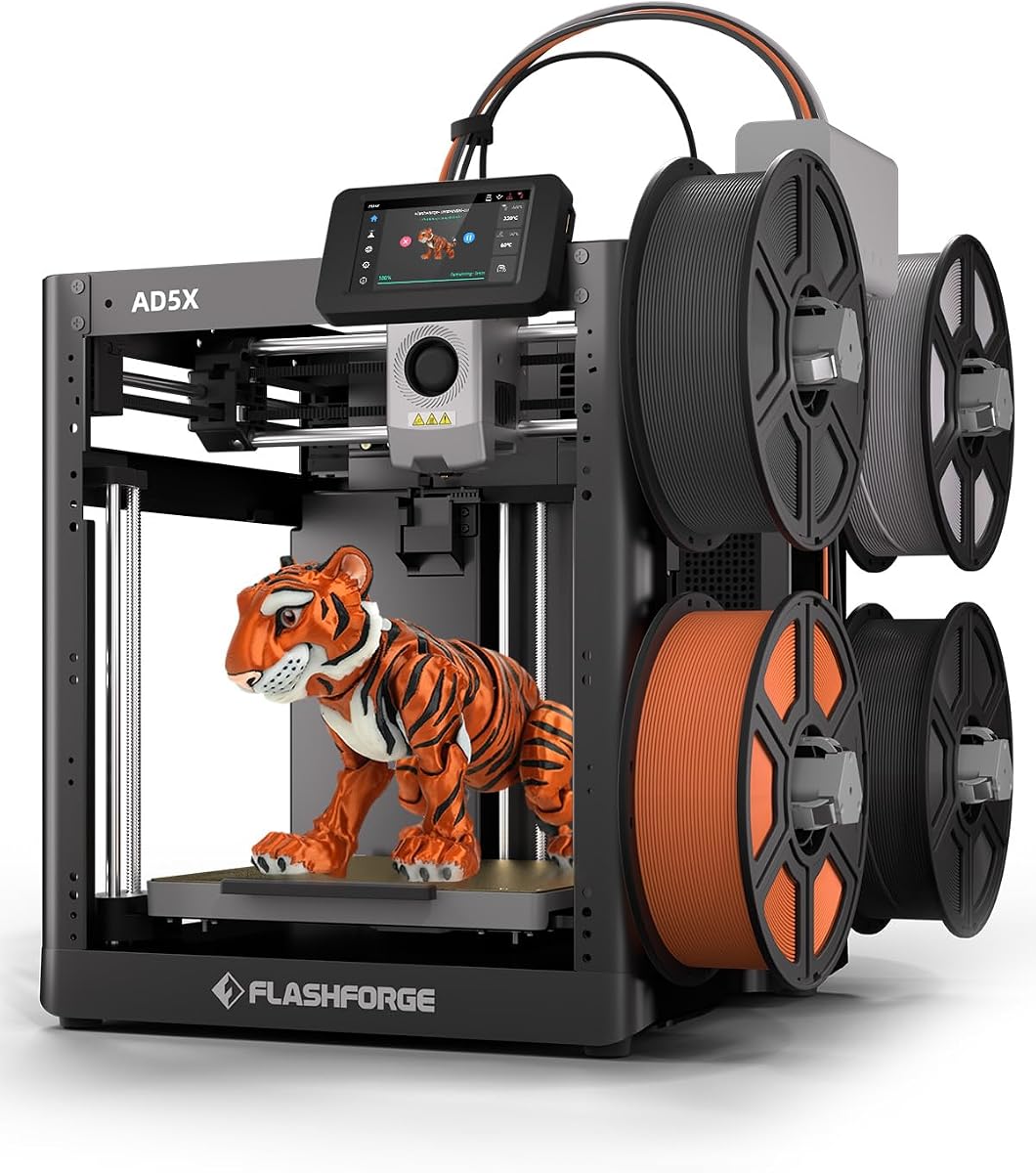
The FLASHFORGE AD5X brings 4-color printing and 600mm/s speed to beginners. Its auto leveling and resume function protect against interruptions while the direct drive handles varied materials. This model suits those wanting fast multi-color capability at an accessible price point.
We may earn a commission when you buy through this link, at no additional cost to you.
It features vibration compensation and dual cooling for high-quality results even at top speeds. You can switch nozzles easily and monitor prints remotely via the Flash Maker app. These tools make the AD5X versatile for both hobbyists and small production runs.
The rating suggests some users face setup challenges or software quirks initially. However once configured the printer performs reliably with quick turnaround times. These early hurdles are typical for advanced features and are worth overcoming for the output quality.
Buy this if you need multi-color output without buying a full AMS system. It offers unique value for its price and enables creative prints with distinct color palettes. With proper setup it delivers consistent speed and quality for demanding projects.
Supporting up to 4 colors simultaneously allows vibrant models without manual swapping. This expands design possibilities significantly and lets you create eye-catching pieces directly on the machine.
If power fails the printer saves layer progress and resumes when power returns. This prevents wasting time and filament on failed prints and adds reliability for long jobs running unattended.
We may earn a commission when you buy through this link, at no additional cost to you.
This fully assembled mini 3D printer is ideal for kids and beginners wanting a plug-and-play experience. Rated 4.4 stars it includes filament and an SD card so you can start printing immediately. Its compact footprint fits easily on desks making it perfect for smaller spaces.
We may earn a commission when you buy through this link, at no additional cost to you.
Features like one-touch filament loading and auto leveling simplify the process for new users. The 250mm/s speed ensures quick small projects and the PEI heated bed aids easy model removal. These conveniences reduce frustration and keep motivation high for learning.
The small build volume limits large prints but suits most beginner toys and prototypes. The included holder for larger spools expands versatility slightly though extra parts may be needed. Overall it balances simplicity and performance well for its price.
Choose this if you need a portable entry-level printer for kids or home schools. It minimizes setup time and maximizes play value. For those wanting to learn basics without complex assembly this kit delivers immediate satisfaction.
Assembly is not required meaning you can start printing within minutes of unboxing. This instant gratification helps maintain excitement and reduces the barrier to entry for younger users.
Including a roll of PLA filament removes the need for extra purchases right away. This ensures you have material to test the printer immediately and learn through hands-on practice.
We may earn a commission when you buy through this link, at no additional cost to you.
The AOSEED AI printer brings unique AI tools that let kids create models from voice or text. Rated 4.5 stars it includes 8000+ designs and a full starter kit with tools and filament. Its enclosed safety design protects kids during operation making it a safe educational toy.
We may earn a commission when you buy through this link, at no additional cost to you.
It delivers fast prints up to 400mm/s with real-time monitoring and time-lapse creation. The built-in camera lets parents track progress remotely and share creations easily. These features make it engaging for family projects and educational activities.
Limitations include single-color printing and reliance on AI prompts for design creation. Users wanting traditional CAD skills may find it limiting but it excels at sparking imagination. The AI integration simplifies design for those without modeling experience.
Pick this for families wanting an interactive creative tool for children. It merges 3D printing with AI to make design accessible and fun. For educators and parents fostering STEM skills this printer is an excellent educational investment.
Children can draw or speak to create custom 3D models instantly without design software. This feature lowers the barrier to creativity and allows imaginative ideas to become physical objects quickly.
The enclosed structure prevents access to hot parts reducing burn risks for kids. This safety focus allows parents to trust the printer in shared spaces without constant supervision.
We may earn a commission when you buy through this link, at no additional cost to you.
The Bambu Lab A1 mini offers a compact solution with a special LED Lamp Kit for creative projects. Rated 4.4 stars it combines ease of use with a connected ecosystem of ready-to-print models. Perfect for small spaces it delivers reliable prints without consuming much room.
We may earn a commission when you buy through this link, at no additional cost to you.
Its automatic calibration and quiet motor make it ideal for home or office use. The LED kit allows you to print and assemble decorative lights instantly. This adds a unique creative angle compared to standard printers focused only on raw production.
The build area limits larger objects but suits most functional parts and toys. While smaller than the A1 it retains high speed and precision. The ecosystem integration ensures you find models easily without hunting online.
Choose this for desk-side creativity or room decor projects. It balances portability with performance and offers unique creative tools in the kit. For users needing a small yet capable machine this is a versatile choice.
The included LED Lamp Kit lets you turn printed models into functional lighting instantly. This unique feature adds practical value beyond standard printing and inspires decorative project ideas.
Access to MakerWorld provides thousands of ready-to-print models saving design time. This library helps beginners jump straight into printing without needing CAD skills.
We may earn a commission when you buy through this link, at no additional cost to you.
The FLASHFORGE AD5M features a patented quick-swap nozzle system ideal for quick maintenance. With 600mm/s speed and auto calibration it ensures efficient and reliable prints. Its 4.3 rating reflects solid performance for users needing speed and easy upkeep.
We may earn a commission when you buy through this link, at no additional cost to you.
Resume print and network monitoring add convenience for unattended operations. The PEI plate simplifies model removal and the CoreXY structure ensures stability during high-speed runs. These features reduce downtime and support consistent quality.
While the interface is straightforward it may lack advanced customization options for power users. However for beginners the simplicity is beneficial. The speed and nozzle flexibility make it adaptable for varied project needs.
Select this printer if you prioritize maintenance simplicity and speed. It offers a balance of performance and user-friendly features for both learning and production. With regular use it proves reliable for consistent output.
The quick-swap nozzle allows you to change sizes in seconds without tools. This simplifies switching between detailed and high-speed jobs without long downtime.
Remote monitoring via app lets you track prints and adjust settings anywhere. This feature adds flexibility and control for managing multiple devices simultaneously.
We may earn a commission when you buy through this link, at no additional cost to you.
Choosing the right 3D printer requires understanding key features that impact ease of use and print quality. This guide outlines critical factors to consider before purchasing.
Auto leveling ensures the build plate is perfectly aligned with the nozzle preventing print failures. For beginners this feature is essential as it removes manual adjustments that can be tedious and error-prone. Look for printers with CR Touch or similar sensors.
Always prioritize models with fully automated calibration to guarantee consistent first layers. This saves time and prevents frustration during initial setup phases.
High print speeds like 250mm/s or higher reduce wait times and keep you engaged. However ensure the machine maintains precision at top speeds to avoid artifacts or weak bonds. Acceleration metrics also indicate how quickly the printer can move accurately.
Look for balanced speed and precision specs to ensure rapid yet quality output.
Build volume determines the maximum size of objects you can print in one go. Enclosed designs protect prints from drafts and support advanced materials like ABS. Beginners usually start with PLA but consider future needs when selecting enclosure options.
Choose a build size matching your project goals and consider enclosure for versatility.
Intuitive touchscreens and clear menus reduce learning curves significantly. Compatibility with popular slicers and apps for remote monitoring enhances convenience. Simple interfaces help beginners focus on design rather than debugging.
Select printers with friendly software ecosystems and remote management capabilities.
Check which filaments the printer supports such as PLA PETG or TPU. A versatile extruder handles varied materials giving you more creative freedom. Consider if it supports flexible or high-temperature filaments for future expansion.
Ensure the extruder handles the materials you plan to use initially.
Budget varies widely so balance cost with necessary features. Entry-level printers may save money but lack speed or automation that beginners need. Evaluate bundled kits that include filament and tools for better value.
Prioritize total value over lowest price to avoid upgrade costs later.
Strong community support helps resolve issues quickly through forums or tutorials. Brands with active user bases provide more troubleshooting resources and shared models. Consider this when selecting a printer to ensure long-term assistance.
Choose a brand with an active user base and helpful support resources.
Start by setting up the printer on a level surface away from direct sunlight. Run the auto calibration routine to ensure the bed is properly aligned before printing your first model.
Regularly clean the nozzle and build plate to prevent clogs and adhesion issues. Use a soft brush and mild cleaner to maintain surfaces without damaging coatings or electronics.
Store filament in a dry environment to avoid moisture absorption which ruins print quality. Use airtight containers or dry boxes to protect materials between projects for consistent results.
The Bambu Lab A1 is widely considered the easiest due to full auto calibration and a user-friendly interface. It eliminates manual adjustments and setup complexity which are common pain points for new users. With a touchscreen and mobile app you can start printing almost immediately.
Not necessarily if you only print PLA which is common for starters. However an enclosure helps with materials like ABS that warp easily. If you plan to expand to engineering materials later an enclosed model will save you from upgrading.
Most beginner projects use less than 50g of filament per print. A standard 1kg spool can last many weeks depending on project sizes. Bundles with multiple rolls like the Creality Ender 3 V3 SE help you test different colors.
Enclosed printers with safety features are safe for supervised kids. Models like the AOSEED AI printer have pinch-resistant designs and filtered ventilation. Always supervise use and teach children not to touch hot nozzles or moving parts.
Most modern printers have auto leveling to prevent failed first layers. If a print fails check bed temperature and adhesion settings. Some models resume after power outages reducing material waste and frustration.
Free tools like Tinkercad are perfect for beginners to learn design basics. Many printers include access to pre-made models you can print while you learn. Online communities offer tutorials and shared designs to inspire creativity.
Modern printers vary in noise levels with many being surprisingly quiet. Models like the Bambu Lab A1 feature active noise canceling for home use. Always check decibel ratings if you plan to use it in shared spaces.
Yes slicing converts 3D models into instructions the printer understands. Slicers like Cura or Bambu Studio are free and user-friendly. Many printers come pre-configured to work seamlessly with recommended slicers.
The top picks for beginners include the Bambu Lab A1 for ease of use and the Creality Ender 3 V3 SE for budget value. Each option balances performance with accessibility helping new users jumpstart their projects quickly.
Prioritize features like auto leveling and ease of maintenance to reduce frustration. Speed and build quality should match your specific project needs and workspace constraints.
Remember that prices change regularly so check current listings before buying. Always verify warranty terms and community support to ensure long-term satisfaction with your new printer.