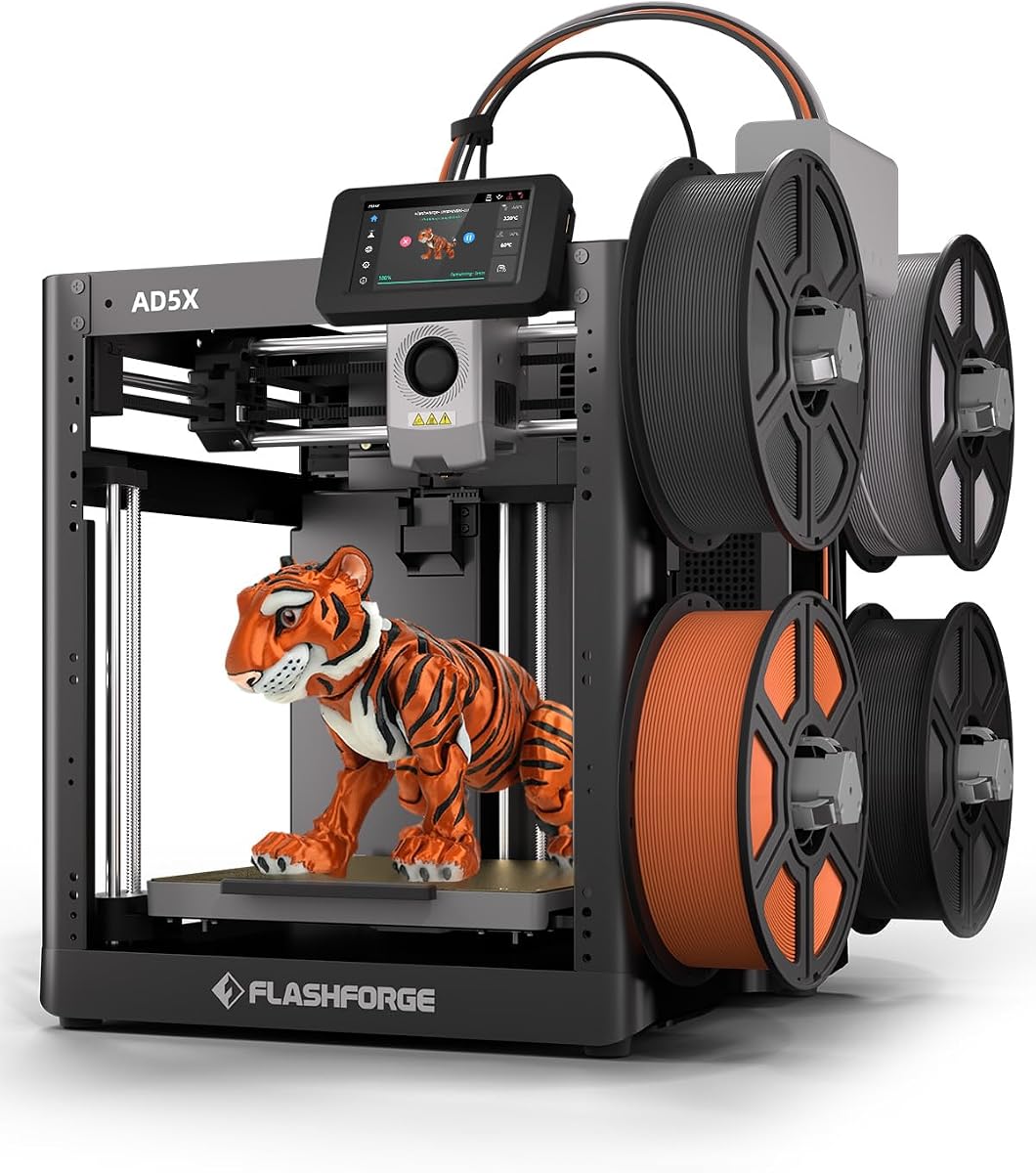
FLASHFORGE AD5X
3.9Editor score
CoreXY 600mm/s high speed
Multi-color printing support
Auto leveling included
300C direct drive extruder
This guide compares the best 3D printer for fast printing speed, analyzing corexy motion, high acceleration, and multi-color systems to help you choose quickly.
Modern 3D printing has evolved beyond slow prototyping to include high-speed production capabilities. When searching for a 3D printer for fast printing speed, enthusiasts and professionals alike need machines that deliver rapid results without sacrificing quality or reliability in daily use.
We have analyzed the latest models from leading manufacturers, focusing on core specifications like maximum print velocity, acceleration rates, and motion systems. This list covers ten distinct options ranging from budget-friendly entries to premium professional units designed for efficiency and versatility in various environments.
Each pick highlights specific strengths such as multi-color capabilities, auto-calibration features, and build volume differences. Remember that prices and availability can change frequently, so verify current details on the product pages before making your final purchasing decision for your workshop or home office.
3.9Editor score

4.7Editor score

4.5Editor score
This side-by-side comparison evaluates the top ten models based on speed, features, and reliability. Use this table to quickly identify which machine fits your specific workflow needs and budget constraints for rapid prototyping or production tasks.



The Bambu Lab P2S Combo stands out as a top contender in the high-speed 3D printing market. With a rating of 4.7, it combines speed with precision to deliver professional-grade results suitable for both hobbyists and businesses.
We may earn a commission when you buy through this link, at no additional cost to you.
Its standout feature is the ability to print at up to 600 mm/s while maintaining accuracy thanks to the PMSM Servo Extruder. The AMS 2 Pro allows for effortless multi-color printing, drying filament internally to ensure quality across every layer.
While the cost is higher than basic models, the time saved on printing and setup justifies the investment. Users benefit from AI failure detection and quick-swap nozzles which reduce downtime significantly during long production runs.
This printer is ideal for those who need reliability and speed without compromising on color capabilities. If you value a unified workflow and advanced automation, the P2S Combo offers a comprehensive solution for modern printing needs.
The P2S maintains exceptional accuracy even at maximum speed due to its servo technology and active flow compensation.
The AMS 2 Pro integrates drying and switching seamlessly, reducing manual intervention during complex multi-material prints.
We may earn a commission when you buy through this link, at no additional cost to you.
The FLASHFORGE AD5X offers a compelling entry point into high-speed 3D printing. With a rating of 3.9, it delivers impressive speed at a budget-friendly price, making it accessible for those new to rapid prototyping.
We may earn a commission when you buy through this link, at no additional cost to you.
It features a CoreXY structure capable of 600mm/s speeds and acceleration up to 20,000mm/s². The 1-Click Auto Leveling ensures smooth starts, while the 300°C direct drive extruder handles various materials effectively.
While it may not match the polish of premium models, its features like remote monitoring via mobile app and resume printing function add significant value. The vibration compensation system helps maintain quality even at higher velocities.
This model is perfect for users seeking speed and versatility without a high initial investment. It balances cost and performance well, especially for those who need quick results for personal projects or small batch production.
The CoreXY design reduces moving mass, allowing for rapid acceleration and deceleration without sacrificing print stability.
Features like auto leveling and resume printing minimize user intervention, streamlining the workflow for beginners.
We may earn a commission when you buy through this link, at no additional cost to you.
The Snapmaker U1 redefines multi-material printing with its unique SnapSwap system. Rated 4.5, it enables rapid tool changes in just 5 seconds, drastically reducing waste and time compared to traditional multi-extruder setups.
We may earn a commission when you buy through this link, at no additional cost to you.
Its rigid CoreXY motion system supports speeds up to 500 mm/s, ensuring stability during fast prints. The four independent toolheads allow mixing rigid and flexible materials in a single print without manual filament swaps.
While it comes at a premium price, the efficiency gains are substantial for professionals. The automatic toolhead offset calibration and vibration compensation ensure high accuracy, making it suitable for functional prototypes and end-use parts.
This printer is designed for users who need advanced versatility and speed in equal measure. If you prioritize reduced waste and complex material combinations, the Snapmaker U1 offers a superior workflow experience.
The SnapSwap system reduces change time from minutes to seconds, keeping production lines moving efficiently.
Support for PLA, TPU, and engineering materials allows for highly functional parts with different physical properties.
We may earn a commission when you buy through this link, at no additional cost to you.
The Bambu Lab P1S is a robust option for users needing an enclosed chamber for better performance. With a rating of 4.5, it delivers true high speeds up to 500mm/s and acceleration of 20000 mm/s² for rapid output.
We may earn a commission when you buy through this link, at no additional cost to you.
Its enclosed design improves performance with advanced filaments while auto bed leveling simplifies the start of every print. Setup is quick at just 15 minutes, ensuring you spend more time creating than assembling.
While it lacks multi-color functionality out of the box, it supports up to 16 colors when connected with the AMS system. This flexibility allows it to adapt as your needs grow from simple prototyping to complex artistic models.
Ideal for intermediate users seeking speed and reliability, the P1S handles a wide range of filaments effectively. It strikes a great balance between performance and usability for those upgrading from entry-level machines.
The fully enclosed body maintains consistent temperatures, crucial for engineering-grade materials and larger prints.
The system handles high acceleration rates without vibration issues, maintaining sharp corners on fast prints.
We may earn a commission when you buy through this link, at no additional cost to you.
The Anycubic Kobra X brings native multi-color capabilities directly to the build plate without external add-ons. Rated 4.2, it features a 4-color setup that can be expanded to 19 colors, offering creative freedom alongside speed.
We may earn a commission when you buy through this link, at no additional cost to you.
With speeds up to 600mm/s and a hardened steel nozzle, it ensures durability and efficiency. The LeviQ 3.0 system ensures a flawless first layer every time, reducing failed prints and saving material on initial trials.
Smart AI monitoring allows remote control via app, detecting spaghetti or foreign objects before they ruin a job. The dual-band Wi-Fi ensures stable connectivity for monitoring prints while you attend to other tasks in the workshop.
This printer is perfect for creators who value vibrant designs and rapid production. It balances technical features with user-friendly controls, making it a strong contender for those needing reliable multi-color performance at speed.
Built-in color switching eliminates the need for external filament managers, keeping the printer compact and streamlined.
The 49-point calibration ensures perfect bed flatness, critical for maintaining quality at high print speeds.
We may earn a commission when you buy through this link, at no additional cost to you.
The Creality K2 Combo offers a convenient plug-and-play experience with 95% pre-assembly. With a rating of 4.0, it aims to streamline the setup process, allowing users to start printing almost immediately after unpacking.
We may earn a commission when you buy through this link, at no additional cost to you.
It features 600mm/s printing speed and a CFS system for up to 16 colors. The silent mode ensures a quiet workspace, utilizing step-servo motors that adjust torque dynamically for smooth and consistent extrusion.
The smart AI camera monitors prints in real time, detecting failures like spaghetti to prevent wasted materials. Auto leveling focuses only on the relevant print area, speeding up the process while maintaining accuracy.
This model suits users who want a ready-to-print machine with minimal setup hassle. It provides a strong combination of speed, silence, and multi-color capability, making it attractive for home offices or schools.
Step-servo motors and dynamically balanced fans reduce noise to a whisper, perfect for shared spaces.
The filament system handles material switching seamlessly, supporting up to 16 colors for complex designs.
We may earn a commission when you buy through this link, at no additional cost to you.
The Bambu Lab A1 is designed to bring high-speed precision to beginners and kids. With a rating of 4.7, it offers impressive acceleration of 10,000 mm/s² while maintaining accuracy for detailed and reliable prints.
We may earn a commission when you buy through this link, at no additional cost to you.
Its full-auto calibration system eliminates manual hassles, ensuring optimal performance without user tuning. Active flow rate compensation guarantees smooth surfaces, making it suitable for both functional parts and detailed models.
Quiet printing is achieved through noise canceling motors, ensuring the device does not disrupt the environment. The interface is user-friendly with a simplified touchscreen, making it accessible for users of all skill levels.
This printer is ideal for educational settings or home use where ease of use is paramount. It balances high performance with approachability, ensuring successful prints every time without complex manual adjustments.
The printer handles calibration automatically, reducing the learning curve for new users significantly.
This technology adjusts flow rates dynamically to ensure consistent results at high speeds and corners.
We may earn a commission when you buy through this link, at no additional cost to you.
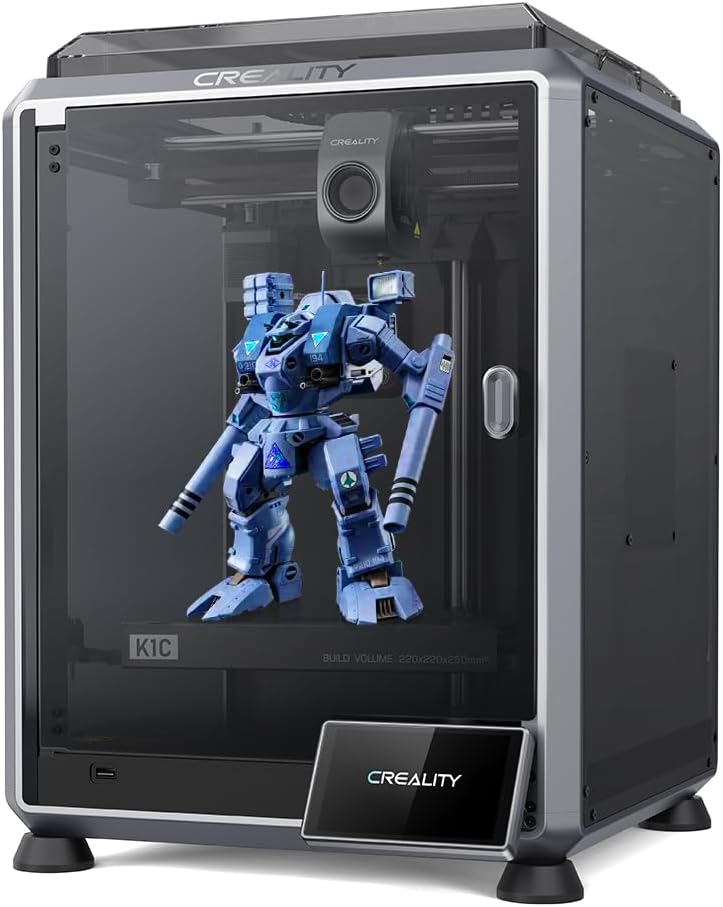
The Creality K1C is engineered to handle abrasive filaments like carbon fiber at high speeds. With a rating of 4.3, it delivers 600mm/s printing speed and 20000mm/s² acceleration for rapid and durable output.
We may earn a commission when you buy through this link, at no additional cost to you.
Its clog-free direct extruder grips filament tightly, preventing slip during high-speed acceleration. The steel-stipped copper nozzle blocks heat creep and is easily swapped, ensuring continuous operation without frequent downtimes.
Smart AI functions allow real-time monitoring to detect failures and film time-lapses. Auto calibration simplifies the process, saving time and reducing the frustration of leveling tests for consistent bed adhesion.
This printer suits professionals needing robust engineering material performance. It handles tough filaments with ease, providing high speed and reliability for applications requiring strong and precise mechanical parts.
The hardened components allow for safe printing of carbon fiber materials without compromising print speed or quality.
The upgraded cooling structure with multiple fans ensures sharp overhangs even at higher velocities.
We may earn a commission when you buy through this link, at no additional cost to you.
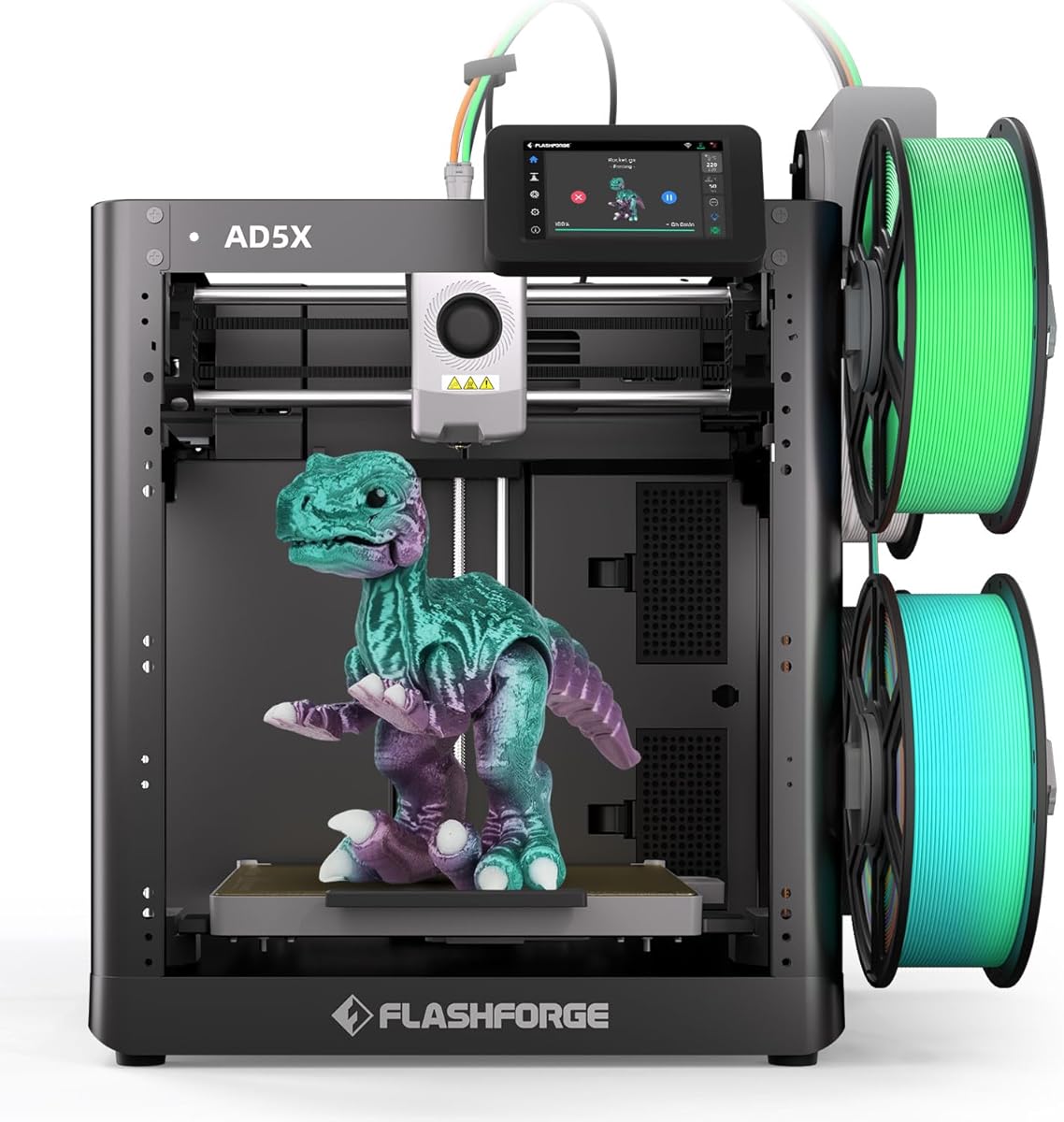
The FLASHFORGE AD5X Multi-Material variant offers advanced flexibility for color and material printing. With a rating of 4.0, it features an Intelligent Filament System (IFS) allowing for 4-color prints in a compact design.
We may earn a commission when you buy through this link, at no additional cost to you.
Speed is a key factor with 600mm/s capability and CoreXY rigidity to minimize vibration errors. Full-auto calibration ensures the nozzle distance is consistent, while vibration compensation algorithms maintain precise alignment across layers.
Its compact design saves space, making it suitable for smaller workshops. The modular setup allows for flexible placement, ensuring it fits into various environments without sacrificing performance or stability during fast operations.
This model is best for users who need multi-material versatility in a smaller footprint. It combines speed and intelligence to handle complex prints efficiently, ideal for creative projects requiring varied textures or colors.
The modular IFS system allows for color changes without a large external footprint, saving desk space.
Algorithms actively reduce mechanical shifts, ensuring sharp details on high-speed prints despite the small size.
We may earn a commission when you buy through this link, at no additional cost to you.
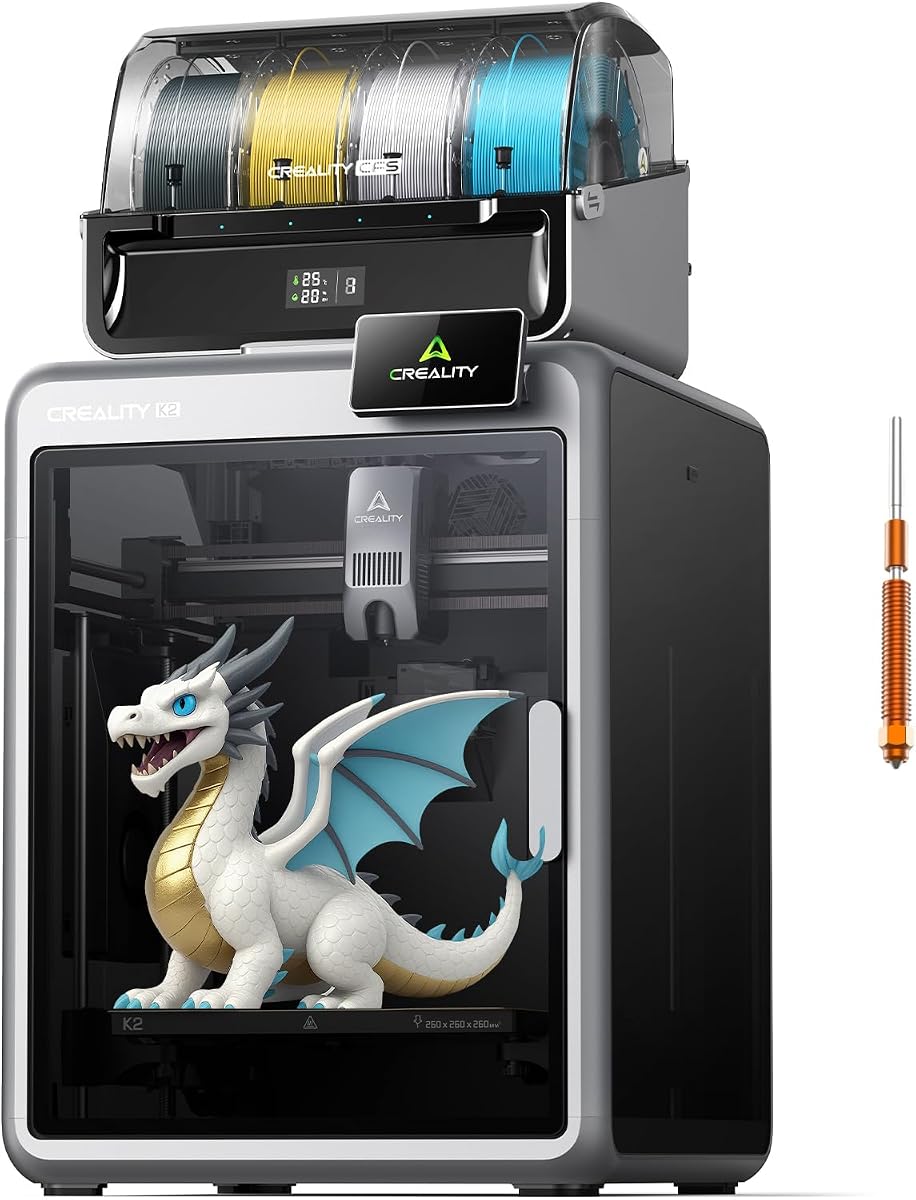
The Creality K2 delivers stable high-speed performance with an aerospace-grade aluminum frame. With a rating of 4.0, it reaches 600mm/s speed and supports 16 vibrant colors through the CFS system for versatile printing tasks.
We may earn a commission when you buy through this link, at no additional cost to you.
Its precision build with dual Z-axis and steel rail ensures virtually zero wobble during high-speed operations. The direct drive extruder handles engineering filaments like ABS and PETG effectively at up to 300 degrees Celsius.
Quiet operation is standard with silent mode and vibration-free design, suitable for open office spaces. Smart leveling and guided calibration make setup easy, allowing users to focus on design rather than technical adjustments.
This printer is ideal for professionals needing stable and reliable high-speed production. It offers a balance of power and precision, making it a solid choice for complex and colorful engineering projects.
The aerospace-grade aluminum and steel rails minimize vibration, ensuring consistent quality at top speeds.
A robust extruder manages flow accurately, supporting both flexible and rigid materials with high throughput.
We may earn a commission when you buy through this link, at no additional cost to you.
Selecting the right machine involves understanding several key technical factors that directly impact speed and reliability. This section breaks down the critical elements to consider before making your final decision.
Maximum print speed defines how fast the nozzle moves during printing. Look for machines offering at least 500mm/s for true rapid prototyping. Higher speeds mean faster completion of jobs and better throughput for businesses.
Always verify if the advertised speed maintains quality or is a theoretical peak.
Acceleration determines how quickly the printer reaches top speed. High acceleration values like 20,000mm/s² reduce time spent on non-print moves. This is crucial for parts with many small features requiring frequent direction changes.
High acceleration combined with rigid frames ensures no loss of detail during speed changes.
Motion systems like CoreXY distribute motors to the frame reducing moving mass. This design allows for higher speeds and better precision compared to traditional Cartesian setups. It is essential for stable printing at high velocities.
Choose printers with CoreXY or similar lightweight motion architectures for best results.
If your work requires multiple colors, check for integrated multi-color systems. These often add speed by automating filament swaps and reducing purging time. Systems like AMS or CFS streamline complex multi-material workflows.
Evaluate if the color system adds convenience or complicates the maintenance process.
Build volume dictates the maximum size of a single print. Ensure the dimensions fit your largest intended parts. Large volume printers might be slightly slower due to travel distance but offer more flexibility for bigger projects.
Balance speed needs with the physical space available for the machine.
Automatic calibration saves time on setup and leveling. Look for auto-bed leveling and auto-tuning features that minimize manual intervention. These features ensure consistent starts even when changing bed conditions frequently.
Automation helps maintain speed by reducing the time spent fixing errors.
Direct drive extruders are better for high-speed printing with flexible filaments. They maintain grip on the filament during rapid acceleration and deceleration. Choose a strong extruder to prevent slip or clogging during fast runs.
Ensure the nozzle material can withstand the heat generated by high-speed extrusion.
High-speed machines must be reliable to avoid material waste. Check for warranty terms and customer support availability. Robust builds with quality motors reduce the risk of failure during critical production runs.
A reliable machine ensures your speed does not come at the cost of downtime.
Always start with a well-leveled bed and clean surface. High-speed prints require perfect adhesion to prevent shifting during rapid motion. Use the provided auto-leveling tools or manual gauges to ensure flatness before beginning.
Monitor the first layer closely regardless of the automation features. Even with auto-start, the first few millimeters are critical for print success. Adjust flow and temperature if you notice inconsistencies in that initial phase.
Perform regular maintenance on nozzles and belts to maintain speed. Lubricate linear rails and check for filament wear after extended use. Keeping components clean ensures the printer runs smoothly and prevents clogs.
Higher speeds can sometimes reduce detail if the printer cannot accelerate quickly enough. However, modern machines with vibration compensation and high torque motors maintain quality even at top speeds. It is always wise to test a speed profile on your specific model to find the sweet spot between speed and precision.
PLA and PETG generally handle high speeds well due to their ease of extrusion. TPU is more flexible and may require slower speeds depending on the nozzle setup. Always check the manufacturer's recommendations for specific materials to avoid clogs or inconsistent flow.
Yes, effective cooling is critical when printing fast. High-speed extrusion generates heat that needs to dissipate quickly to solidify layers. A good part cooling fan ensures crisp edges and prevents warping on bridges and overhangs during rapid passes.
Upgrading a slow printer can be complex and often costs more than buying a new high-speed unit. While you can improve motors and nozzles, the frame rigidity may still limit performance. Investing in a new printer designed for speed is usually more cost-effective for significant gains.
Multi-color systems require extra time to switch filaments and purge excess material. This process adds overhead to the print job. However, dedicated multi-color printers with integrated chambers minimize this delay, allowing for faster transitions than manual methods.
Yes, moving the printer can shift the bed or nozzles causing misalignment. Always re-run auto-leveling after relocation to ensure the nozzle distance remains consistent. Skipping this step can lead to failed prints even if the machine is capable of high speeds.
Clogs often occur due to excessive heat or slow cooling. Ensure your cooling fan is working correctly and that the nozzle is clean. Regularly clean the nozzle tip and use quality filament to prevent debris from blocking the flow during rapid extrusion.
High-speed printers often draw more power due to heaters and fast motors. Ensure your outlet provides stable power and matches the printer's voltage requirements. Using a dedicated circuit helps prevent brownouts that could cause power loss during long print jobs.
We have reviewed ten top models offering exceptional speed and reliability. From the Bambu Lab P2S Combo to the FLASHFORGE AD5X, each option provides unique benefits for rapid production and prototyping tasks.
When choosing, prioritize the features that align with your workflow needs. Whether it is multi-color capability, build volume, or pure velocity, finding the right balance will ensure you get the most out of your investment.
Remember to check current prices and availability before buying. The market changes quickly, so verifying the latest details on the product pages guarantees you get the best deal for your specific requirements.